Last Updated on March 17, 2026 by John Tim
A living room is more than just a place to sit and relax. It often becomes the most expressive space in a home, where personal taste, memories, and creativity come together. For homeowners who enjoy mixing styles, colors, and textures, an eclectic living room offers the perfect opportunity to design a space that truly reflects their personality.
Unlike strict design styles that follow a single theme, eclectic interior design celebrates diversity. It allows homeowners to combine vintage and modern furniture, bold artwork with neutral backgrounds, and cultural influences from different eras or regions. The key is not randomness, but thoughtful curation. When done correctly, an eclectic living room can feel balanced, welcoming, and visually fascinating without appearing chaotic.
Many people assume eclectic décor means filling a room with unrelated pieces. In reality, successful eclectic design requires a clear sense of harmony and intention. Every item in the room should contribute to a larger story while maintaining visual balance. Colors, textures, and shapes must work together to create a cohesive yet vibrant environment.
The beauty of an eclectic living room lies in its flexibility. It allows homeowners to showcase meaningful items, unique furniture, and decorative pieces collected over time. This approach creates spaces that feel lived-in, authentic, and full of character rather than staged or overly polished.
Whether you are redesigning your living space or simply looking to introduce more personality into your home, understanding the principles behind eclectic living room décor can help you build a space that feels creative, comfortable, and uniquely yours.
Understanding the Core Principles of an Eclectic Living Room
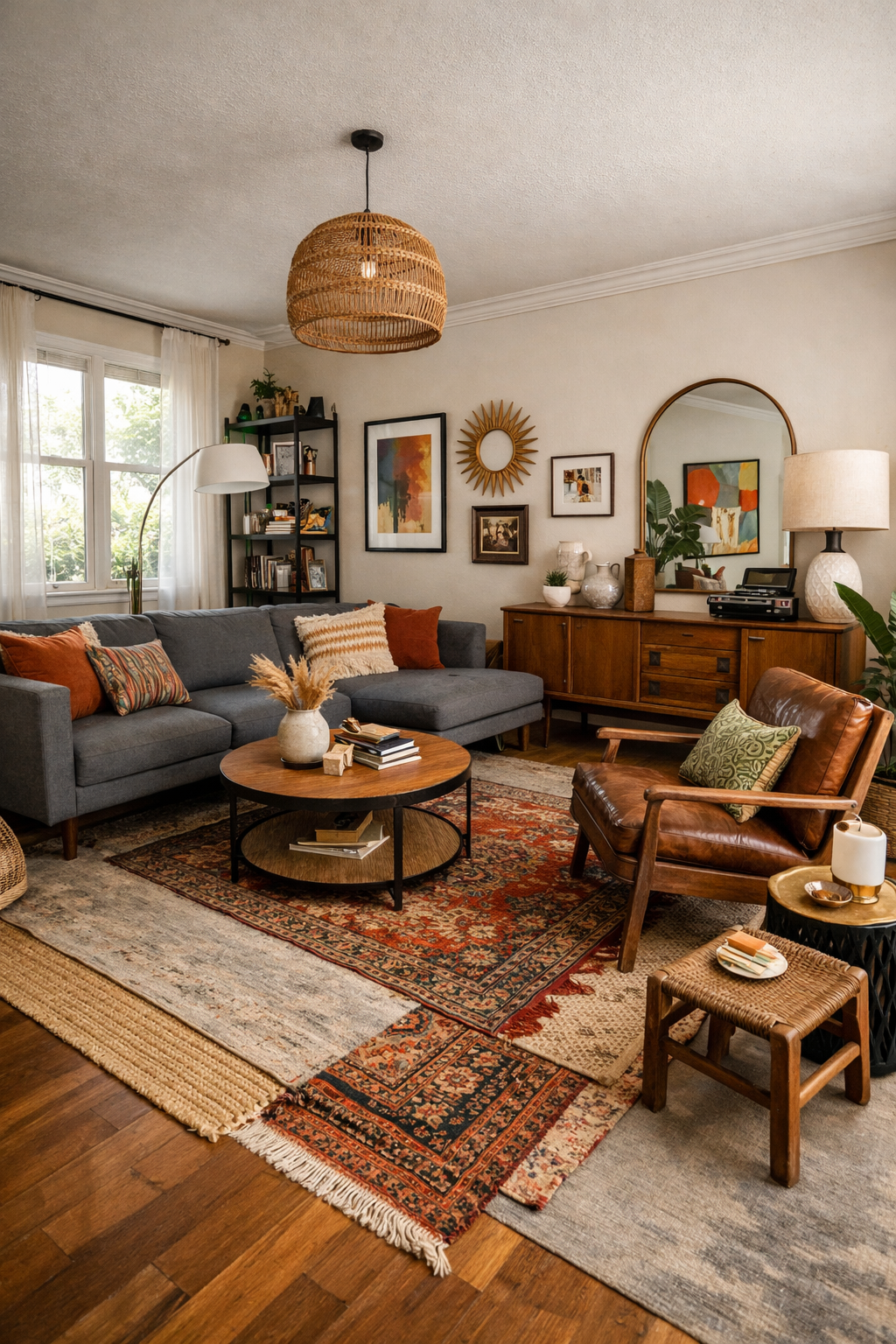
An eclectic living room thrives on creative freedom, but that freedom still relies on thoughtful design principles. The goal is to combine different elements in a way that feels intentional rather than accidental.
One of the most important ideas behind eclectic design is balance. A room filled with contrasting pieces must still feel visually comfortable. This balance often comes from repeating certain colors, materials, or shapes throughout the space. When similar design elements appear in different parts of the room, they help unify the entire environment.
Another defining feature of an eclectic living room is contrast. Mixing modern furniture with vintage pieces or combining sleek metal accents with rustic wood textures can create visual interest. These contrasts give the room personality and depth, making it more engaging than spaces that rely on a single design style.
Personal storytelling also plays a major role in eclectic interiors. Many eclectic living rooms include items collected during travels, inherited furniture, or handmade décor pieces. These objects bring emotional meaning into the space, transforming the room from a simple sitting area into a reflection of the homeowner’s experiences.
Despite its mix of styles, an eclectic living room should never feel cluttered. Careful editing is essential. Choosing fewer, meaningful pieces allows each item to stand out while keeping the room visually balanced.
By focusing on harmony, contrast, and personal expression, eclectic design transforms the living room into a space that celebrates individuality while maintaining a cohesive atmosphere.
Choosing Colors That Bring an Eclectic Living Room Together
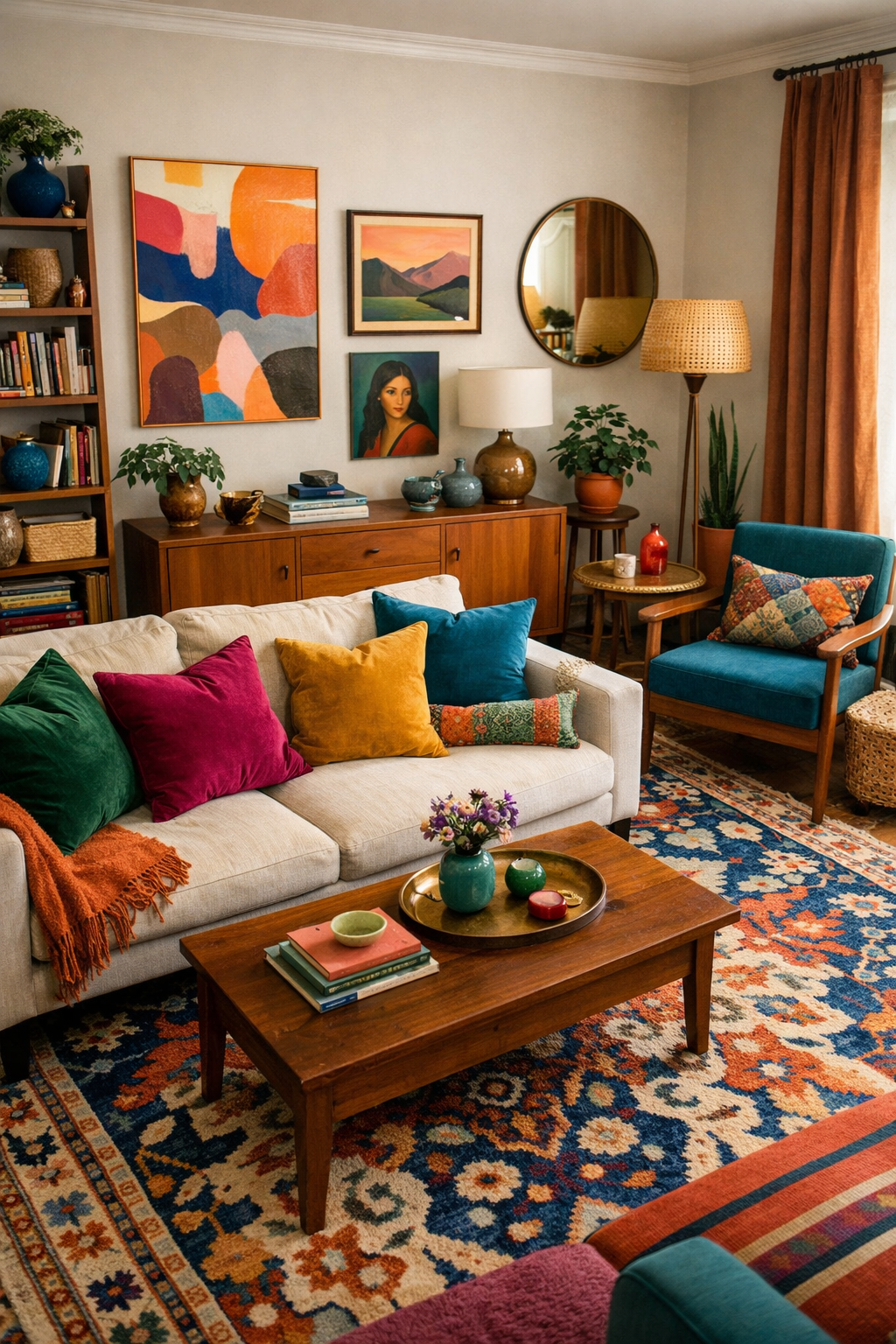
Color plays a crucial role in making an eclectic living room feel unified rather than chaotic. Because eclectic spaces often feature a variety of furniture styles and decorative elements, a well-planned color palette helps connect these pieces visually.
Many successful eclectic interiors begin with a neutral base. Walls painted in shades such as white, soft gray, or warm beige create a calm backdrop that allows more vibrant elements to shine. Neutral tones help anchor the room and prevent bold décor from overwhelming the space.
Once the foundation is established, accent colors can be introduced through furniture, textiles, and artwork. Rich jewel tones, earthy hues, or vibrant patterns often appear in eclectic living rooms, bringing energy and personality to the design.
Color repetition is an important technique for maintaining harmony. When a particular shade appears in multiple places throughout the room, it visually connects different objects. For example, a deep blue tone in a throw pillow might also appear in a painting or decorative vase.
Layering colors through textures can also enhance an eclectic living room. Rugs, curtains, cushions, and upholstery provide opportunities to introduce subtle variations of the same tone while adding warmth and depth.
Lighting further influences how colors appear within the room. Natural daylight highlights textures and patterns, while warm artificial lighting enhances the richness of darker tones.
By carefully coordinating colors, an eclectic living room can maintain its lively personality while still feeling cohesive and thoughtfully designed.
Mixing Furniture Styles for an Eclectic Living Room
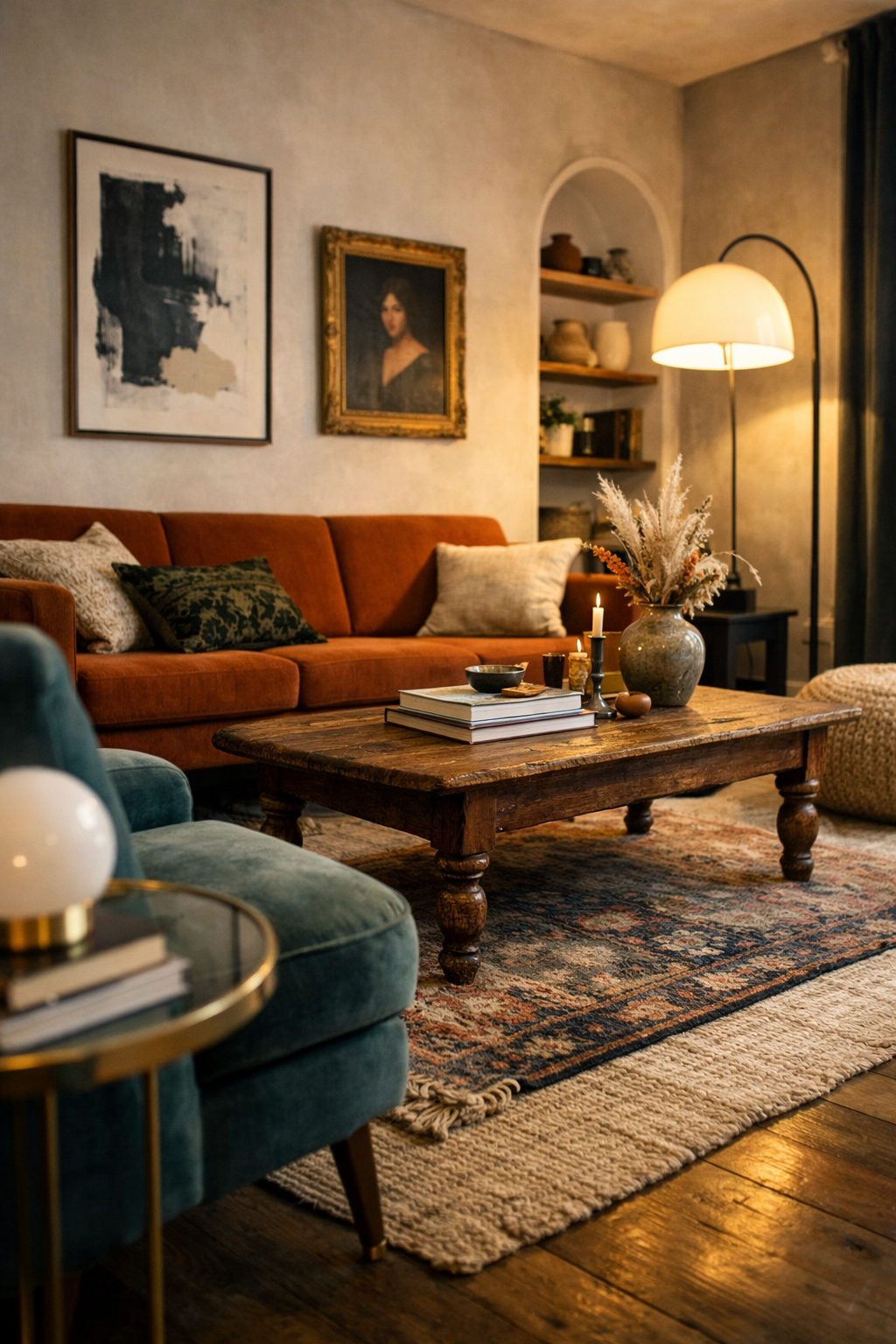
Furniture selection is where the personality of an eclectic living room truly shines. Instead of following a single design trend, eclectic spaces allow homeowners to blend pieces from different periods and styles.
A contemporary sofa might sit beside a vintage wooden coffee table, while a mid-century armchair complements a modern bookshelf. This mixture of styles adds character and visual interest, making the living room feel dynamic rather than predictable.
Scale and proportion remain important even in eclectic design. Furniture pieces should complement each other in size and shape so the room maintains visual balance. A large sectional sofa paired with delicate furniture may feel mismatched, while pieces with compatible proportions create harmony despite stylistic differences.
Material diversity also contributes to the eclectic look. Combining wood, metal, glass, and fabric introduces varied textures that make the room more engaging. Each material adds a different sensory quality, enhancing the richness of the space.
Comfort should never be sacrificed for style. An eclectic living room must remain functional and welcoming. Seating arrangements should encourage conversation and relaxation while maintaining an inviting atmosphere.
By blending furniture styles thoughtfully, homeowners can create a living room that feels curated, expressive, and comfortably lived-in.
Using Art, Patterns, and Decor to Add Personality
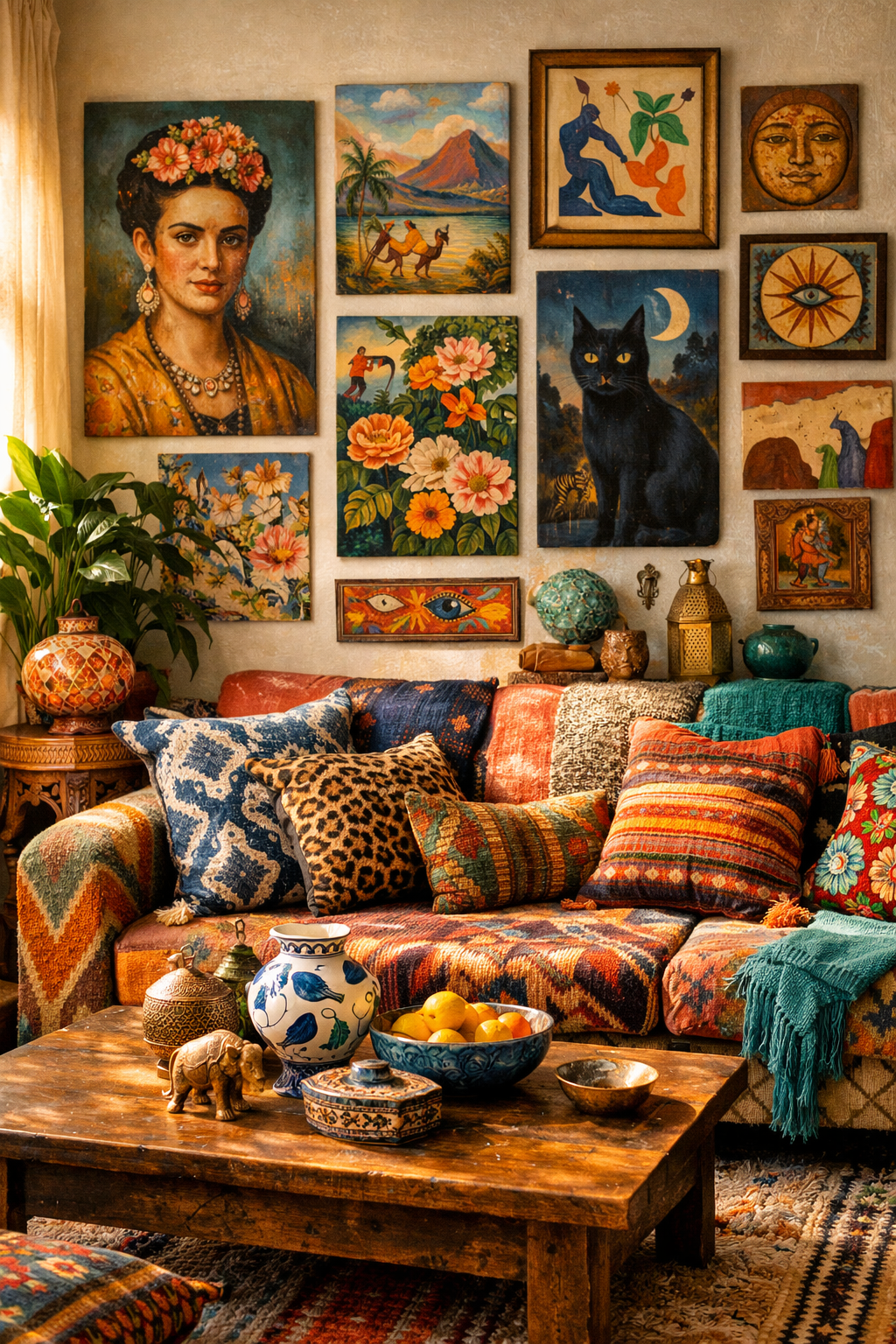
Decorative elements are often what transform a standard living room into an eclectic masterpiece. Artwork, textiles, and small decorative objects allow homeowners to express creativity and individuality within the space.
Art plays a central role in many eclectic living rooms. Paintings, photographs, and sculptures introduce visual interest while reflecting personal taste. Some homeowners prefer bold statement pieces, while others create gallery-style walls that showcase multiple works together.
Patterns are another hallmark of eclectic design. Rugs, cushions, and curtains often feature intricate prints or layered textures that add depth to the room. The key to mixing patterns successfully is maintaining some form of connection, such as shared colors or complementary shapes.
Decorative objects also bring personality into the space. Vintage finds, handcrafted items, ceramics, or travel souvenirs can all contribute to the eclectic atmosphere. These objects tell stories and create conversation points within the room.
Plants are frequently used in eclectic interiors as well. Greenery introduces natural color and softness, balancing the stronger visual elements of furniture and décor.
While eclectic design encourages creativity, restraint still plays a role. Carefully selecting decorative pieces ensures the room feels curated rather than cluttered.
Through art, patterns, and thoughtful décor, an eclectic living room becomes a lively environment full of personality and charm.
Creating Harmony and Flow in an Eclectic Living Room
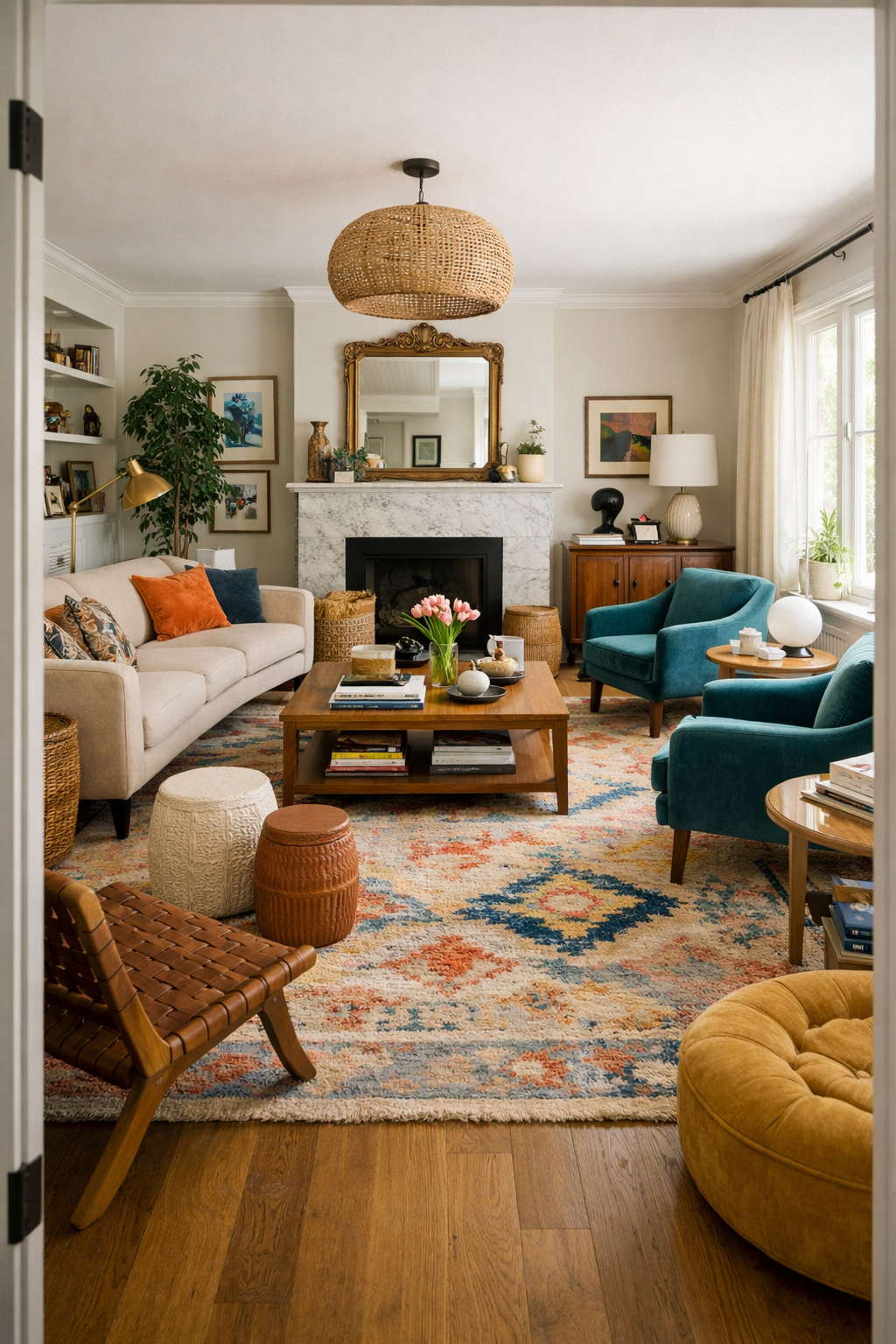
One of the most challenging aspects of designing an eclectic living room is ensuring that the various elements work together smoothly. Without careful planning, a mix of styles can easily become visually overwhelming.
Creating harmony begins with establishing a clear focal point. This might be a statement sofa, a large piece of artwork, or an eye-catching rug. Once the focal point is defined, other design elements can be arranged around it to support the overall composition.
Visual flow is equally important. The eye should move naturally across the room without encountering abrupt changes in style or color. Repeating shapes, materials, or tones in different parts of the room helps maintain continuity.
Layout also plays a key role in achieving balance. Furniture should be arranged in a way that supports comfortable movement while maintaining a sense of openness. Even though eclectic rooms contain a variety of elements, thoughtful spacing ensures the room remains functional and visually pleasing.
Lighting contributes significantly to harmony within the space. Combining natural light with warm interior lighting enhances textures and highlights decorative features without overpowering the design.
By focusing on balance, repetition, and thoughtful placement, an eclectic living room can successfully blend diverse elements into a cohesive and inviting environment.
Frequently Asked Questions (FAQs)
What is an eclectic living room?
An eclectic living room is a design style that combines elements from different interior styles, time periods, and cultural influences. The goal is to create a space that feels unique, expressive, and visually interesting while still maintaining balance and harmony.
How do you decorate an eclectic living room without making it look messy?
The key is maintaining a consistent color palette and repeating certain design elements throughout the room. Thoughtful placement of furniture and décor ensures that the space feels curated rather than cluttered.
What colors work best in an eclectic living room?
Eclectic living rooms often start with neutral wall colors and introduce bolder shades through furniture, textiles, and decorative accents. Rich tones, earthy hues, and vibrant patterns can all work well when balanced carefully.
Can you mix modern and vintage furniture in an eclectic living room?
Yes, mixing modern and vintage furniture is one of the defining characteristics of eclectic design. Combining different eras and styles adds character and creates a visually dynamic space.
Is eclectic interior design suitable for small living rooms?
Eclectic design can work well in smaller spaces as long as furniture is chosen carefully and the layout remains balanced. Using fewer but more meaningful pieces can help maintain openness while still showcasing personality.
Conclusion
An eclectic living room celebrates creativity, individuality, and thoughtful design. Instead of following rigid decorating rules, it encourages homeowners to combine different styles, colors, and textures to create a space that reflects their personality.
By focusing on balance, harmony, and intentional design choices, eclectic interiors can blend diverse elements into a cohesive environment. Carefully selected furniture, coordinated color palettes, and meaningful decorative pieces all contribute to the charm and uniqueness of the space.
The true beauty of an eclectic living room lies in its ability to tell a story. Each item in the room can represent a memory, an inspiration, or a personal interest. This storytelling aspect transforms the living room into more than just a functional space—it becomes an expression of identity.
When designed thoughtfully, an eclectic living room offers warmth, comfort, and visual excitement. It invites creativity while maintaining balance, resulting in a home environment that feels vibrant, welcoming, and authentically personal.