Last Updated on April 10, 2026 by John Tim
Pop-up campers have always been a favorite for travelers who want the freedom of the road without the bulk of a full-size RV. But as travel styles evolve, so do expectations for comfort, aesthetics, and functionality. In 2026, remodeling your camper is no longer just about fixing wear and tear—it’s about transforming a compact space into something that feels modern, efficient, and truly personal.
If you’re searching for fresh and practical pop up camper interior ideas, you’re likely looking to maximize space, improve comfort, and give your camper a style that reflects your lifestyle. Whether you’re planning weekend escapes or extended road trips, the right interior upgrades can make a huge difference in how you experience your journeys.
This guide walks you through creative, realistic, and achievable ways to remodel your pop-up camper interior while keeping things functional, stylish, and travel-ready.
Why Remodeling Your Pop-Up Camper Interior Matters
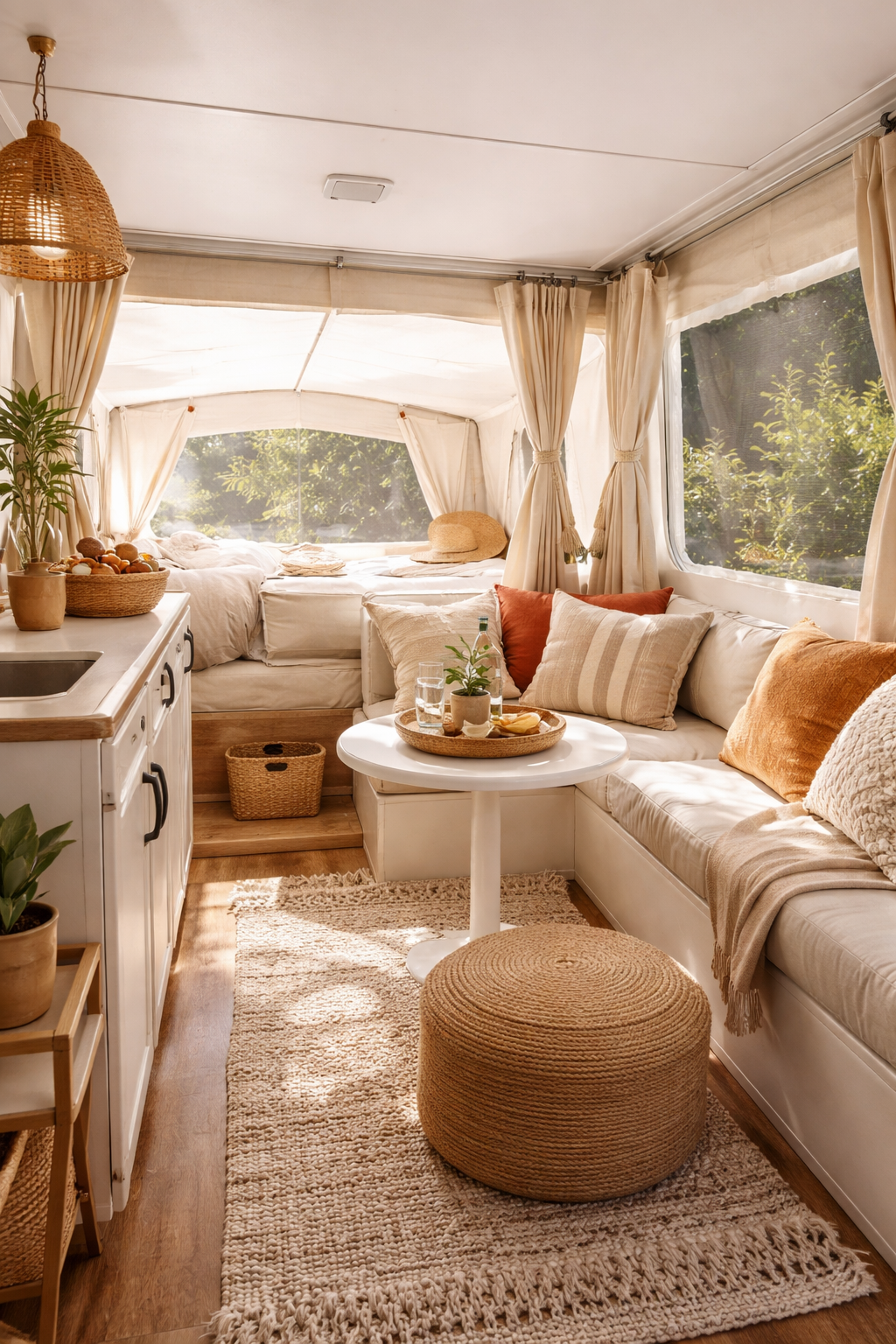
A pop-up camper is designed for simplicity, but that doesn’t mean you have to sacrifice comfort or design. Remodeling gives you the opportunity to tailor the space to your needs, making it more practical and enjoyable.
Older camper interiors often feel outdated, with dark cabinetry, worn fabrics, and inefficient layouts. Updating these elements can instantly make the space feel brighter, cleaner, and more welcoming. Beyond aesthetics, remodeling can also improve storage, optimize layout flow, and enhance usability during travel.
In many cases, even small changes—like new upholstery or better lighting—can significantly improve the overall experience. The goal is not to create luxury in a traditional sense, but to design a space that works smarter for your lifestyle.
Understanding the Unique Challenges of Pop-Up Camper Interiors
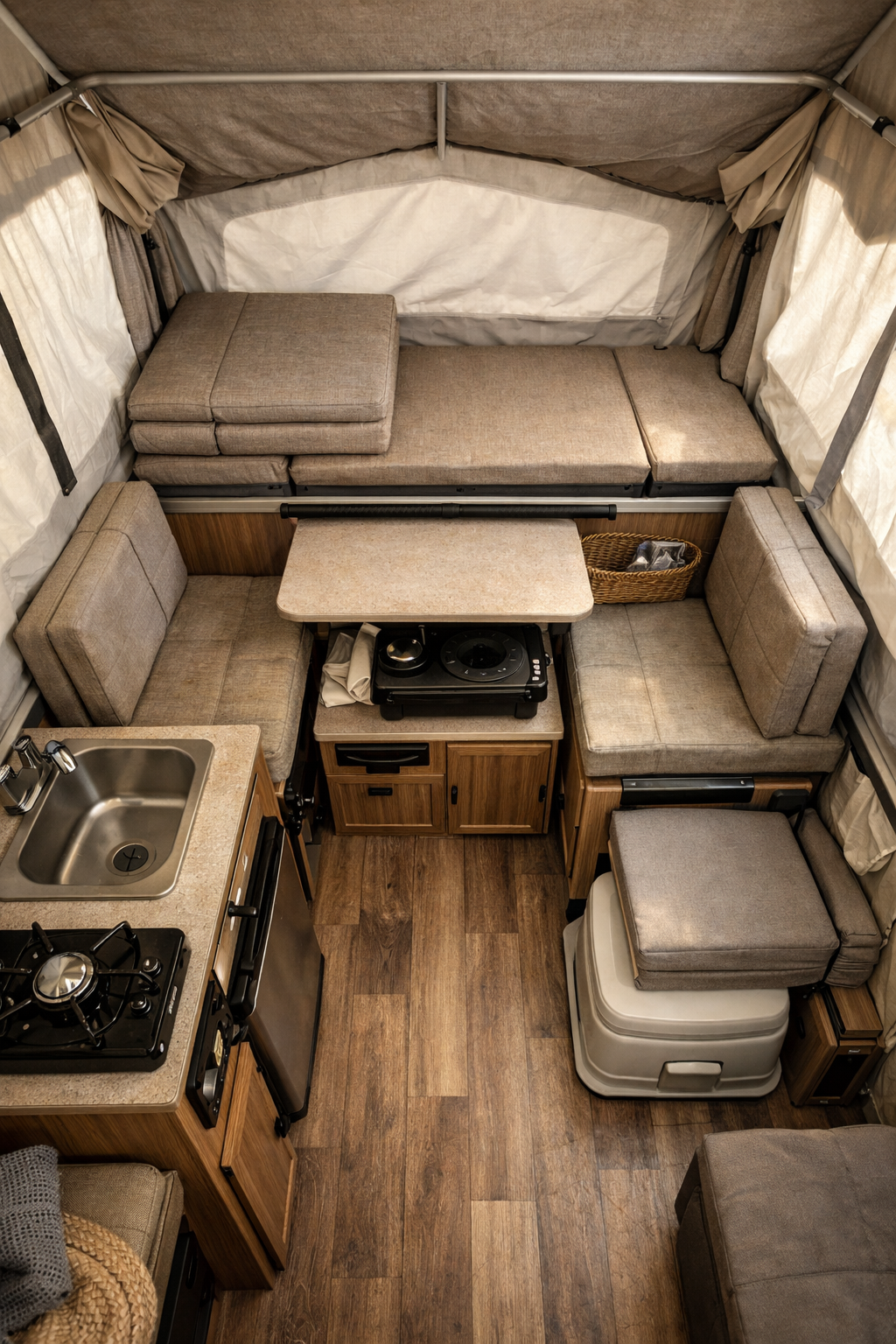
Before exploring specific pop up camper interior ideas, it’s important to recognize the limitations that come with these compact spaces. Unlike larger RVs, pop-up campers rely on collapsible structures and lightweight materials, which means every modification must be carefully planned.
Weight is a key consideration. Adding heavy materials can affect towing performance and structural integrity. Flexibility is another factor, as many components must fold or retract during transport. This limits the type of furniture and fixtures you can use.
Space efficiency is also critical. Every inch must serve a purpose, and clutter can quickly make the interior feel cramped. Successful remodeling focuses on balance—enhancing comfort without compromising mobility or function.
Modern Color Palettes and Interior Themes
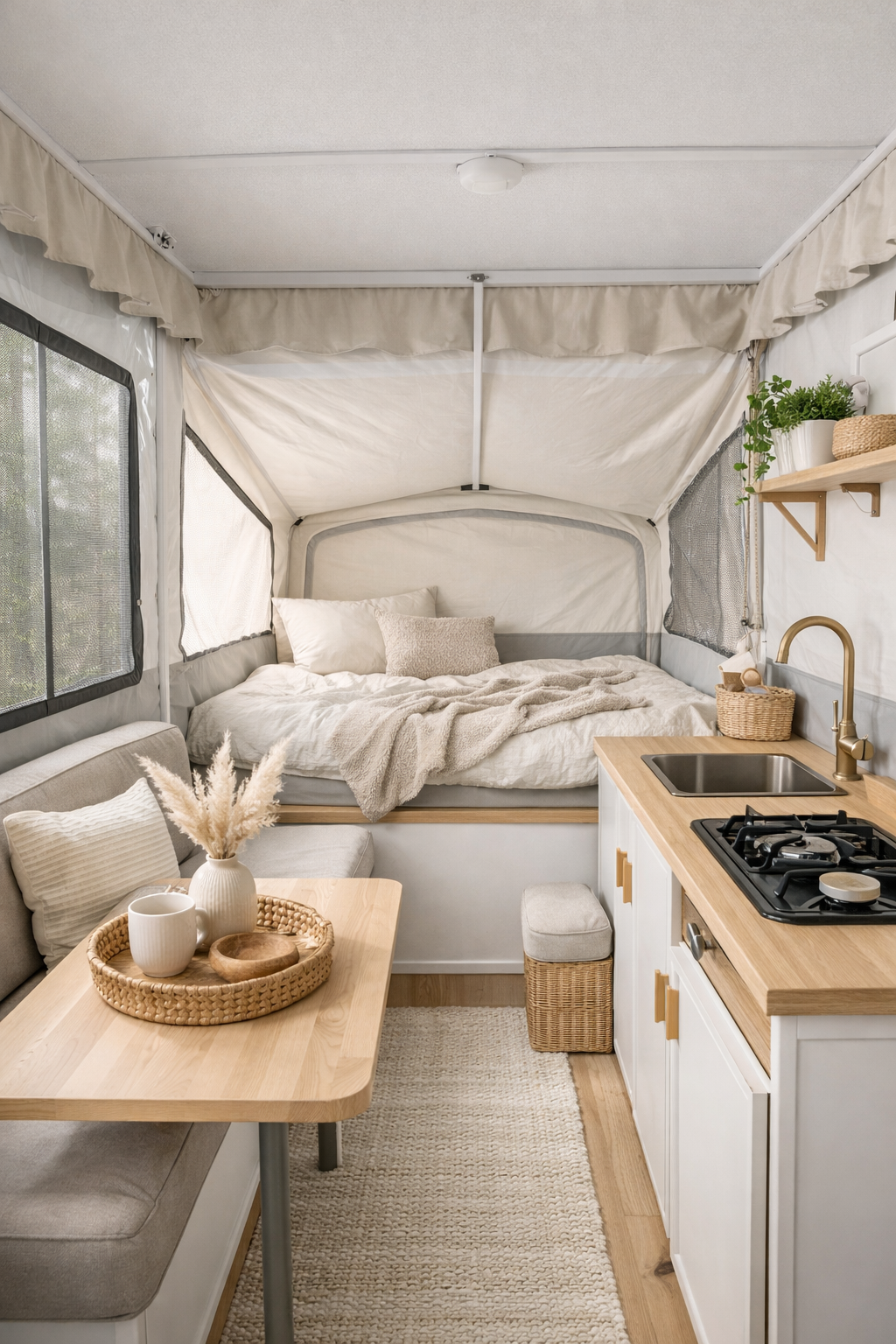
One of the simplest ways to refresh your camper is through color and design themes. In 2026, lighter tones and natural textures are trending in small-space interiors.
Neutral palettes such as soft whites, warm beiges, and light greys help create a sense of openness. These colors reflect light, making the interior feel larger than it actually is. Pairing these tones with wood accents adds warmth and a natural feel.
For those who prefer a more distinctive style, subtle contrasts can add character without overwhelming the space. Matte black hardware, muted green cabinets, or soft blue upholstery can introduce personality while maintaining a cohesive look.
Consistency is key. Keeping a unified color scheme throughout the camper ensures the space feels intentional rather than cluttered.
Smart Storage Solutions That Maximize Space
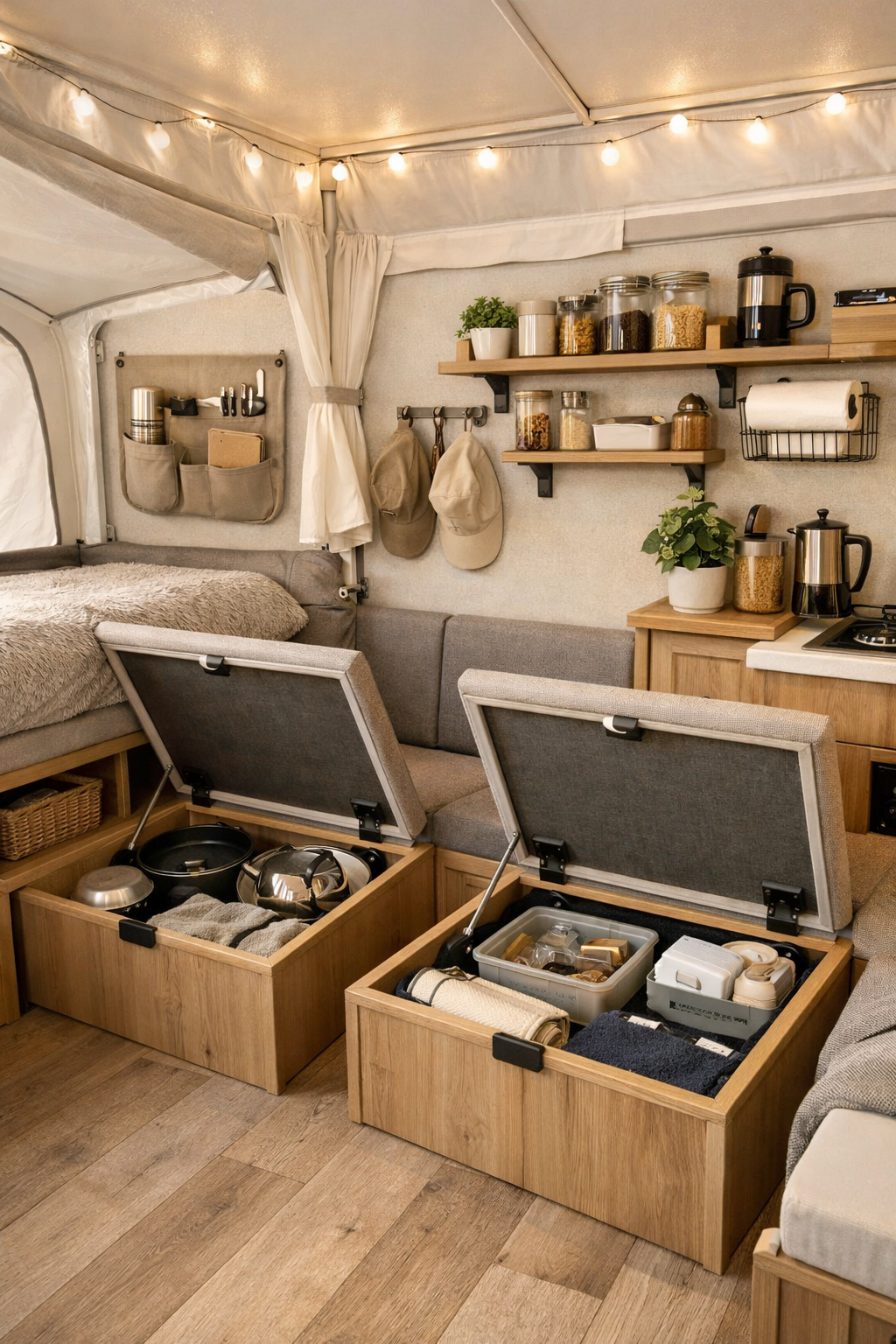
Storage is one of the biggest challenges in any pop-up camper. Creative solutions can help you stay organized without sacrificing living space.
Built-in storage is often the most effective approach. Under-seat compartments, hidden cabinets, and vertical shelving can provide extra room without adding bulk. These solutions keep items out of sight while maintaining a clean and open environment.
Wall-mounted organizers are another practical option. Hooks, hanging pockets, and compact racks can hold everyday essentials without taking up valuable floor space.
In smaller campers, multi-purpose storage becomes essential. Seating areas that double as storage compartments or foldable tables with hidden space underneath can significantly improve functionality.
The key is to think vertically and creatively, using areas that are often overlooked.
Upgrading Seating and Sleeping Areas
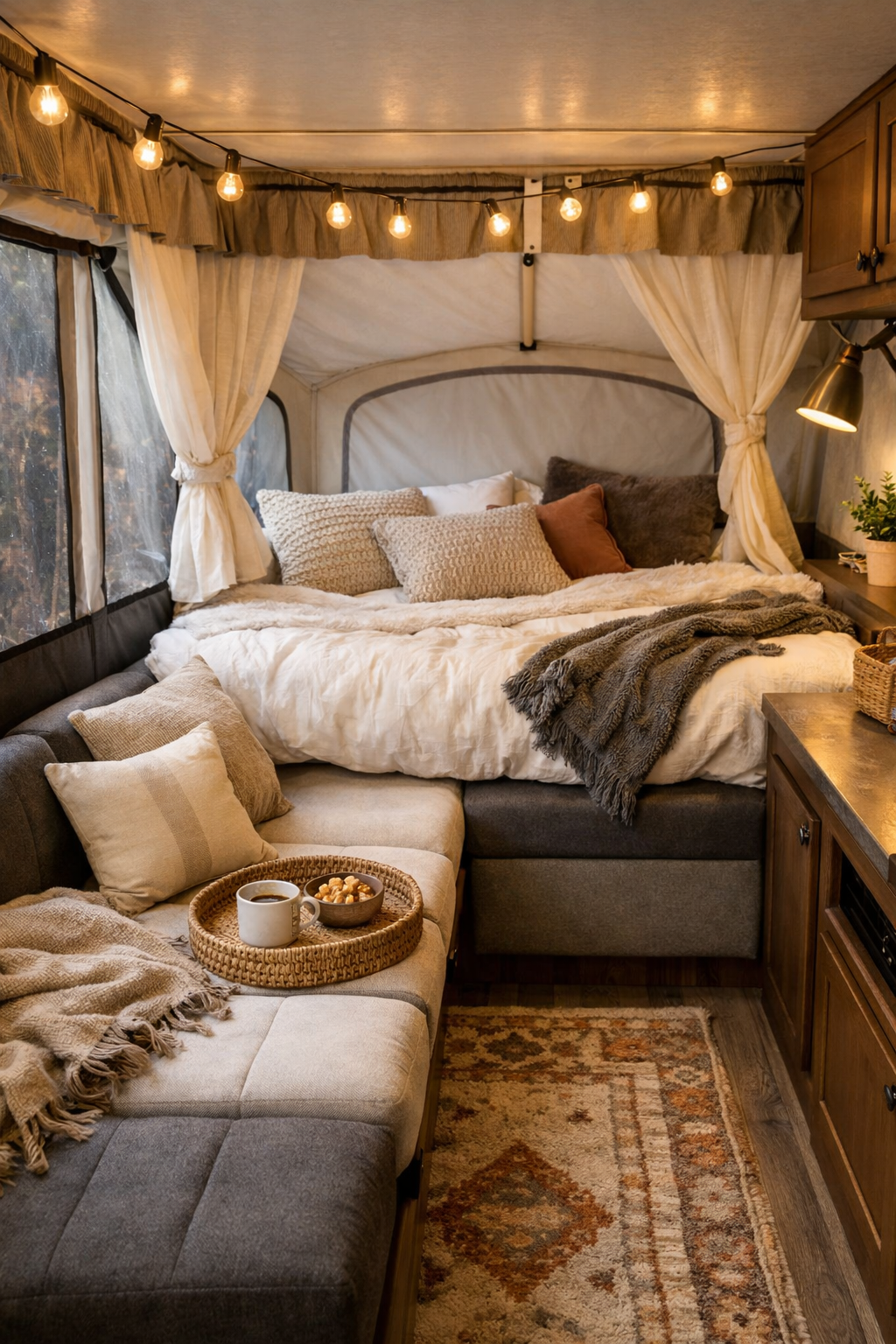
Comfort plays a major role in how enjoyable your camper feels. Updating seating and sleeping areas is one of the most impactful pop up camper interior ideas you can implement.
Replacing old cushions with high-density foam can improve both comfort and durability. Choosing washable, stain-resistant fabrics ensures practicality, especially for frequent travelers.
Convertible seating designs are particularly useful. Benches that transform into beds or dinette areas that fold down can maximize space while maintaining flexibility.
Layering textiles such as throws and cushions can also enhance comfort without adding permanent bulk. These small additions make the space feel more inviting and adaptable to different needs.
Kitchen and Dining Area Enhancements
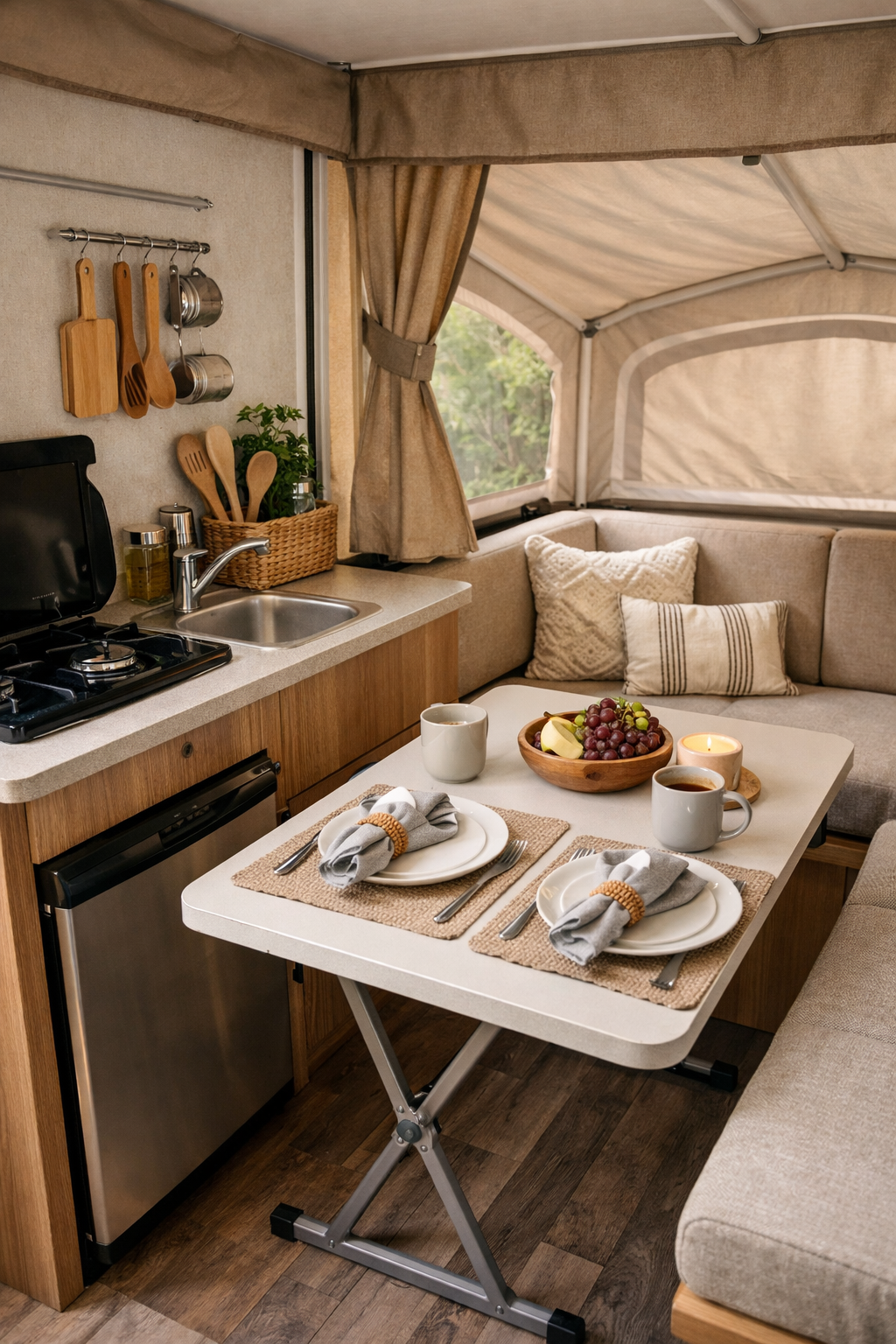
The kitchen area in a pop-up camper is often compact, but with thoughtful upgrades, it can become much more functional.
Improving countertop space is a common priority. Fold-out or slide-out surfaces can provide additional workspace when needed and remain out of the way when not in use.
Upgrading fixtures such as faucets or adding a small backsplash can elevate the overall look without major structural changes. Even small details can make the space feel more modern and efficient.
Dining areas can also be reimagined. A simple table redesign or adjustable setup can create a more comfortable eating space. Flexibility is key, allowing the area to serve multiple purposes throughout the day.
Lighting That Transforms the Interior
Lighting is often underestimated, yet it has a powerful impact on how a space feels.
Natural light should always be maximized. Keeping windows unobstructed and using light-filtering curtains can brighten the interior during the day.
For evening use, layered lighting works best. Soft overhead lights combined with focused task lighting create a balanced and comfortable atmosphere. LED lighting is especially popular due to its energy efficiency and low heat output.
Warm lighting tones tend to make the space feel more inviting, while cooler tones can give a more modern, clean look. Choosing the right balance depends on your personal preference and overall design theme.
Flooring and Wall Upgrades
Updating flooring and walls can dramatically change the look of your camper interior.
Lightweight vinyl flooring is a popular choice due to its durability and ease of installation. It can mimic the appearance of wood or stone without adding significant weight.
Walls can be refreshed with paint, peel-and-stick panels, or lightweight coverings. These updates can hide wear and tear while introducing a new style.
Consistency between flooring and walls helps create a cohesive design. Matching tones and textures ensures the space feels unified rather than fragmented.
Adding Personal Touches Without Clutter
Personalization is what turns a camper into a home. However, in a small space, it’s important to strike the right balance.
Decorative elements should be chosen carefully. A few meaningful items can add character without overwhelming the interior. Soft textiles, small plants, or subtle accents can make the space feel lived-in and comfortable.
Flexibility is important here as well. Items that can be easily stored or repositioned allow you to adapt the space as needed.
The goal is to create a space that reflects your personality while maintaining functionality and simplicity.
Technology and Modern Features in 2026
As technology evolves, it’s becoming easier to integrate modern features into compact spaces.
Portable power solutions, efficient lighting systems, and compact appliances can enhance convenience without requiring major modifications. Many travelers are also incorporating smart storage solutions and energy-efficient upgrades.
While not every camper needs advanced technology, thoughtful additions can improve usability and comfort, especially for longer trips.
The focus should remain on practicality. Technology should support your lifestyle, not complicate it.
Frequently Asked Questions (FAQ)
What are the best pop up camper interior ideas for small spaces?
The most effective ideas focus on multi-functional furniture, vertical storage, and light color schemes. These elements help maximize space while keeping the interior open and comfortable.
How much does it cost to remodel a pop-up camper interior?
Costs can vary widely depending on the scope of the project. Simple updates like new fabrics and paint are relatively affordable, while more extensive renovations involving flooring or structural changes may require a larger budget.
Can I remodel a pop-up camper myself?
Yes, many remodeling projects can be done as DIY tasks. Basic upgrades such as painting, replacing fabrics, and installing storage solutions are accessible for most people with minimal tools.
What materials are best for a pop-up camper interior?
Lightweight and durable materials are ideal. Vinyl flooring, soft fabrics, and composite panels are commonly used because they balance strength with weight efficiency.
How do I make my pop-up camper look modern?
Focus on neutral color palettes, updated lighting, and clean design elements. Removing outdated features and introducing simple, cohesive styling can make a significant difference.
Is it worth remodeling an older pop-up camper?
In many cases, yes. Remodeling can extend the life of your camper and improve your overall travel experience. It’s often more cost-effective than purchasing a new unit.
Conclusion
Remodeling your camper is an opportunity to redefine how you travel and live on the road. The best pop up camper interior ideas are those that combine practicality with creativity, transforming a compact space into something that feels both functional and inspiring.
By focusing on smart storage, modern design, and thoughtful upgrades, you can create an interior that adapts to your needs while enhancing comfort and style. Every improvement, no matter how small, contributes to a more enjoyable and efficient travel experience.
As you plan your remodel in 2026, remember that the goal is not perfection but usability. A well-designed pop-up camper interior doesn’t just look good—it works seamlessly with your lifestyle, making every journey more comfortable, memorable, and uniquely yours.