
Last Updated on April 9, 2026 by John Tim
When you’re living or traveling in an RV, every square foot matters. Yet one of the most overlooked opportunities for expanding your living space is right outside your door. With the right approach, an RV deck can transform a compact setup into a comfortable, stylish, and highly functional outdoor extension of your home on wheels.
Whether you’re parked for a weekend getaway or settled in for a longer stay, thoughtful RV deck ideas can enhance your lifestyle, improve usability, and even increase the overall enjoyment of your travel experience. From space-saving designs to creative layouts that blend comfort and adventure, building the right deck is less about size and more about smart planning.
This guide explores practical, creative, and adaptable RV deck ideas that work for both small spaces and bigger outdoor ambitions.
Why an RV Deck Is Worth It
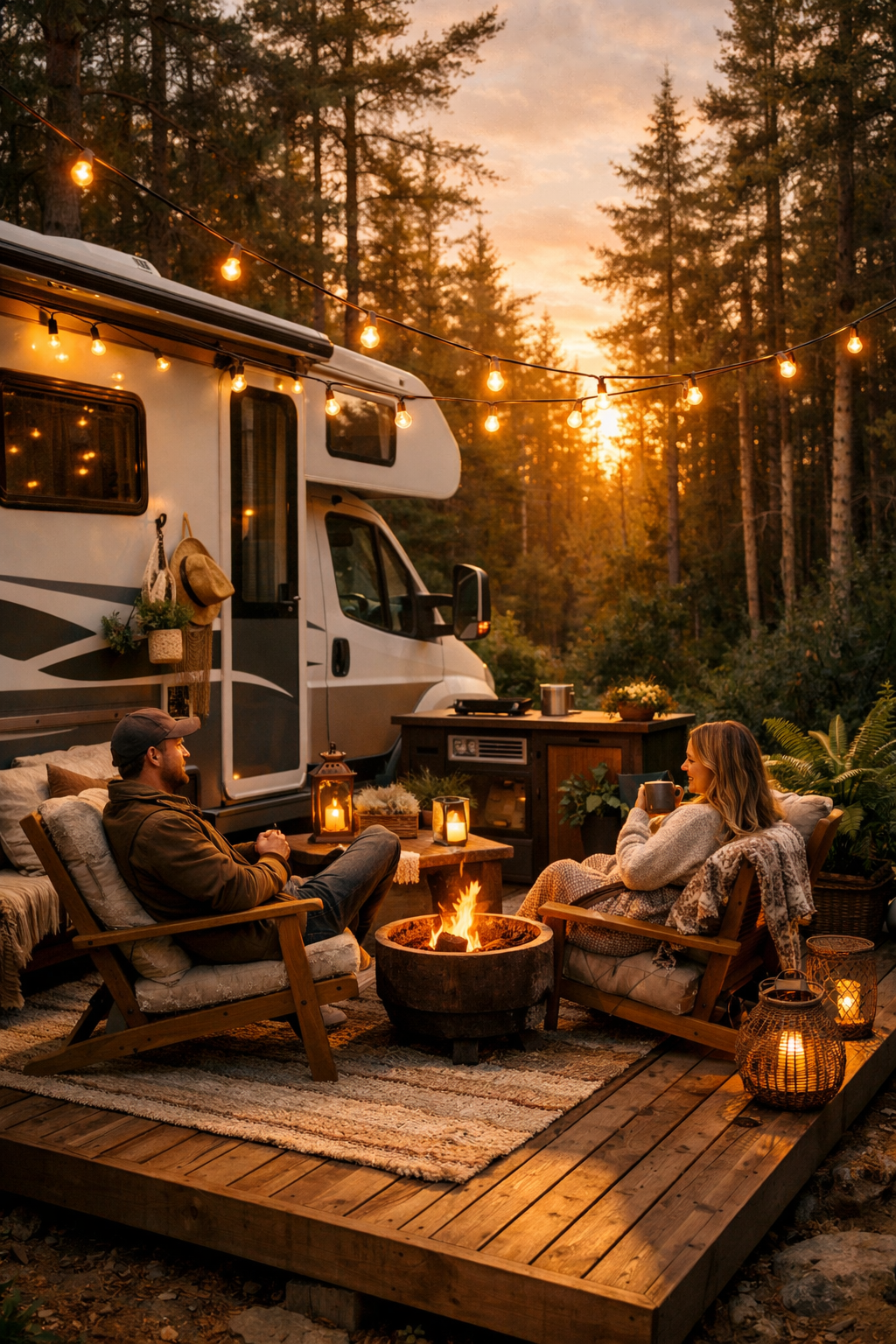
An RV deck is more than just an accessory. It creates a defined outdoor living area that extends your usable space without altering your vehicle itself. For many RV owners, this becomes the primary place to relax, cook, socialize, or simply enjoy nature.
In smaller setups, a deck helps reduce the feeling of confinement. It provides breathing room and allows you to step outside without stepping directly onto uneven ground or dirt. In larger setups, it becomes a centerpiece for entertaining, dining, or even working remotely.
A well-designed deck also brings structure to your campsite. It creates a sense of home, even when you’re constantly on the move.
Understanding Space Constraints and Opportunities
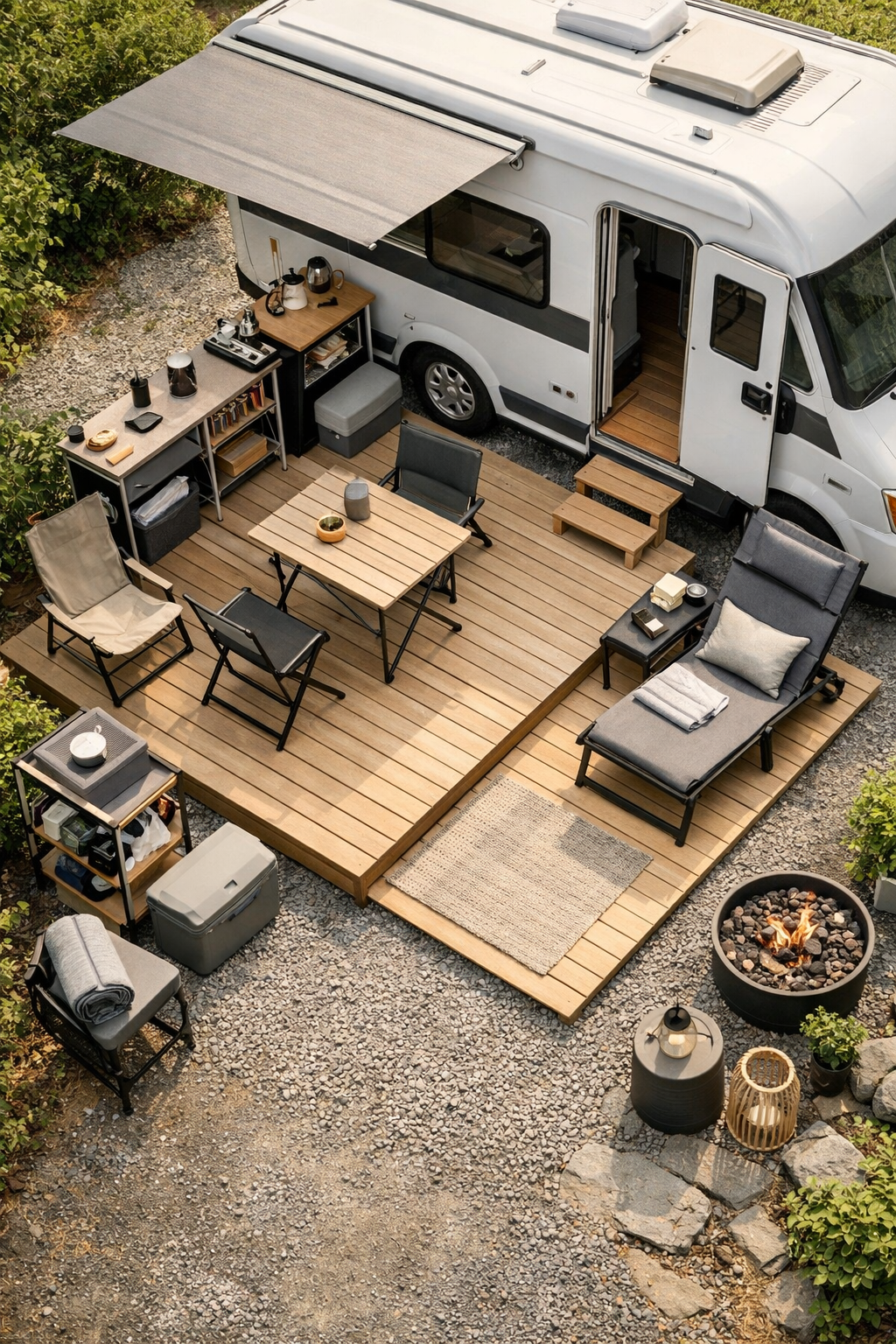
Before diving into specific RV deck ideas, it’s important to understand the limitations and possibilities of your setup. Unlike traditional homes, RV spaces require flexibility and efficiency.
Small RV sites demand compact, multi-functional designs. Every element must serve a purpose without overcrowding the area. Larger sites allow more creativity, but still benefit from intentional design to avoid clutter.
Consider the terrain, portability requirements, and local regulations. Some locations may restrict permanent structures, making modular or temporary decks the best option. Others may allow semi-permanent installations if you stay long-term.
The key is to design a deck that complements your RV lifestyle rather than complicates it.
Compact Deck Designs for Small RV Spaces
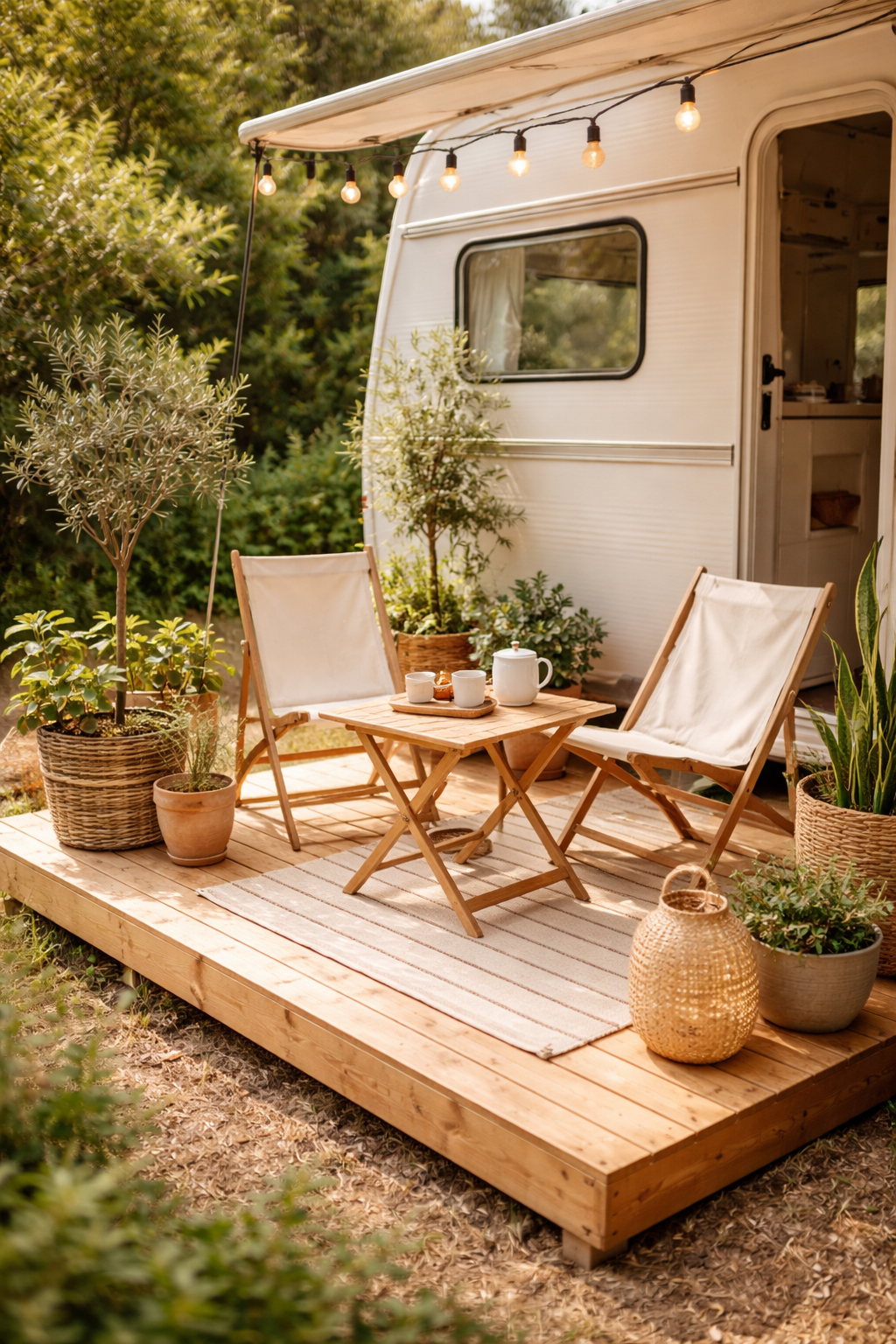
Small spaces don’t mean limited possibilities. In fact, they often inspire the most innovative solutions.
A simple platform deck made from lightweight materials can instantly elevate your outdoor experience. Even a small, raised surface creates a clean, defined area for seating and movement. By keeping the structure minimal, you preserve openness while still gaining functionality.
Foldable or modular decks are especially useful for travelers. These designs can be assembled quickly and stored when not in use. Interlocking panels or collapsible frames make setup efficient without sacrificing stability.
Another effective approach is integrating your deck with your RV’s existing features. Extending from the entrance area creates a natural flow between indoor and outdoor spaces. Adding a small step platform or landing zone can improve accessibility while doubling as a seating area.
For tight spaces, vertical design elements can make a big difference. Instead of expanding outward, consider adding height through railings, hanging plants, or compact storage solutions.
Multi-Functional Deck Layouts
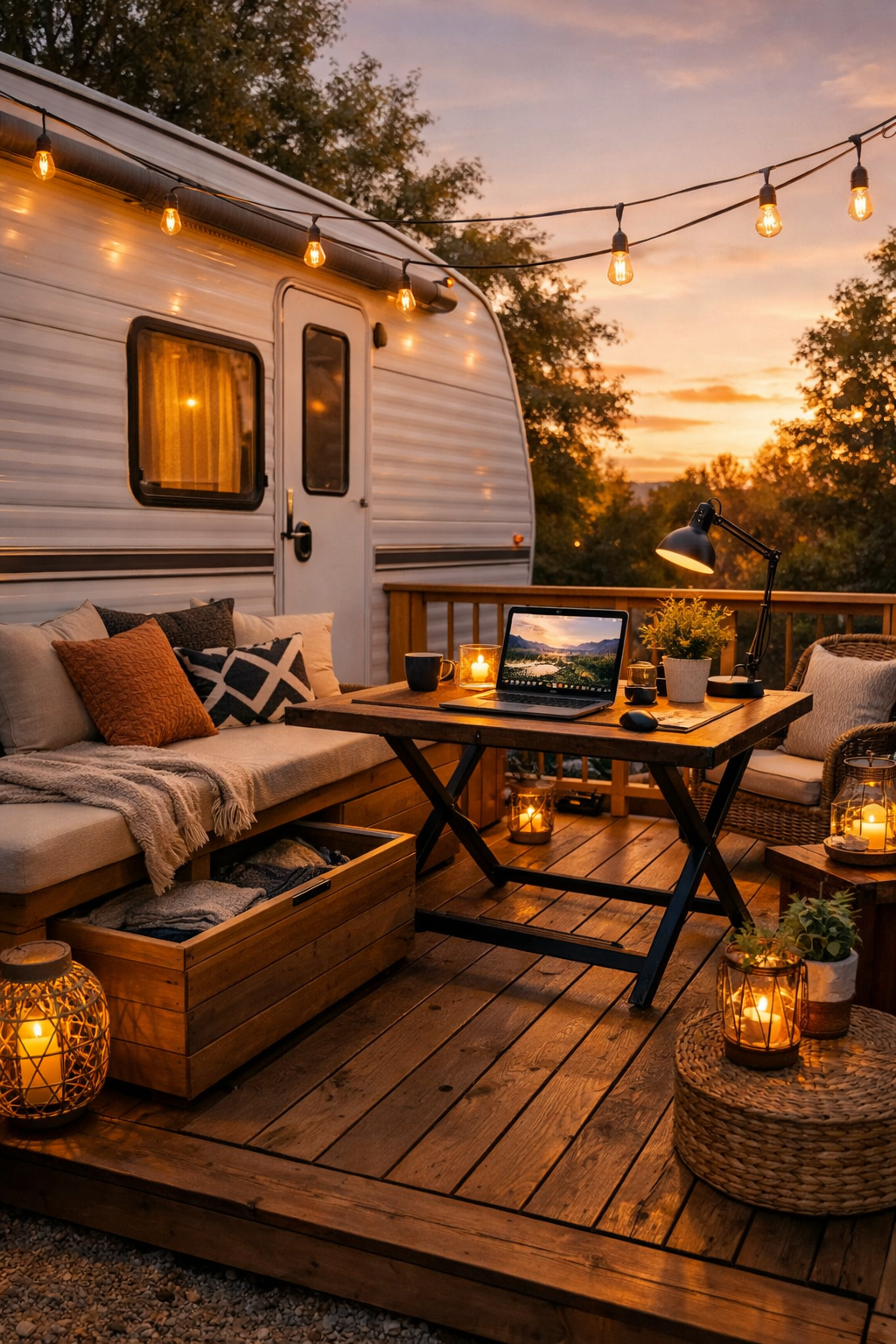
One of the most practical RV deck ideas is designing for multiple uses. Since space is limited, each part of your deck should serve more than one purpose.
A seating area can double as storage if built with hidden compartments. Benches with lift-up lids provide a place to store tools, outdoor gear, or seasonal items. This keeps your deck organized without adding clutter.
Dining areas can be flexible as well. A fold-down table attached to the railing or wall can be used when needed and tucked away when not in use. This approach keeps the deck open while still offering functionality.
Some RV owners incorporate workspace elements into their decks. A small outdoor desk or countertop can create a refreshing environment for remote work. With the right shade and seating, your deck becomes both an office and a relaxation zone.
Lighting also plays a multi-functional role. Soft ambient lighting not only improves visibility but also enhances the atmosphere, making your deck usable during evenings.
Creative Materials and Budget-Friendly Options
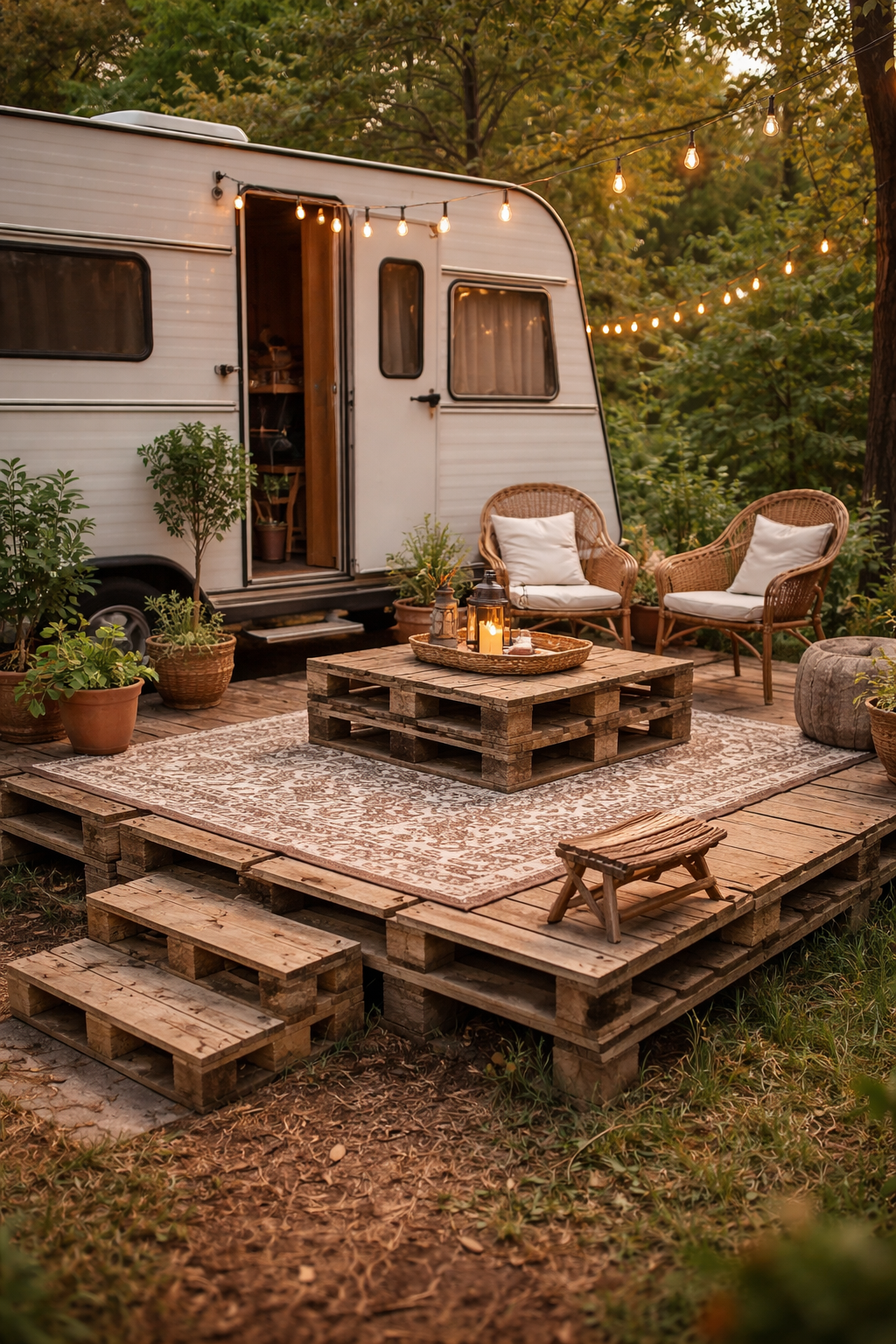
Building an RV deck doesn’t have to be expensive or complicated. Many creative solutions use accessible, affordable materials while still achieving a polished look.
Wood pallets are a popular choice for DIY decks. When properly treated and arranged, they create a rustic and sturdy foundation. Adding outdoor rugs or mats can improve comfort and aesthetics.
Composite decking is another option for those seeking durability. While slightly more expensive, it requires less maintenance and withstands weather conditions better than traditional wood.
For temporary setups, rubber mats or outdoor tiles can be arranged to form a deck-like surface. These materials are easy to install, remove, and transport, making them ideal for frequent travelers.
Reclaimed wood or repurposed materials can also add character. Using salvaged boards or leftover construction materials not only saves money but also creates a unique, personalized design.
Enhancing Comfort and Style
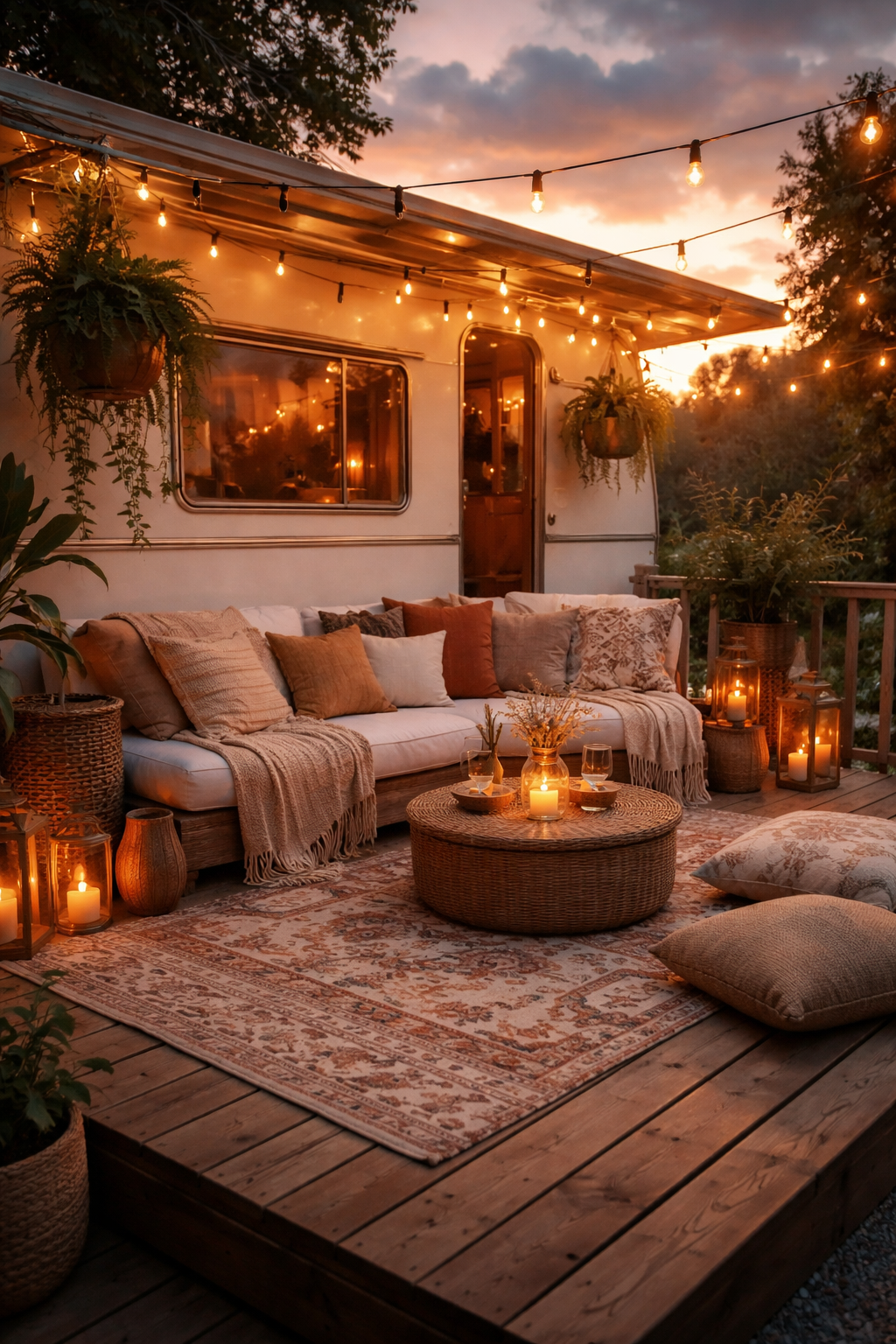
An RV deck should feel like an extension of your living space, not just a functional platform. Comfort and style play a major role in achieving this.
Outdoor furniture should be chosen carefully to match the scale of your deck. Compact chairs, foldable loungers, or built-in seating options work best in smaller areas. Cushions and textiles can add warmth and personality without taking up extra space.
Shade is another essential element. A simple canopy, retractable awning, or fabric cover can protect against sun exposure while making the deck more usable throughout the day.
Adding greenery brings life to your deck. Potted plants, vertical gardens, or hanging planters create a natural, inviting atmosphere. Even a few small plants can make a significant difference in how the space feels.
Decorative touches such as lanterns, rugs, and subtle accents help personalize the area. These elements should be chosen with mobility in mind, ensuring they are easy to pack and transport.
Safety and Stability Considerations
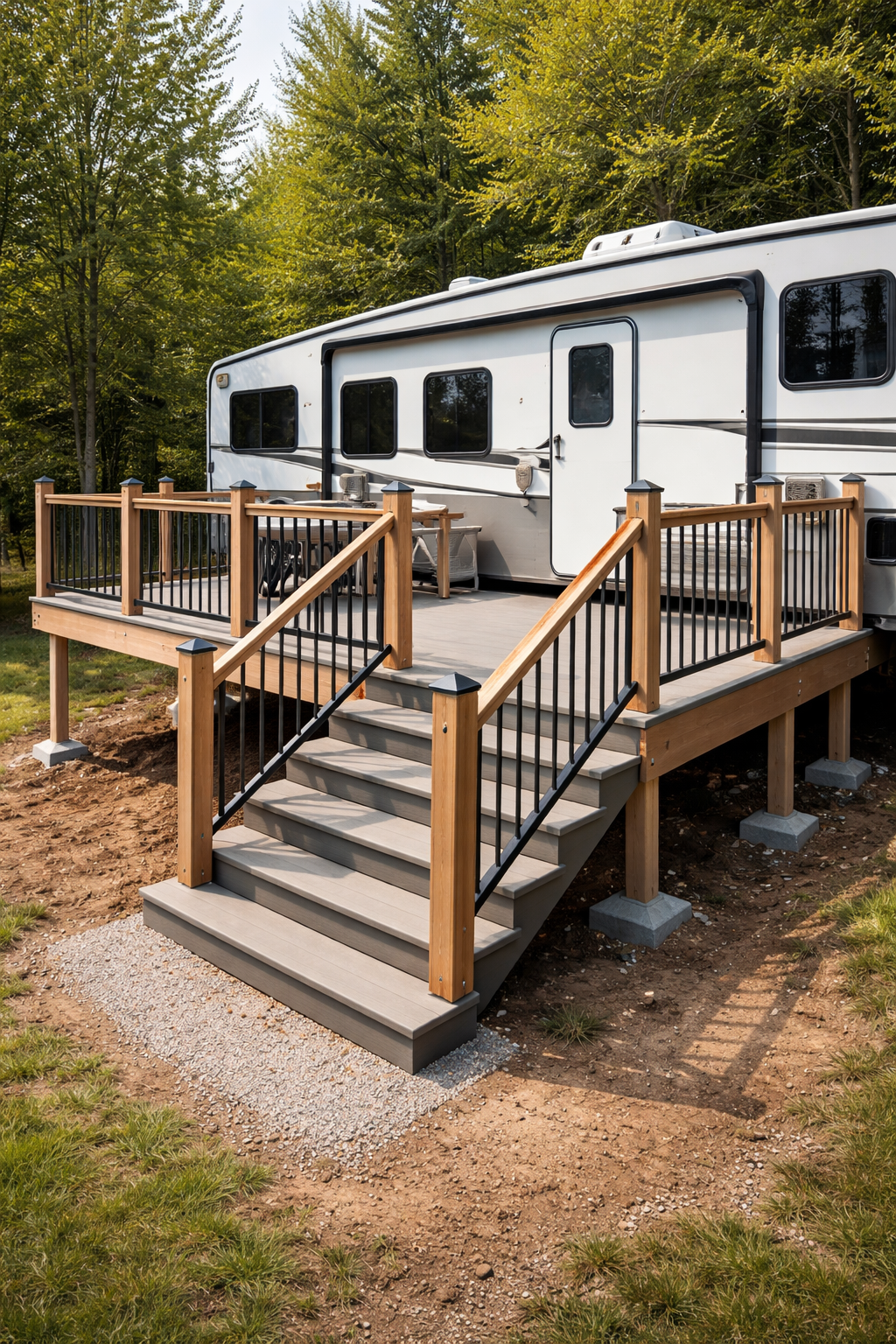
While creativity is important, safety should never be overlooked. A well-built RV deck must be stable, secure, and suitable for various conditions.
Ensure the deck is level and properly supported, especially on uneven ground. Adjustable supports or leveling blocks can help maintain balance.
Railings may be necessary depending on the height of the deck. They provide added safety, particularly for families or older individuals.
Slip-resistant surfaces are also important. Outdoor conditions can make decks slippery, so choosing textured materials or adding anti-slip coatings can reduce risk.
Weight capacity should always be considered. The deck must be able to support furniture, people, and additional elements without compromising stability.
Portable vs. Semi-Permanent Deck Solutions
Different RV lifestyles require different deck approaches. Some travelers move frequently, while others stay in one place for extended periods.
Portable decks are ideal for those who relocate often. These designs focus on quick assembly and easy transportation. Lightweight materials and modular components make setup efficient without requiring tools or heavy lifting.
Semi-permanent decks, on the other hand, are better suited for long-term stays. They allow for more customization and durability. These decks can include additional features such as railings, stairs, and built-in furniture.
Choosing between these options depends on your travel habits. The goal is to find a balance between convenience and functionality.
Adapting RV Deck Ideas for Different Environments
Your surroundings play a significant role in how your deck should be designed.
In forested or natural settings, blending your deck with the environment creates a cohesive look. Using natural materials and earthy tones helps the structure feel integrated rather than intrusive.
In beach or coastal areas, weather resistance becomes more important. Materials that withstand moisture and salt exposure should be prioritized.
For urban or RV park settings, maximizing privacy can be a key consideration. Adding screens, curtains, or partial enclosures can create a more secluded and comfortable space.
Each environment presents unique challenges and opportunities, and adapting your deck accordingly ensures long-term satisfaction.
Maintaining Your RV Deck
Maintenance is often overlooked but essential for keeping your deck functional and attractive.
Regular cleaning prevents buildup of dirt and debris. Simple sweeping and occasional washing can extend the life of your materials.
Wooden decks may require sealing or treatment to protect against weather damage. Composite or synthetic materials typically need less upkeep but should still be inspected regularly.
Checking for structural integrity is also important. Loose boards, unstable supports, or worn components should be addressed promptly to maintain safety.
By investing a little time in maintenance, you ensure your deck remains a reliable part of your RV setup.
Frequently Asked Questions (FAQ)
What is the best material for an RV deck?
The best material depends on your needs. Wood is affordable and versatile, while composite decking offers durability and low maintenance. For portability, lightweight panels or outdoor tiles are excellent options.
Can I build a deck for my RV if I travel frequently?
Yes, portable and modular designs are specifically created for travelers. These decks can be assembled and disassembled quickly, making them ideal for changing locations.
Do I need permission to build an RV deck?
In some areas, especially RV parks or regulated sites, you may need approval. It’s always best to check local rules before building any structure.
How do I make a small RV deck feel bigger?
Use light colors, minimal furniture, and multi-functional designs. Keeping the space uncluttered and adding vertical elements can create the illusion of a larger area.
Is an RV deck safe for all weather conditions?
With proper materials and construction, an RV deck can handle various weather conditions. Choosing weather-resistant materials and ensuring stability are key factors.
Can I add utilities like lighting or power to my deck?
Yes, many RV owners incorporate lighting and even small power setups. Battery-powered or solar options are popular for maintaining flexibility and safety.
Conclusion
RV deck ideas are not just about adding extra space—they’re about enhancing how you live, relax, and experience the outdoors. Whether you’re working with a compact setup or have room to expand, the right deck design can transform your RV lifestyle in meaningful ways.
By focusing on smart layouts, multi-functional features, and adaptable materials, you can create a deck that feels both practical and personal. It becomes a place where comfort meets creativity, where small spaces feel bigger, and where every moment outdoors is more enjoyable.
Ultimately, the best RV deck is one that aligns with your travel style and meets your everyday needs. With thoughtful planning and a touch of creativity, even the simplest setup can become a space that truly feels like home—no matter where the road takes you.


