
Last Updated on April 9, 2026 by John Tim
There’s something instantly calming about the beach. The soft tones of sand, the gentle rhythm of waves, and the fresh, airy atmosphere create a feeling many people wish they could carry with them everywhere. That’s exactly where the idea of a beachy car interior comes in. Instead of limiting that relaxed coastal vibe to vacations, you can bring it into your daily drive and transform your car into a personal escape.
Designing a beachy car interior is not just about aesthetics. It’s about creating an environment that feels light, refreshing, and functional at the same time. Whether you’re a regular beachgoer, a road trip enthusiast, or simply someone who loves coastal design, the right choices can turn your car into a space that reflects both style and comfort.
This guide explores how to design the ultimate beachy car interior with a focus on practicality, durability, and visual appeal. Every detail matters, from colors and materials to storage and finishing touches, and when done correctly, the result is both beautiful and highly usable.
What Defines a Beachy Car Interior?
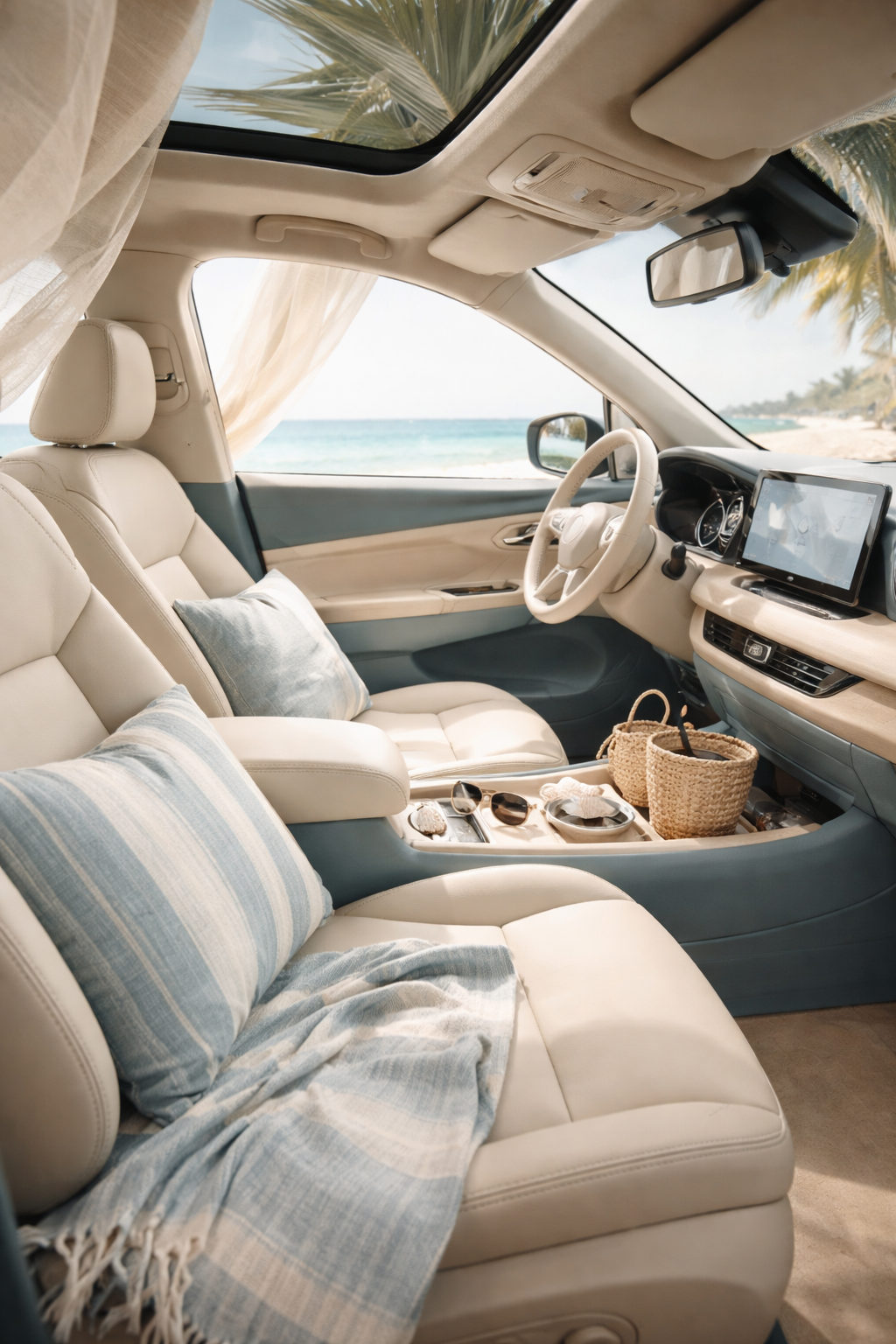
A beachy car interior is inspired by coastal environments and designed to evoke a sense of openness and calm. It typically incorporates light colors, natural textures, and a clean, uncluttered layout. The goal is to recreate the feeling of being near the ocean without compromising the functionality of your vehicle.
The essence of this design lies in simplicity. Overly complex decorations or heavy materials can disrupt the airy feel that defines a beach-inspired space. Instead, the focus remains on subtle details that collectively create a cohesive look.
Soft whites, sandy beiges, ocean blues, and muted greens are commonly used to reflect the natural palette of the beach. These tones not only enhance the visual appeal but also help keep the interior feeling bright and spacious.
Choosing the Right Color Palette for a Coastal Feel
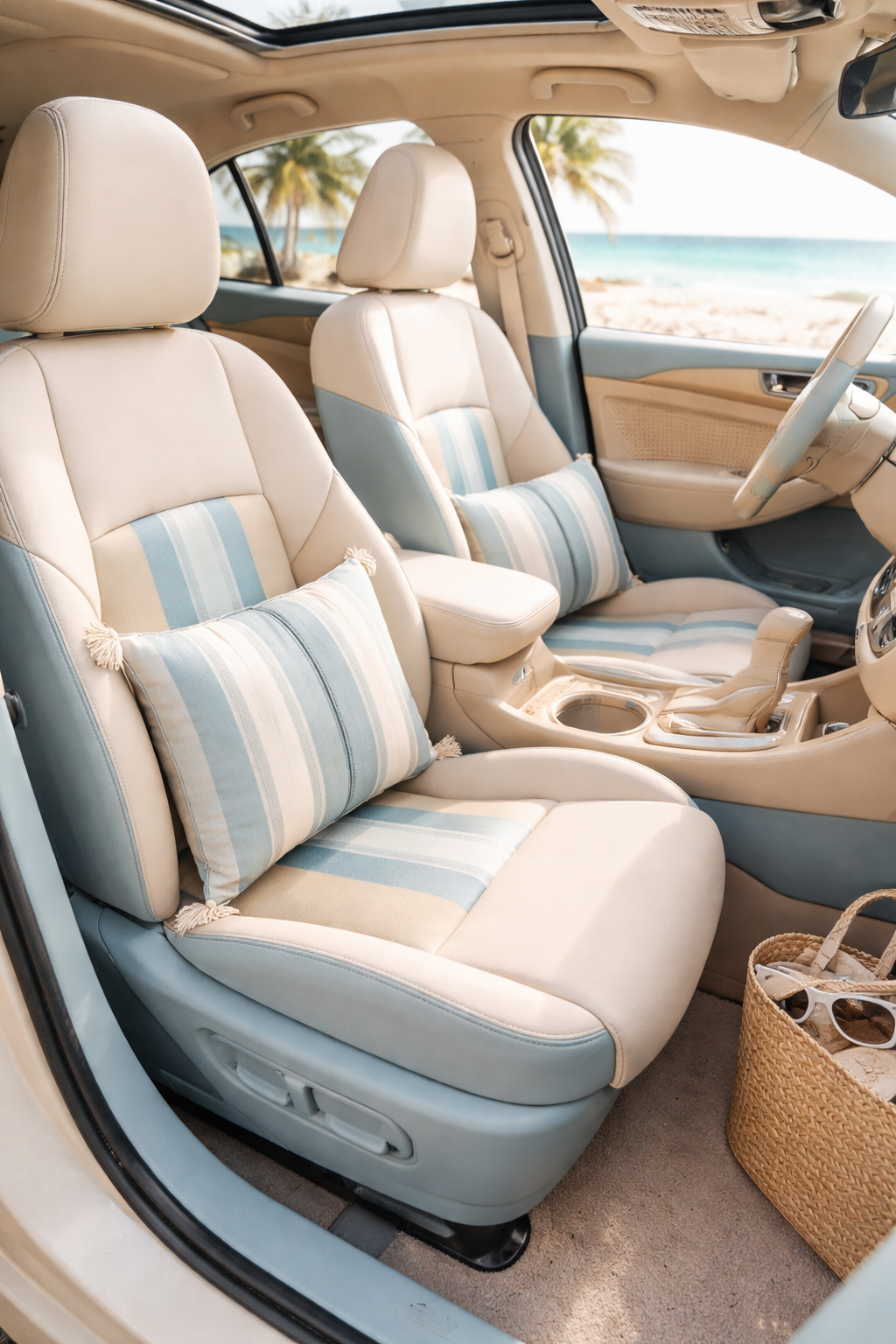
Color is one of the most powerful elements when designing a beachy car interior. It sets the mood and defines the overall aesthetic of the space.
Light and neutral tones form the foundation of a coastal-inspired design. Shades of beige, cream, and off-white mimic the look of sand, while soft blues and aquas bring in the essence of the sea. These colors work together to create a soothing and cohesive environment.
It’s important to avoid overly dark or heavy colors, as they can make the interior feel confined and disconnected from the beach theme. Instead, subtle contrasts can be introduced through accents, such as stitching, trims, or small accessories.
Maintaining balance is key. Too many colors can feel overwhelming, while a well-coordinated palette enhances the calm and inviting atmosphere.
Selecting Materials That Match Style and Function
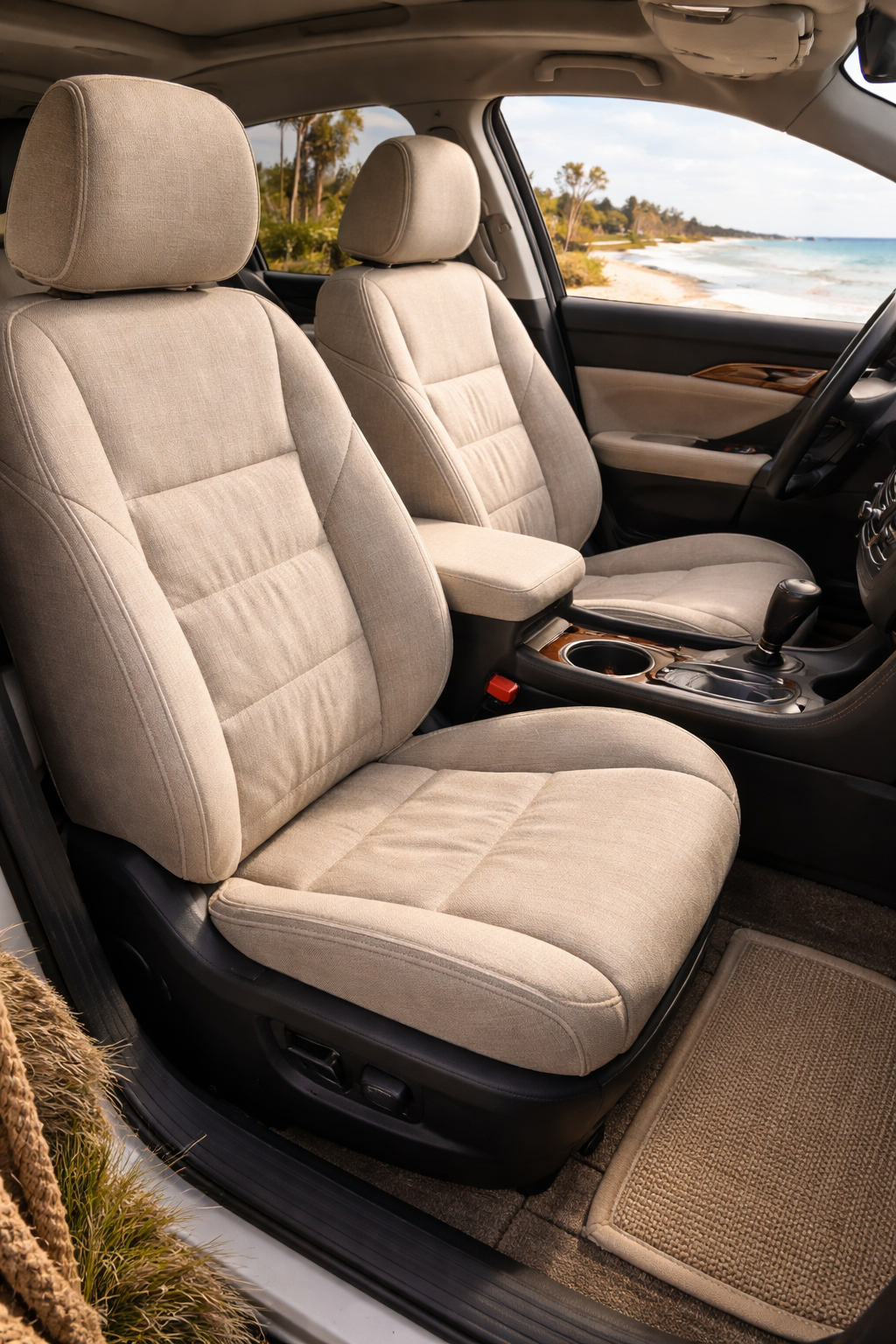
A successful beachy car interior is not just about how it looks but also how it performs. The materials you choose should be both visually appealing and practical, especially if your car frequently encounters sand, moisture, or outdoor elements.
Natural textures play a significant role in achieving a coastal aesthetic. Fabrics that resemble linen or cotton can create a relaxed and breathable feel. At the same time, durability should not be overlooked. Materials that are easy to clean and resistant to wear are essential for maintaining the look over time.
Water-resistant seat covers and floor mats are particularly useful for beach environments. They help protect the interior while keeping it aligned with the overall theme. The combination of style and resilience ensures that your design remains functional in real-world conditions.
Creating an Open and Airy Layout
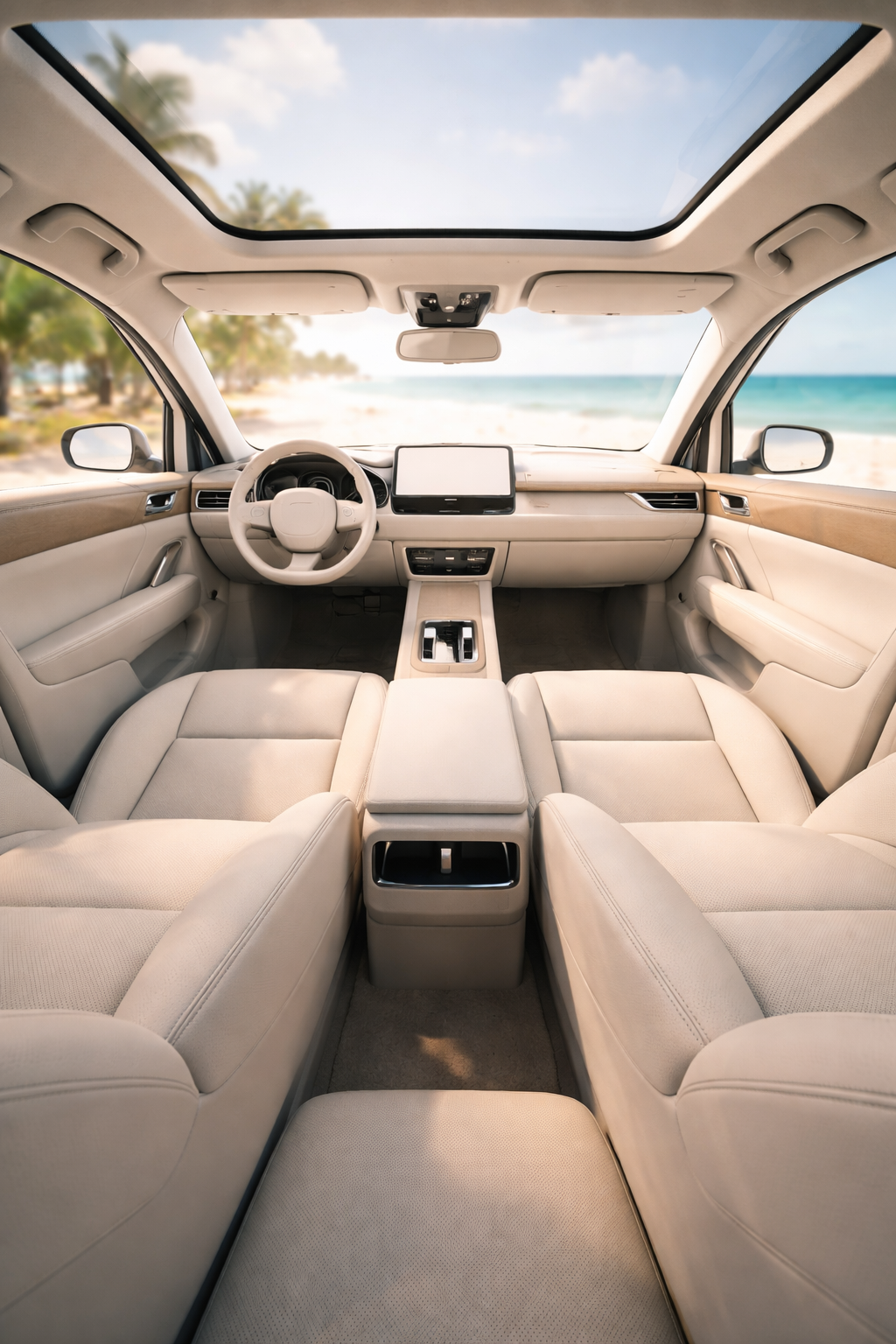
One of the defining characteristics of a beachy car interior is the sense of openness. Even in a compact vehicle, thoughtful design choices can make the space feel larger and more inviting.
Decluttering is the first step toward achieving this effect. Removing unnecessary items and keeping surfaces clean instantly enhances the visual flow of the interior. Organized storage solutions help maintain this simplicity without sacrificing convenience.
Lighting also plays an important role. Natural light, when available, enhances the brightness of the interior and highlights the chosen color palette. Clean windows and minimal obstructions allow light to move freely, reinforcing the airy atmosphere.
The arrangement of elements should feel intentional and balanced. Each component should serve a purpose while contributing to the overall aesthetic.
Incorporating Coastal-Inspired Accessories
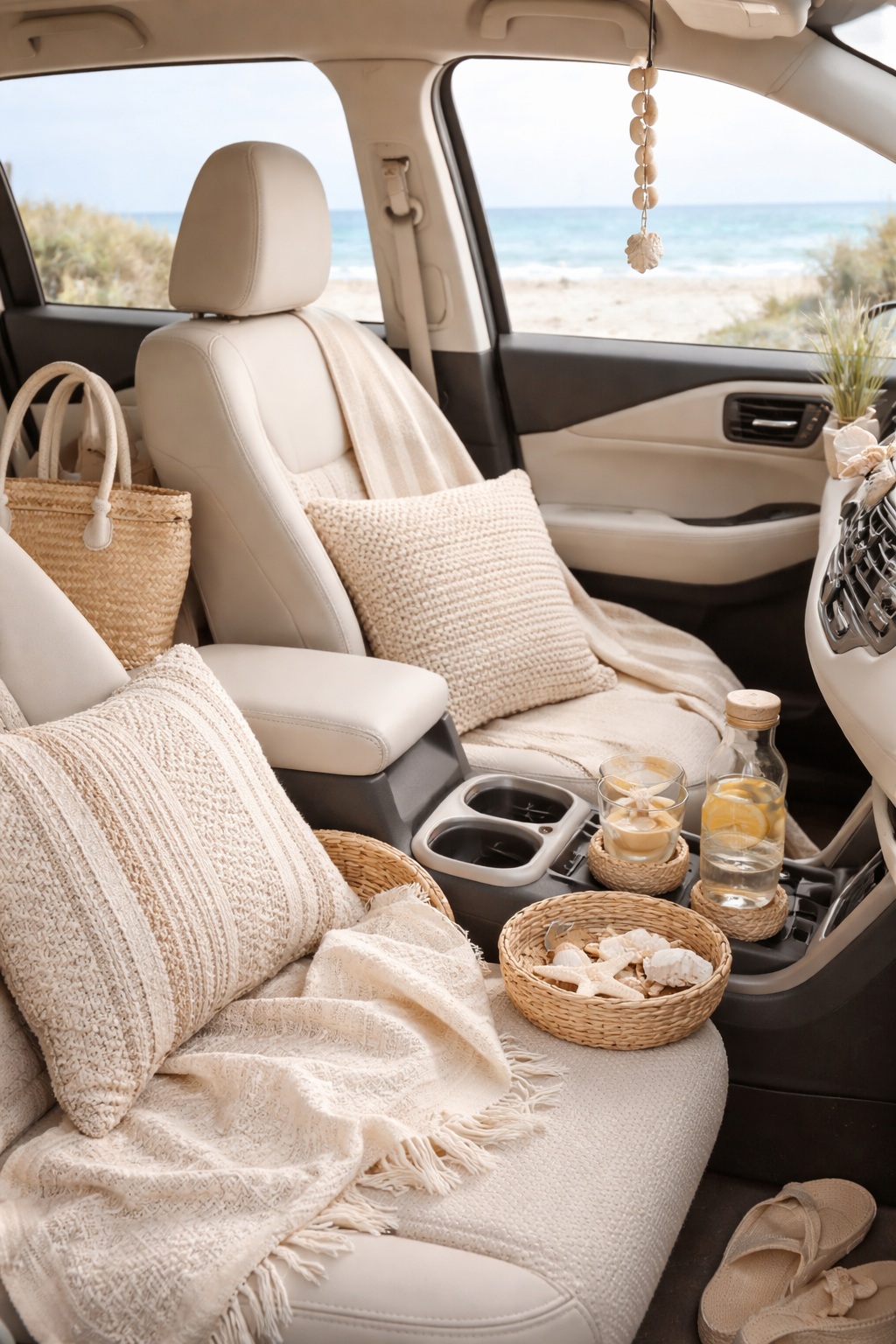
Accessories bring personality to a beachy car interior and help tie the design together. However, subtlety is essential. Overloading the space with decorative items can disrupt the clean and relaxed look.
Thoughtfully chosen accents can make a significant impact. Textured cushions, soft throws, or small decorative elements inspired by the ocean can enhance the theme without overwhelming the space. The key is to select items that complement the overall design rather than compete with it.
Even small details, such as steering wheel covers or seatbelt pads in coastal tones, can contribute to a cohesive appearance. These additions should feel natural and integrated rather than forced.
Managing Sand, Moisture, and Everyday Wear
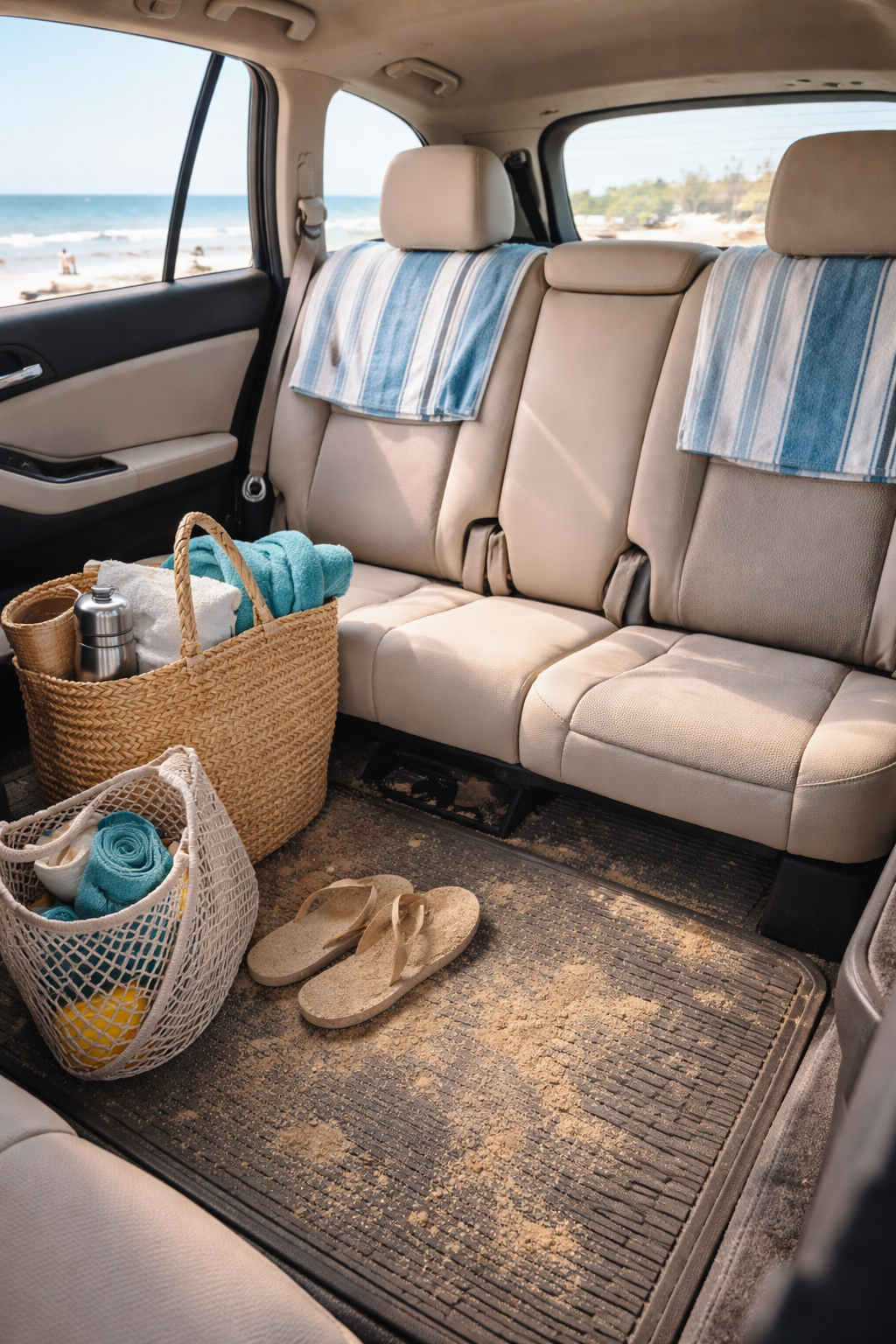
A beachy car interior must be designed with real-life use in mind. Sand, water, and frequent use can quickly affect the condition of your vehicle if not properly managed.
Preventive measures are essential. Using protective mats and covers helps minimize the impact of sand and moisture. Regular cleaning routines also play a crucial role in maintaining the appearance and hygiene of the interior.
It’s helpful to create a system for handling beach-related items. Keeping towels, bags, or other essentials organized ensures that the interior remains clean and functional. This approach allows you to enjoy the beach lifestyle without compromising the condition of your car.
Durability and ease of maintenance should always be considered alongside visual appeal.
Balancing Style with Practical Storage
Storage is often overlooked in design-focused discussions, but it is a critical component of any well-planned interior. A beachy car interior should feel spacious, yet it still needs to accommodate everyday items.
The key is to integrate storage solutions seamlessly into the design. Hidden compartments, organizers, and compact storage options can help keep items out of sight while maintaining accessibility.
The goal is not to eliminate storage but to make it unobtrusive. When everything has a designated place, the interior remains tidy and visually appealing. This balance between style and functionality is what makes a design truly effective.
Personalizing Your Beachy Car Interior
While there are common principles that define a beachy car interior, personal touches are what make it unique. Your preferences, lifestyle, and experiences should influence the final design.
Some people may prefer a minimal approach with subtle coastal hints, while others might embrace a more expressive style. The key is to ensure that all elements work together harmoniously.
Personalization can be achieved through color choices, materials, and small design details. The aim is to create a space that feels authentic and enjoyable every time you step inside your car.
Maintaining the Look Over Time
Consistency is essential for preserving the beauty of your beachy car interior. Without regular care, even the most well-designed space can lose its appeal.
Routine cleaning helps prevent the buildup of sand and dirt. Gentle maintenance ensures that materials remain in good condition and colors stay vibrant. It’s also important to periodically reassess your setup and make adjustments as needed.
Seasonal changes or evolving needs may require small updates to your interior. Staying flexible allows you to maintain both functionality and style over time.
FAQs About Beachy Car Interior
What is a beachy car interior?
A beachy car interior is a design style inspired by coastal environments, featuring light colors, natural textures, and a clean, airy layout that creates a relaxed and refreshing atmosphere.
How do I keep my car clean with a beachy interior?
Regular cleaning, protective mats, and organized storage help manage sand and moisture. Choosing easy-to-clean materials also makes maintenance simpler.
What colors work best for a beachy car interior?
Soft neutrals like beige, cream, and white combined with ocean-inspired shades such as light blue and aqua create a balanced and calming look.
Can I create a beachy car interior on a budget?
Yes, small changes like seat covers, accessories, and color coordination can significantly transform your interior without requiring major investment.
Is a beachy car interior practical for daily use?
With the right materials and organization, it can be both stylish and highly practical, especially if designed with durability and maintenance in mind.
Conclusion
Designing a beachy car interior is about more than just appearance. It is a thoughtful blend of style, comfort, and practicality that brings the calming essence of the coast into your everyday life. By focusing on light color palettes, functional materials, and an organized layout, you can create a space that feels both inviting and efficient.
The beauty of this approach lies in its flexibility. Whether you prefer a subtle coastal influence or a more expressive design, the principles remain the same. Simplicity, balance, and attention to detail guide every decision.
When done right, a beachy car interior becomes more than just a design choice. It transforms your car into a personal retreat, offering a sense of relaxation and enjoyment with every drive.


