Last Updated on April 7, 2026 by John Tim
Car camping has quietly transformed from a minimalist, budget travel hack into a lifestyle that blends freedom, comfort, and adventure. Whether you’re escaping for a weekend or planning an extended road trip, having the right car camping setup can completely change your experience. Instead of feeling cramped or unprepared, your vehicle becomes a functional, cozy retreat that moves with you.
This guide is designed to help you create a setup that feels intentional rather than improvised. It combines practical experience with thoughtful planning so you can sleep better, stay organized, and enjoy the journey without constant adjustments. If you’ve ever wondered how to turn your car into a comfortable home on wheels, you’re in the right place.
Understanding the Foundation of a Car Camping Setup
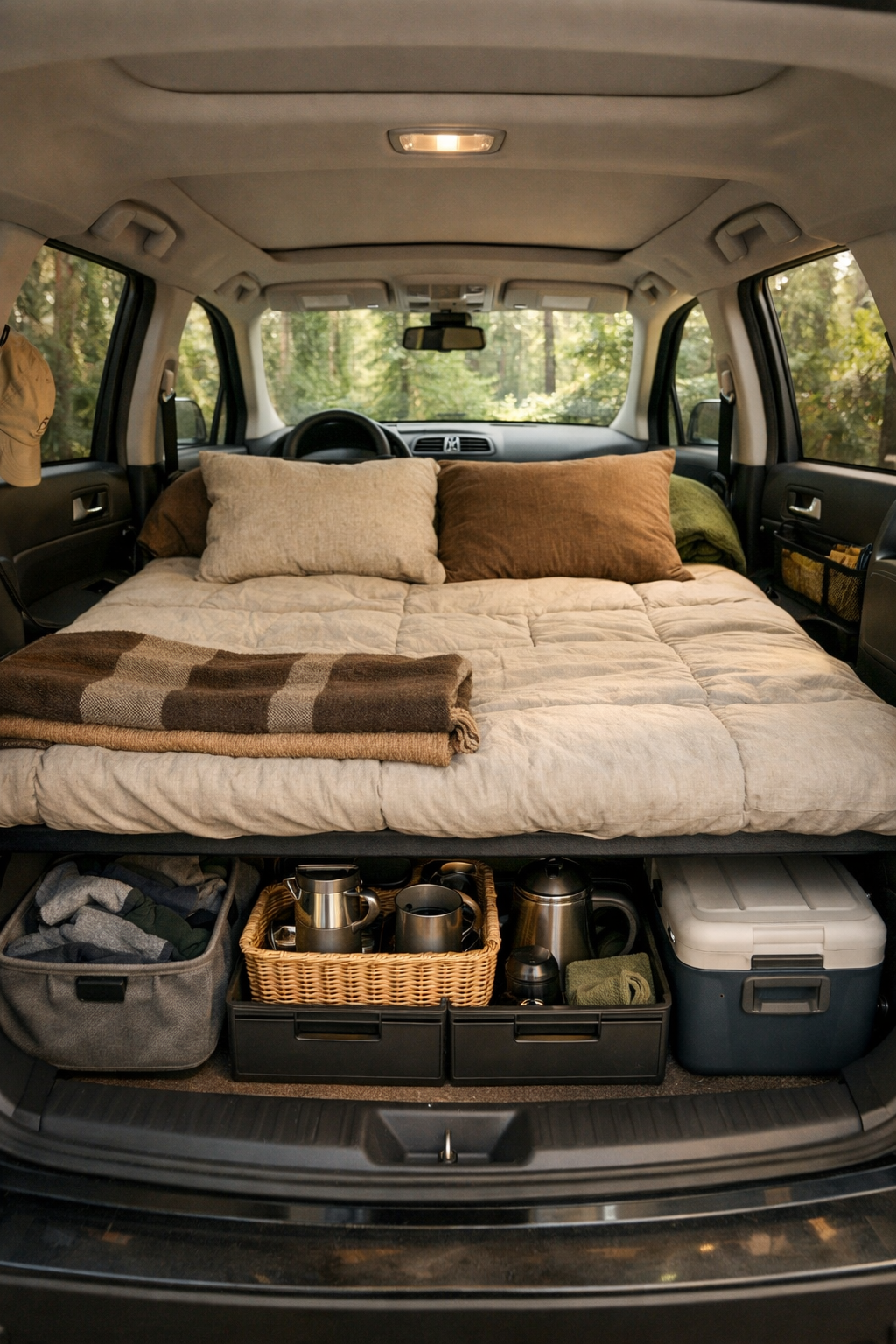
A successful car camping setup begins with understanding your space and your needs. Every vehicle is different, and what works for a large SUV might not translate directly to a compact sedan. The goal is not to replicate a traditional camping experience but to adapt your setup to your car’s limitations and strengths.
Think of your vehicle as a small, multi-purpose room. During the day, it functions as storage and transportation. At night, it becomes your sleeping area. This dual purpose means your setup must be flexible, easy to rearrange, and efficient in how it uses space.
Climate, trip duration, and personal comfort preferences also play a role. Someone camping in cooler mountain regions will prioritize insulation and warmth, while someone traveling through warmer areas will focus on airflow and ventilation. Understanding these factors early will help you build a setup that works consistently rather than one that needs constant fixing.
Choosing the Right Sleeping Arrangement
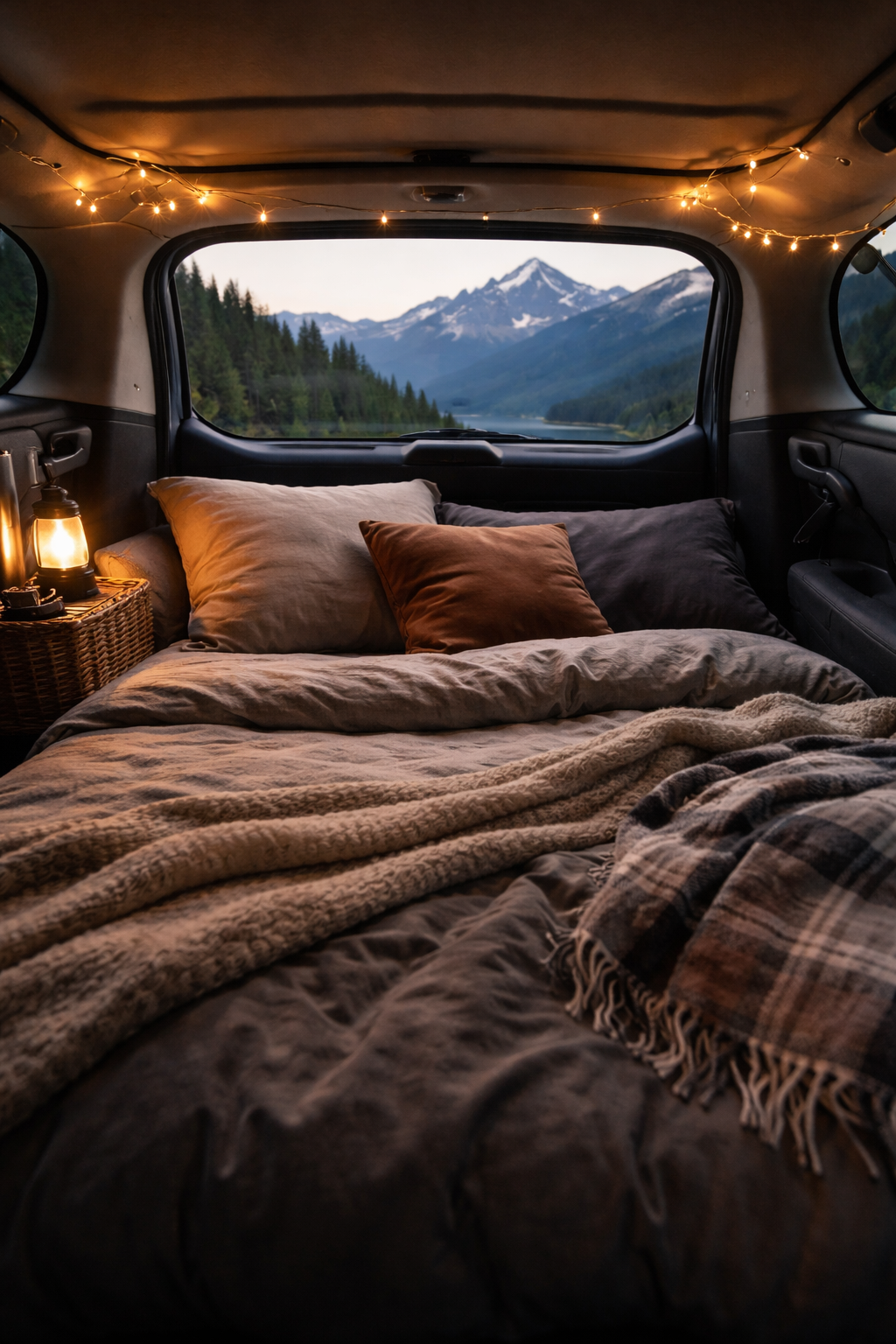
Comfortable sleep is the foundation of any good car camping experience. Without it, even the most scenic trip can feel exhausting. The key is to create a flat, supportive, and insulated sleeping surface inside your vehicle.
Many people start with the simplest approach: folding down the back seats and placing a sleeping pad or mattress across the space. However, not all cars provide a perfectly level surface. In such cases, small adjustments like leveling with foam or creating a simple platform can make a noticeable difference.
Mattress thickness matters more than most beginners expect. A thin layer may feel fine for a short nap but can lead to discomfort overnight. Memory foam or inflatable camping mattresses designed specifically for cars often strike a good balance between comfort and portability.
Bedding should also be chosen carefully. Regular blankets work, but temperature-specific sleeping bags or layered bedding systems provide more control. A proper pillow can elevate your sleep quality significantly, making your setup feel more like a bed than a temporary solution.
Organizing Your Space for Efficiency
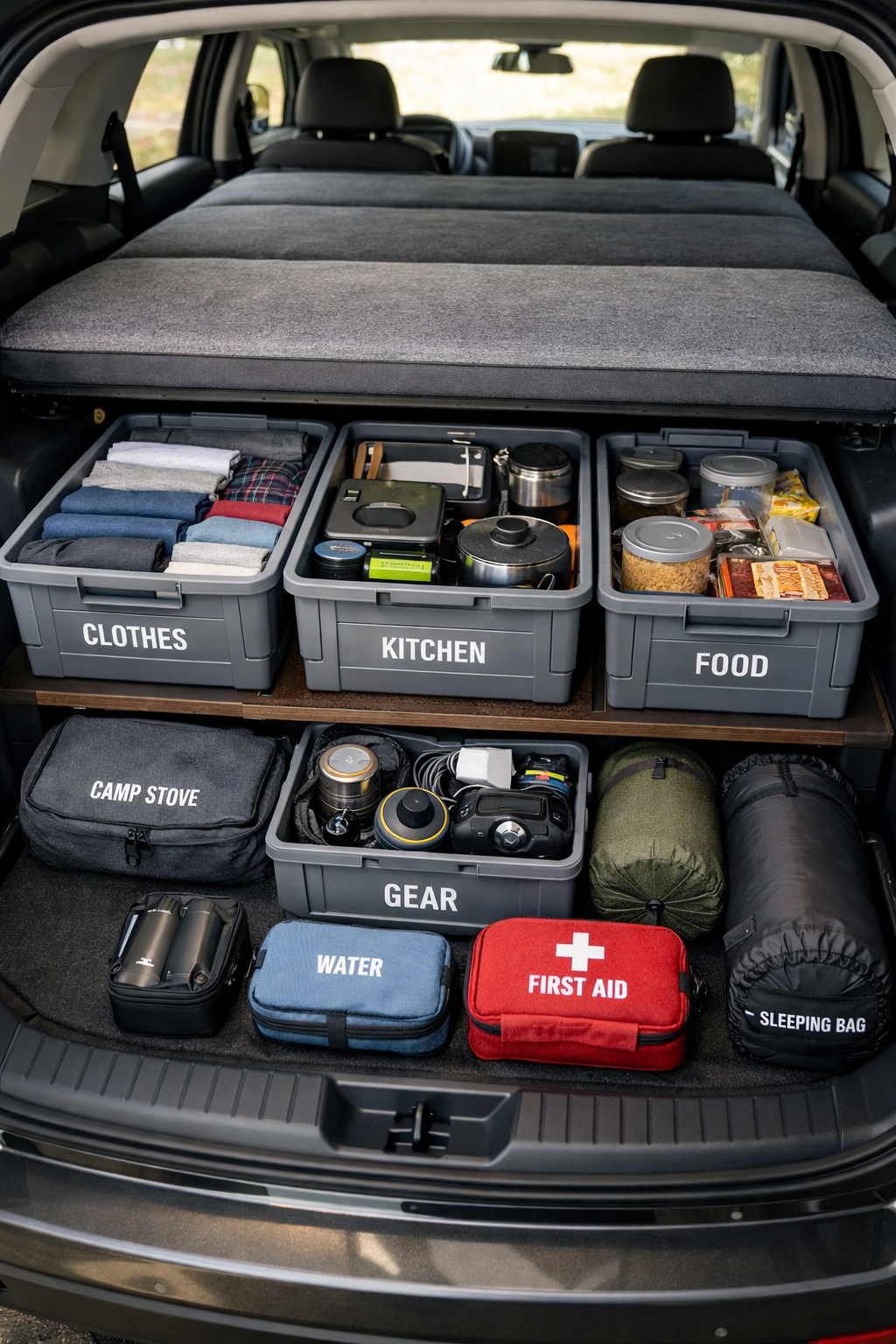
A cluttered car quickly turns a relaxing trip into a stressful one. Organization is not just about neatness; it directly affects how easily you can access your essentials and transition between day and night setups.
The best car camping setup uses vertical and hidden spaces effectively. Under-bed storage is one of the most valuable areas in your vehicle. By using bins or soft storage bags, you can keep clothing, cooking gear, and supplies out of sight while still easily accessible.
Front seats often become secondary storage zones at night. Items that you don’t need while sleeping can be moved there, freeing up your main sleeping area. During the day, everything should have a designated place to avoid constant rearranging.
Consistency is key. When every item has a specific spot, you spend less time searching and more time enjoying your surroundings. Over time, this system becomes second nature and makes your setup feel intuitive rather than improvised.
Managing Temperature and Ventilation
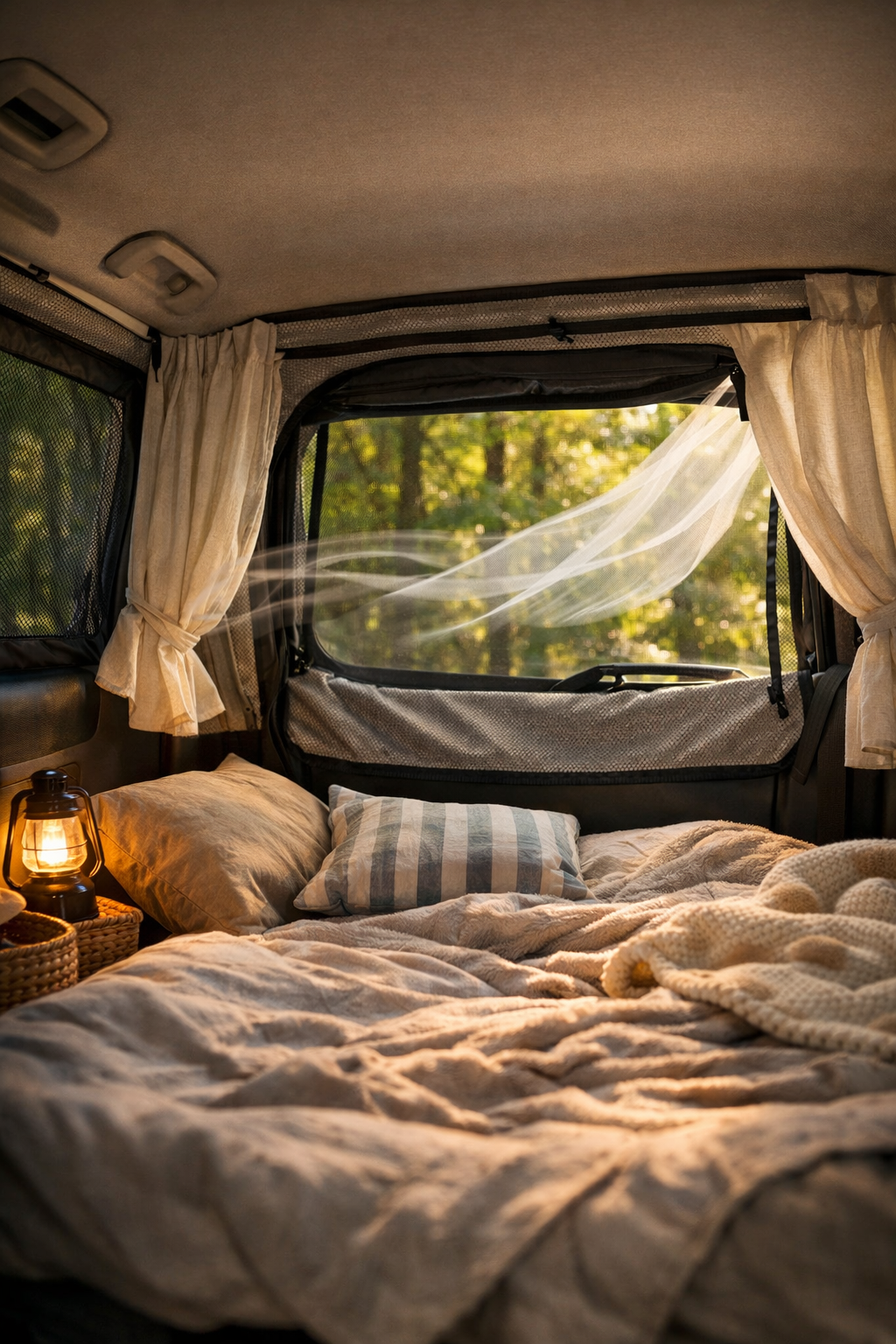
Temperature control is one of the most overlooked aspects of car camping, yet it has a huge impact on comfort. Unlike tents, cars can trap heat quickly during the day and lose warmth rapidly at night.
Ventilation is essential, especially in warmer conditions. Slightly opening windows can help regulate airflow, but this needs to be done thoughtfully for both safety and weather protection. Simple additions like window covers or breathable screens can improve airflow while keeping insects out.
In colder environments, insulation becomes the priority. Reflective materials, layered bedding, and even wearing thermal clothing can help retain body heat. It’s important to understand that cars are not designed to maintain stable temperatures, so your setup should compensate for these fluctuations.
Balancing ventilation and insulation ensures that your sleeping environment remains comfortable regardless of external conditions.
Privacy and Comfort Enhancements
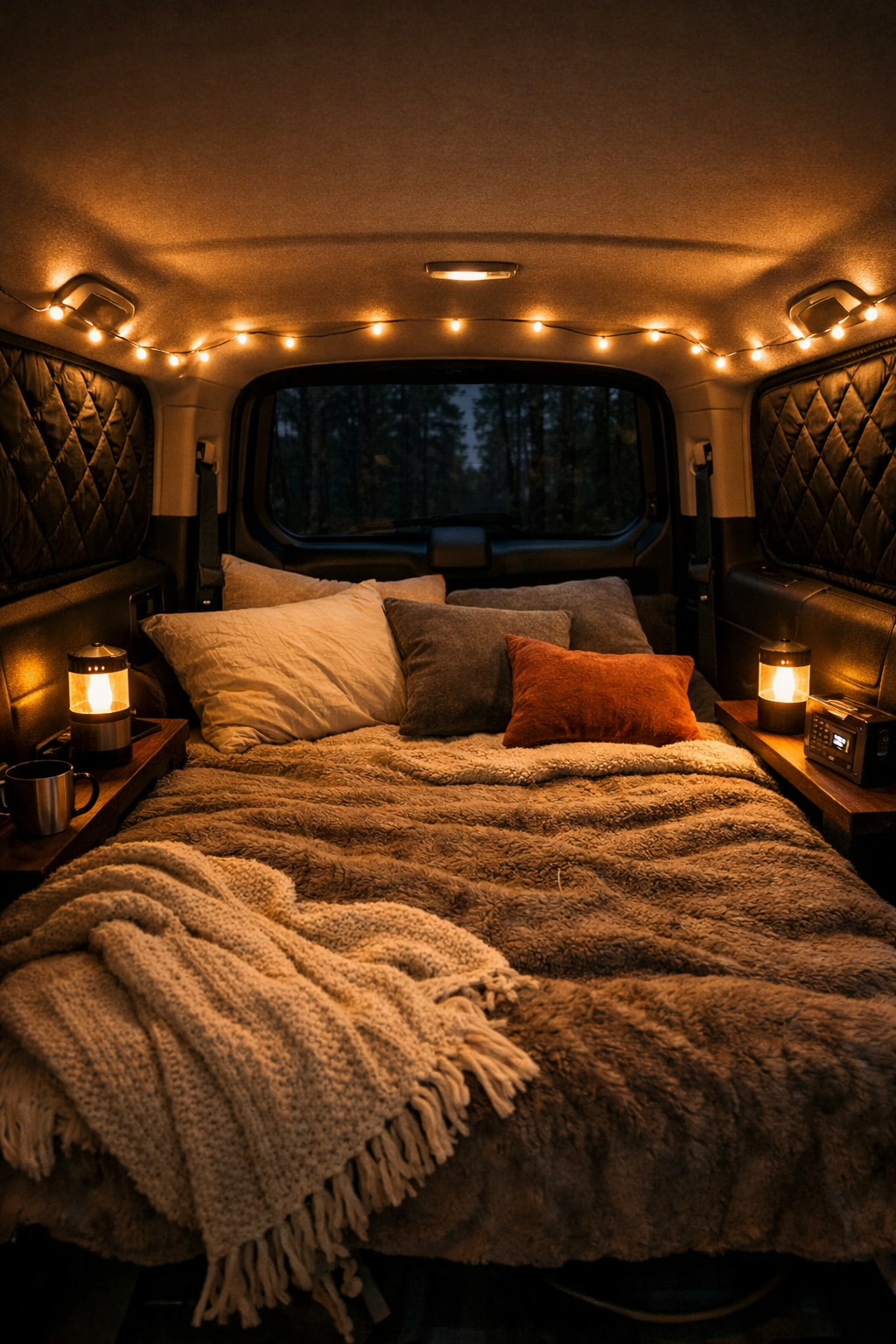
Privacy transforms your car from a temporary shelter into a personal space. Without it, even a well-designed car camping setup can feel exposed and uncomfortable.
Window coverings are one of the simplest ways to create privacy. They also help regulate light and temperature, making your sleeping environment more controlled. Whether you use custom-fit shades or improvised solutions, the goal is to create a sense of enclosure.
Lighting also plays a role in comfort. Soft, low-intensity lighting can make your space feel more inviting without draining your vehicle’s battery. It also helps during nighttime organization, allowing you to find items without turning on harsh interior lights.
Small personal touches, such as familiar bedding or compact décor, can make your setup feel less temporary. These details might seem minor, but they contribute to a more relaxed and enjoyable experience.
Cooking and Food Storage Solutions
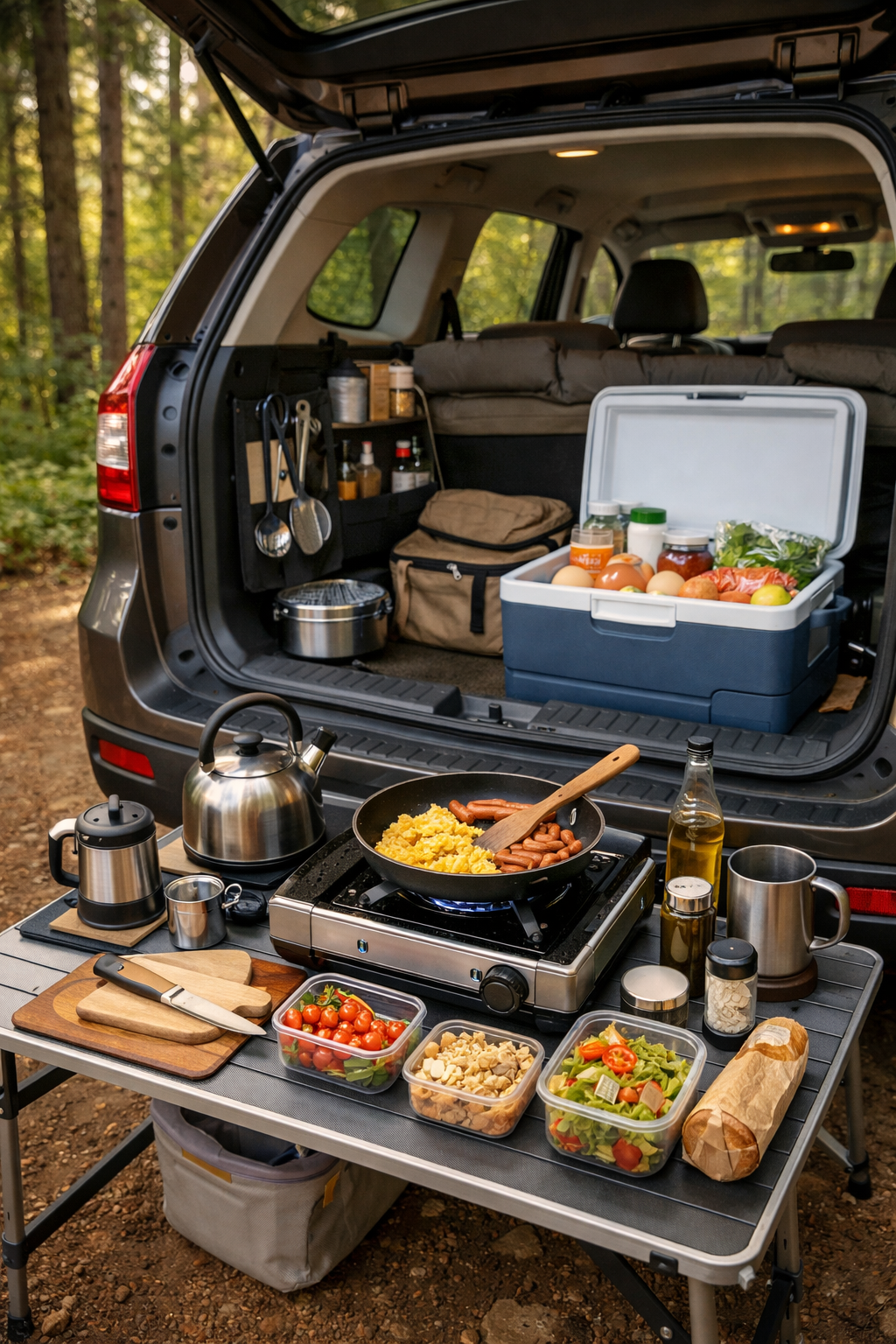
Food is a central part of any travel experience, and your car camping setup should support simple, efficient meal preparation. The goal is not to recreate a full kitchen but to enable practical cooking and easy access to food.
Portable stoves are commonly used for basic cooking, but even simple setups can work well if planned properly. The key is to keep your cooking area separate from your sleeping space to maintain cleanliness and organization.
Food storage should prioritize freshness and accessibility. Cooler boxes or insulated bags can keep perishable items safe for a limited time. Dry food should be stored in sealed containers to prevent spills and contamination.
Planning meals in advance can reduce the amount of equipment you need. Simple, one-pan meals or ready-to-eat options can make your experience smoother, especially on shorter trips.
Power and Charging Essentials
Modern car camping often involves some level of technology, whether it’s charging your phone, running small devices, or using portable lights. Managing power effectively ensures that your trip remains convenient without draining your car battery.
Portable power stations or battery packs provide a reliable source of energy without relying solely on your vehicle. These can be charged while driving and used when parked, offering flexibility and peace of mind.
Charging cables and adapters should be organized and easily accessible. Losing access to power can quickly become frustrating, especially during longer trips.
While technology can enhance your experience, it’s important to balance usage to avoid unnecessary complications. A well-planned power setup supports your needs without becoming overly complex.
Safety Considerations for Car Camping
Safety should always be a priority, regardless of how comfortable your setup becomes. A well-thought-out car camping setup includes precautions that protect both you and your belongings.
Choosing safe and legal places to park overnight is essential. Awareness of your surroundings helps prevent unwanted situations and ensures a more relaxed experience. Trusting your instincts plays a significant role in making good decisions.
Basic safety items such as a first aid kit, flashlight, and emergency supplies should always be within reach. These items may not be used often, but they provide reassurance and preparedness.
Vehicle maintenance is another critical aspect. Ensuring your car is in good condition before your trip reduces the risk of unexpected issues and keeps your journey smooth.
Adapting Your Setup for Different Trips
No single car camping setup works perfectly for every situation. Flexibility is what allows you to adapt your setup to different destinations, seasons, and trip lengths.
For short trips, simplicity often works best. Minimal gear, quick setup, and easy packing allow you to focus on the experience rather than logistics. For longer trips, additional comfort and storage solutions become more important.
Weather changes can also influence your setup. Being prepared to adjust your bedding, ventilation, or storage approach ensures that you remain comfortable in varying conditions.
Over time, you will refine your setup based on experience. What starts as a basic arrangement can evolve into a personalized system that reflects your travel style and preferences.
Common Mistakes to Avoid
Many beginners approach car camping with either too much gear or too little planning. Both extremes can create challenges that reduce enjoyment.
Overpacking can make your space feel cramped and difficult to manage. On the other hand, underestimating essentials like bedding or storage can lead to discomfort and inconvenience.
Ignoring organization is another common issue. Without a clear system, even a well-equipped setup can become chaotic. Taking the time to plan your layout and storage approach pays off quickly.
Lastly, overlooking comfort can turn an otherwise great trip into a tiring experience. Prioritizing sleep quality, temperature control, and personal space ensures that your setup supports your journey rather than complicates it.
Frequently Asked Questions (FAQ)
What is the best car for a car camping setup?
The best car depends on your needs, but vehicles with fold-flat seats like SUVs, hatchbacks, and minivans are generally more suitable. They offer more space and flexibility for sleeping and storage.
Can you sleep comfortably in a small car?
Yes, with the right adjustments. Using a proper sleeping pad, organizing your space efficiently, and minimizing clutter can make even a small car comfortable for sleeping.
How do you stay safe while car camping?
Choosing safe locations, keeping your doors locked, and having essential safety items nearby are key practices. Awareness of your surroundings also plays an important role.
Do you need special equipment for car camping?
Not necessarily. Many setups start with basic items like blankets, pillows, and storage bins. Over time, you can add specialized gear based on your needs and preferences.
How do you keep your car cool while camping?
Ventilation is essential. Slightly opening windows, using sunshades, and parking in shaded areas can help regulate temperature during warmer conditions.
Is car camping cheaper than traditional camping?
It can be, especially since it eliminates the need for tents and some additional gear. However, costs can vary depending on how much you invest in your setup.
Conclusion
Creating the perfect car camping setup is less about buying the most gear and more about designing a system that works for you. It’s a balance of comfort, organization, and adaptability that transforms your vehicle into a functional and inviting space.
By focusing on sleep quality, efficient storage, temperature management, and safety, you can build a setup that enhances every part of your journey. Over time, your experience will refine your approach, allowing you to travel with confidence and ease.
Car camping offers a unique blend of freedom and simplicity. With the right setup, your car becomes more than just transportation—it becomes a reliable companion that supports your adventures wherever the road takes you.