Last Updated on March 13, 2026 by John Tim
The appeal of tiny house living often stems from a desire for simplicity, sustainability, and freedom from excess. Yet one of the most common concerns potential owners voice is the fear of feeling confined or cramped inside a space that might measure just a few hundred square feet. The reality, drawn from countless real-world examples and thoughtful design practice, is that a tiny house interior can feel surprisingly expansive—sometimes even more open than much larger traditional homes. The secret lies not in adding more square footage but in strategic choices that enhance light, flow, perception, and functionality.
Experienced tiny house dwellers and designers consistently demonstrate that intentional interior design transforms limitations into strengths. By prioritizing openness, clever storage, and visual continuity, even the most compact layouts breathe with ease. This guide explores five core approaches to tiny house interior designs that create that coveted sense of spaciousness. Each draws from proven techniques that maximize every inch while maintaining comfort, style, and livability. Whether you are planning a build, renovating an existing tiny home, or simply dreaming of downsizing, these ideas offer practical inspiration to make your small space feel remarkably big.
Maximizing Natural Light and Views
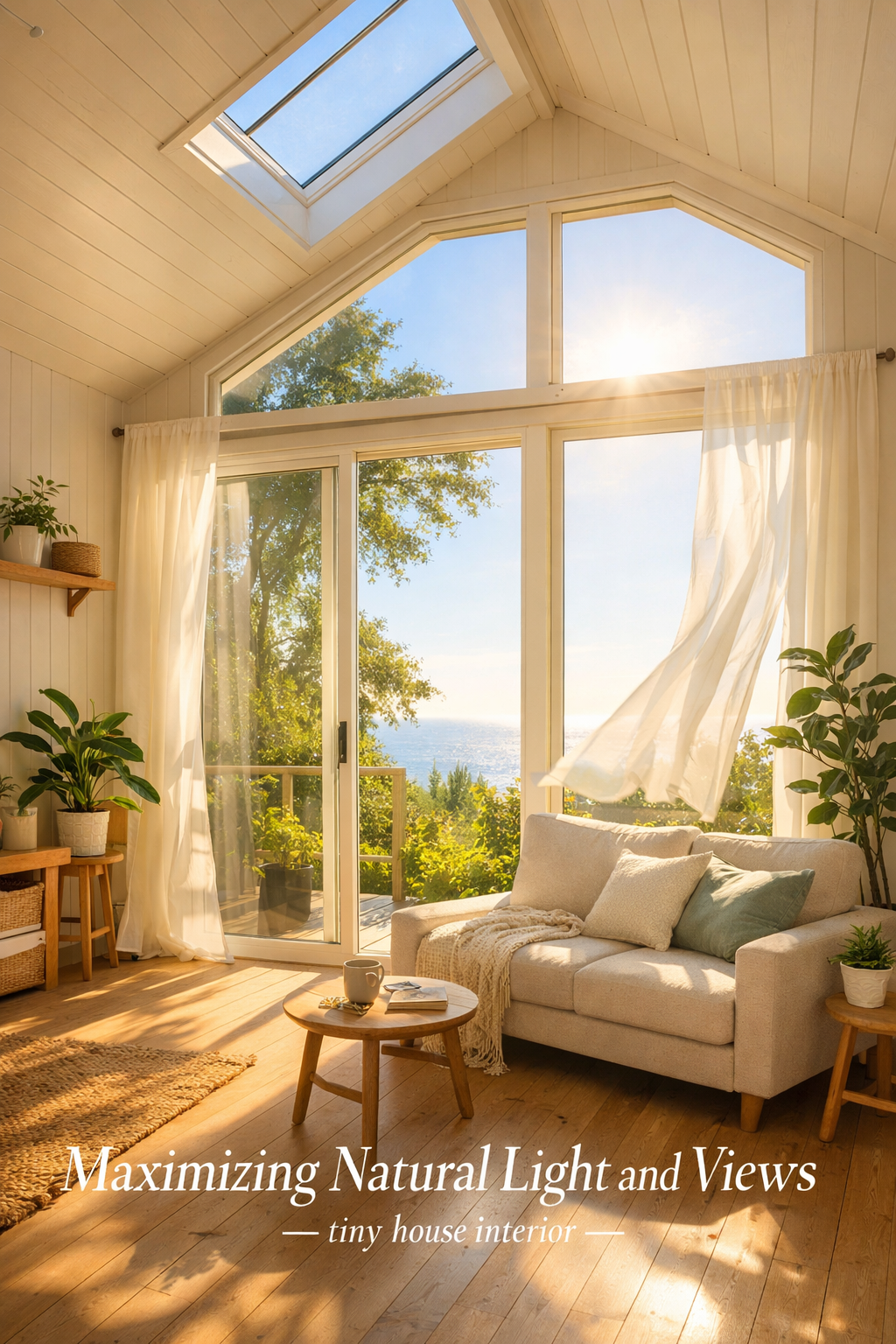
Light is the single most powerful tool for expanding perceived space in a tiny house interior. Large windows, strategically placed skylights, and glass doors draw the eye outward, blurring the boundary between indoors and outdoors. When natural light floods the interior, shadows diminish and surfaces reflect brightness, instantly making rooms feel airier and more generous.
Many successful tiny homes feature oversized windows along at least one long wall, often with minimal framing to preserve views. Skylights above lofts or main living areas introduce overhead light that washes down walls, creating vertical emphasis that lifts the ceiling visually. Light-colored sheer curtains or no treatments at all allow maximum daylight while maintaining privacy where needed.
Positioning living areas to capture the best available views—whether a garden, forest, or open sky—extends the sense of space beyond physical walls. Reflective surfaces near windows, such as glossy countertops or pale flooring, bounce light deeper into the interior. This approach not only brightens the space but also connects residents to the environment, fostering a feeling of expansiveness that counters any sense of enclosure.
Embracing Open Floor Plans and Multi-Functional Zones
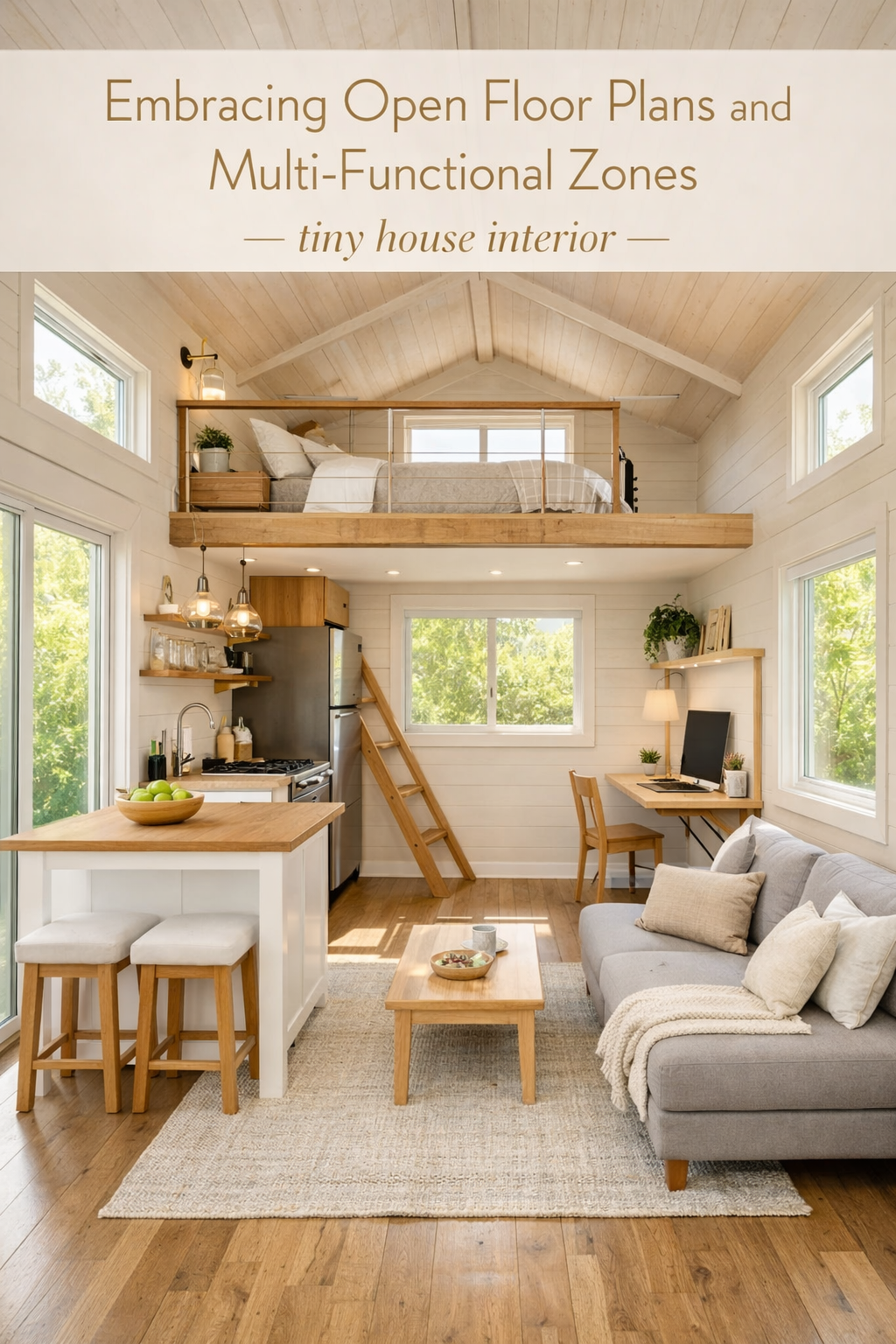
Removing unnecessary interior walls stands as one of the most effective ways to make a tiny house interior feel surprisingly big. An open floor plan allows sight lines to travel uninterrupted from one end of the home to the other, creating a continuous flow that defies the actual footprint.
In practice, this means combining living, dining, and kitchen areas into one cohesive zone with subtle transitions rather than hard divisions. A slim kitchen island or peninsula might serve as both prep space and casual dining spot, while a sofa positioned to face the kitchen keeps conversations flowing naturally. Lofted sleeping areas or fold-down desks maintain privacy without closing off the main level.
Multi-functional zones further enhance openness. A living room couch that converts to a guest bed, or a dining table that folds away when not in use, ensures the space remains adaptable rather than static. By avoiding permanent barriers, these layouts encourage movement and flexibility, making even modest square footage feel generous and inviting.
Strategic Use of Color and Materials
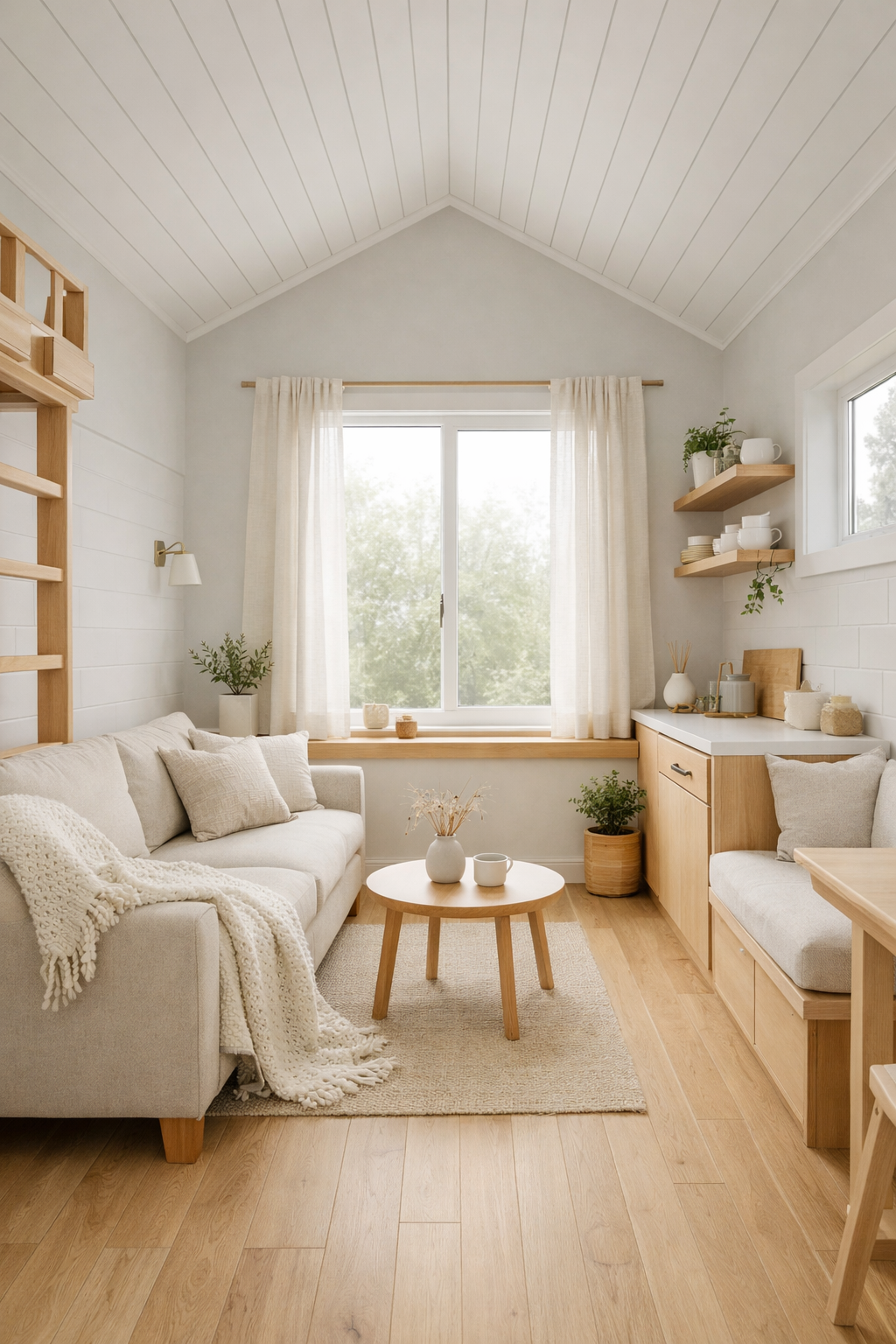
Color choices dramatically influence how spacious a tiny house interior appears. Light, neutral palettes—soft whites, pale grays, warm beiges, and light woods—reflect light generously and create a serene backdrop that visually recedes. These tones prevent the walls from closing in and allow the eye to move freely.
Consistent materials across floors, walls, and ceilings establish continuity that stretches the space. Extending the same hardwood or laminate flooring throughout eliminates visual breaks, while painting trim and ceilings the same color as walls blurs boundaries and adds height. Vertical wood cladding or shiplap installed upward draws attention toward the ceiling, reinforcing a sense of volume.
Accents in slightly deeper tones or natural textures add depth without overwhelming. A single accent wall in muted green or a textured throw introduces personality while keeping the overall scheme light and expansive. The result is a calm, unified environment that feels open and thoughtfully composed rather than confined.
Clever Storage and Furniture Solutions
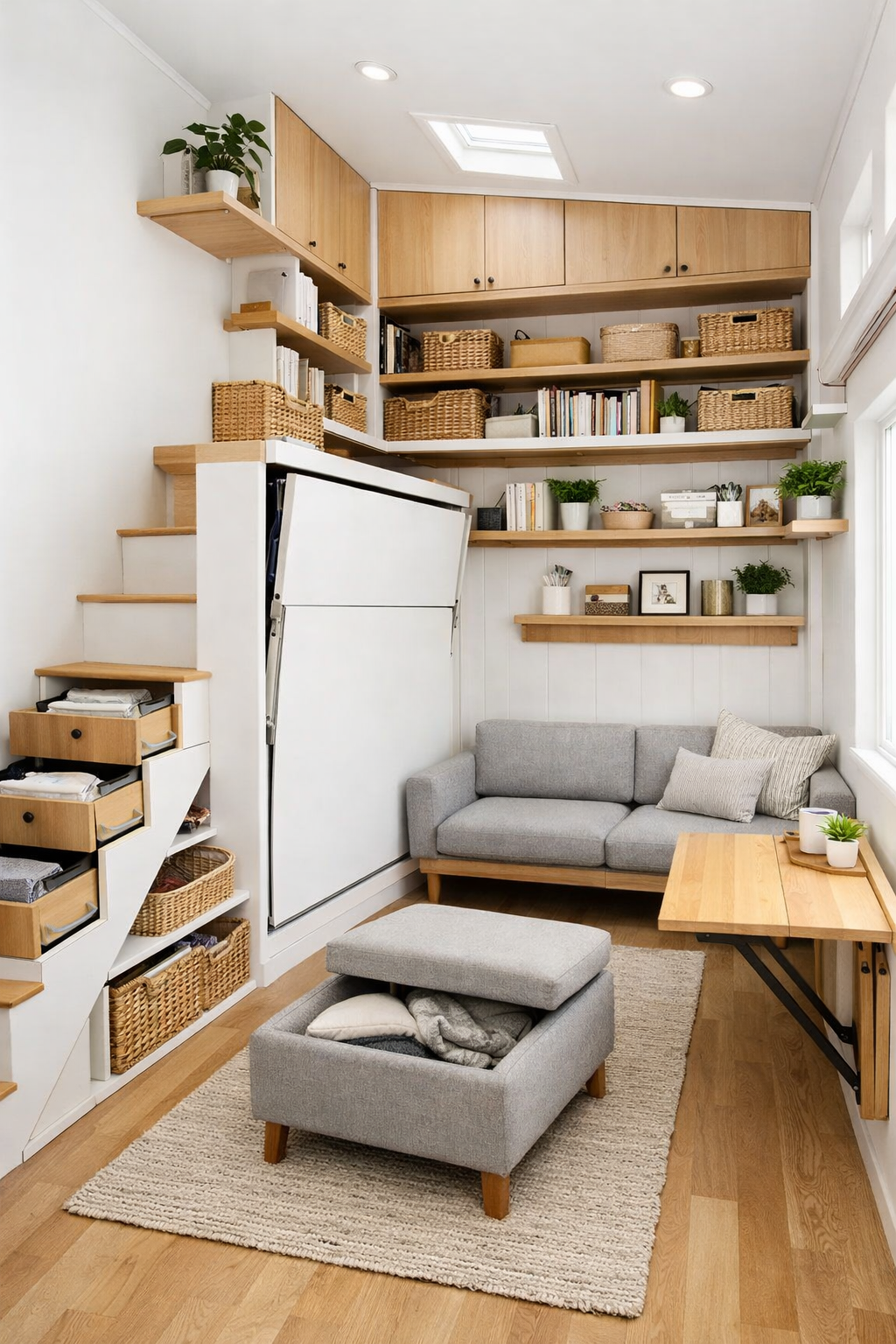
Hidden and built-in storage prevents clutter from shrinking a tiny house interior. Every vertical surface becomes an opportunity: under-stair drawers, wall-mounted shelves that reach toward the ceiling, and benches with lift-up lids turn dead space into functional storage. Loft areas often incorporate cabinets or cubbies along low walls where headroom is limited.
Furniture selection plays a crucial role in maintaining openness. Slim, leggy pieces—such as sofas raised on slender legs or tables with open bases—allow light and sight lines to pass underneath, preventing the heavy, grounded feeling that bulky items create. Foldable, stackable, or wall-mounted options disappear when not needed, freeing floor area instantly.
Custom or modular pieces tailored to exact dimensions maximize utility without wasting space. A Murphy bed that folds into a wall during the day transforms a bedroom into a living area, while a rolling cart serves kitchen prep then tucks away. These solutions keep surfaces clear and floors visible, contributing significantly to an uncluttered, expansive atmosphere.
Incorporating Mirrors and Reflective Elements
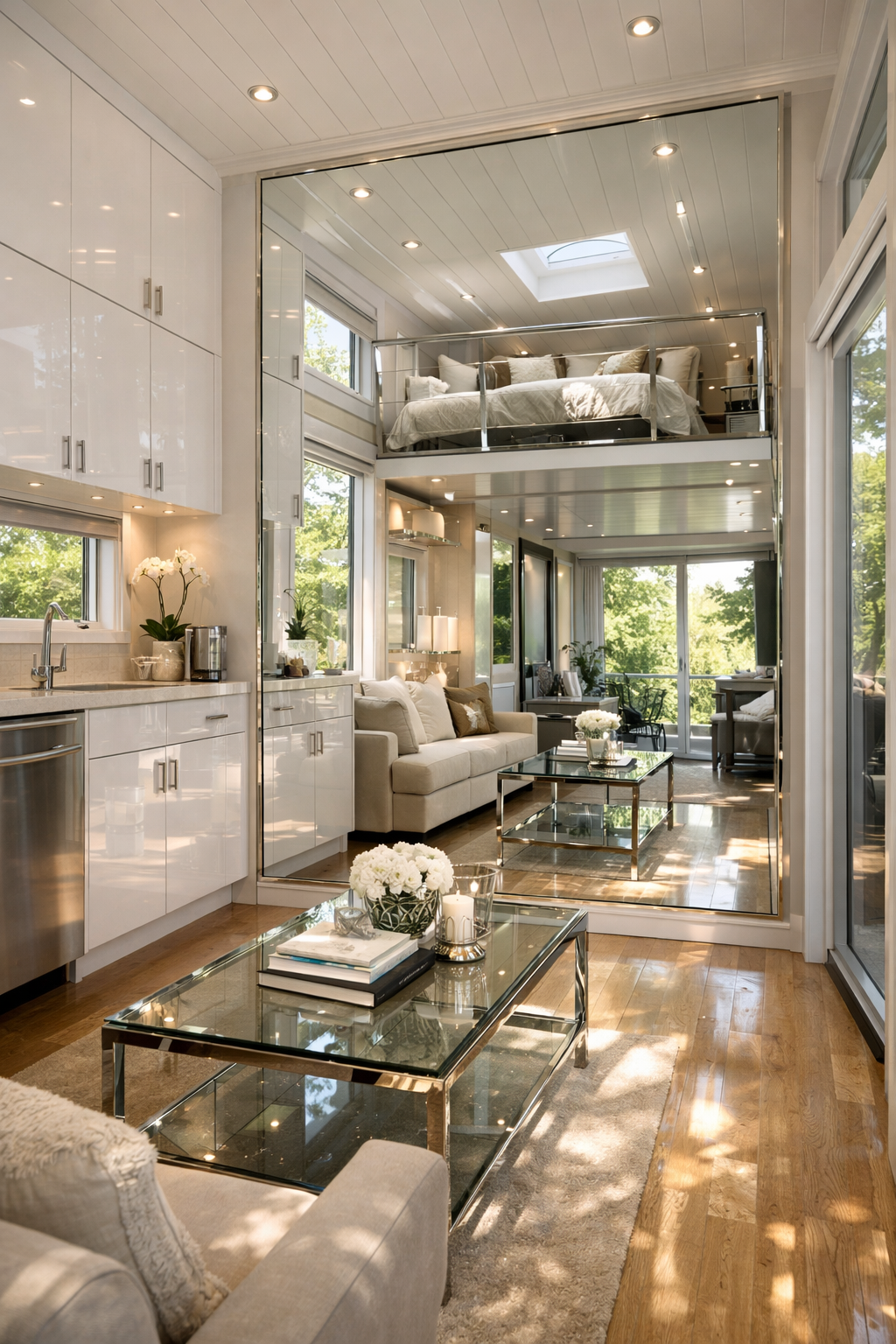
Mirrors remain one of the simplest yet most effective ways to double perceived space in a tiny house interior. A large mirror opposite a window captures and redistributes natural light, creating the illusion of depth and another room beyond. Floor-to-ceiling mirrors in hallways or lofts amplify vertical space, while smaller ones on cabinet doors or as backsplashes brighten kitchens and bathrooms.
Glossy finishes complement mirrors beautifully. High-gloss cabinetry, polished concrete or tile floors, and metallic accents reflect light in multiple directions, enhancing brightness and openness. Even subtle elements like glass tabletops or acrylic chairs contribute to this effect without adding visual weight.
When placed thoughtfully, these reflective surfaces trick the eye into seeing more volume than physically exists. They also add a layer of sophistication, turning functional necessity into elegant design that feels intentional and luxurious.
Frequently Asked Questions About Tiny House Interior Designs
How can I make my tiny house feel less cramped without major renovations?
Focus on decluttering thoroughly, maximizing natural light with window treatments that allow full exposure, and using light neutral colors throughout. Adding one large mirror opposite a light source and choosing furniture with visible legs instantly open the space.
What colors work best for tiny house interiors to create a bigger feel?
Light neutrals like white, soft gray, beige, and pale wood tones reflect light best and keep walls from advancing. Consistent color across ceilings, trim, and walls blurs boundaries and adds perceived height and width.
Is an open floor plan essential in a tiny house?
While not strictly essential, removing interior walls to create an open layout dramatically improves flow and sight lines, making the entire home feel connected and larger. Subtle zoning with rugs or furniture placement maintains function without division.
How do I add storage without making the space feel smaller?
Prioritize vertical and built-in solutions: tall narrow shelves, under-stair drawers, wall-mounted cabinets, and multi-functional furniture. Keep storage concealed or integrated so surfaces remain clear and visual clutter stays minimal.
Should I avoid dark colors entirely in a tiny house?
Not necessarily, but use them sparingly as accents. A dark accent wall or piece of furniture can add depth if balanced with plenty of light surfaces. Overuse of dark tones tends to absorb light and close in the space.
What furniture scale works best in tiny house interiors?
Opt for slim, proportional pieces with open bases rather than oversized or bulky items. Leggy furniture, low-profile sofas, and foldable tables maintain openness and prevent the room from feeling weighed down.
How important are mirrors for making a tiny house feel bigger?
Very important. A strategically placed mirror can nearly double visual depth by reflecting light and views. Large or multiple mirrors opposite windows or in key areas provide the biggest impact.
Can tiny house interiors still feel cozy without feeling small?
Yes—coziness comes from thoughtful layering of textures, soft lighting, and personal touches rather than crowding. Use plush textiles, warm wood accents, and focused task lighting to create intimate zones within an open layout.
Conclusion
Tiny house interior designs that feel surprisingly big prove that true spaciousness comes from intention rather than size alone. By flooding spaces with natural light, opening layouts, choosing reflective light palettes, integrating smart storage, and using mirrors strategically, even the most compact homes gain remarkable airiness and comfort.
These principles transform potential constraints into opportunities for creative, efficient living. The result is not just a house that accommodates daily needs but one that inspires calm, freedom, and connection to the world outside. If you embrace these approaches, your tiny home becomes more than a small dwelling—it becomes a thoughtfully crafted sanctuary that feels expansive, welcoming, and deeply personal. Step inside, breathe deeply, and discover just how big a tiny space can truly feel.