Last Updated on February 16, 2026 by John Tim
Living or traveling in a small camper can feel like freedom on wheels—until clutter takes over. Limited cabinets, tight walkways, and minimal closet space can quickly make even the coziest RV feel cramped. If you’ve ever opened a cabinet only to have items tumble out or struggled to find space for everyday essentials, you’re not alone.
The good news is that small camper storage doesn’t depend on having more space. It depends on using the space you already have more intelligently. With thoughtful layout adjustments, creative organization strategies, and a shift in mindset, your compact camper can feel open, calm, and surprisingly spacious.
This guide explores practical, experience-driven small camper storage tricks that work in real life. Whether you’re a weekend traveler or a full-time road explorer, these ideas will help you maximize every inch without sacrificing comfort or style.
Understanding the Reality of Small Camper Living
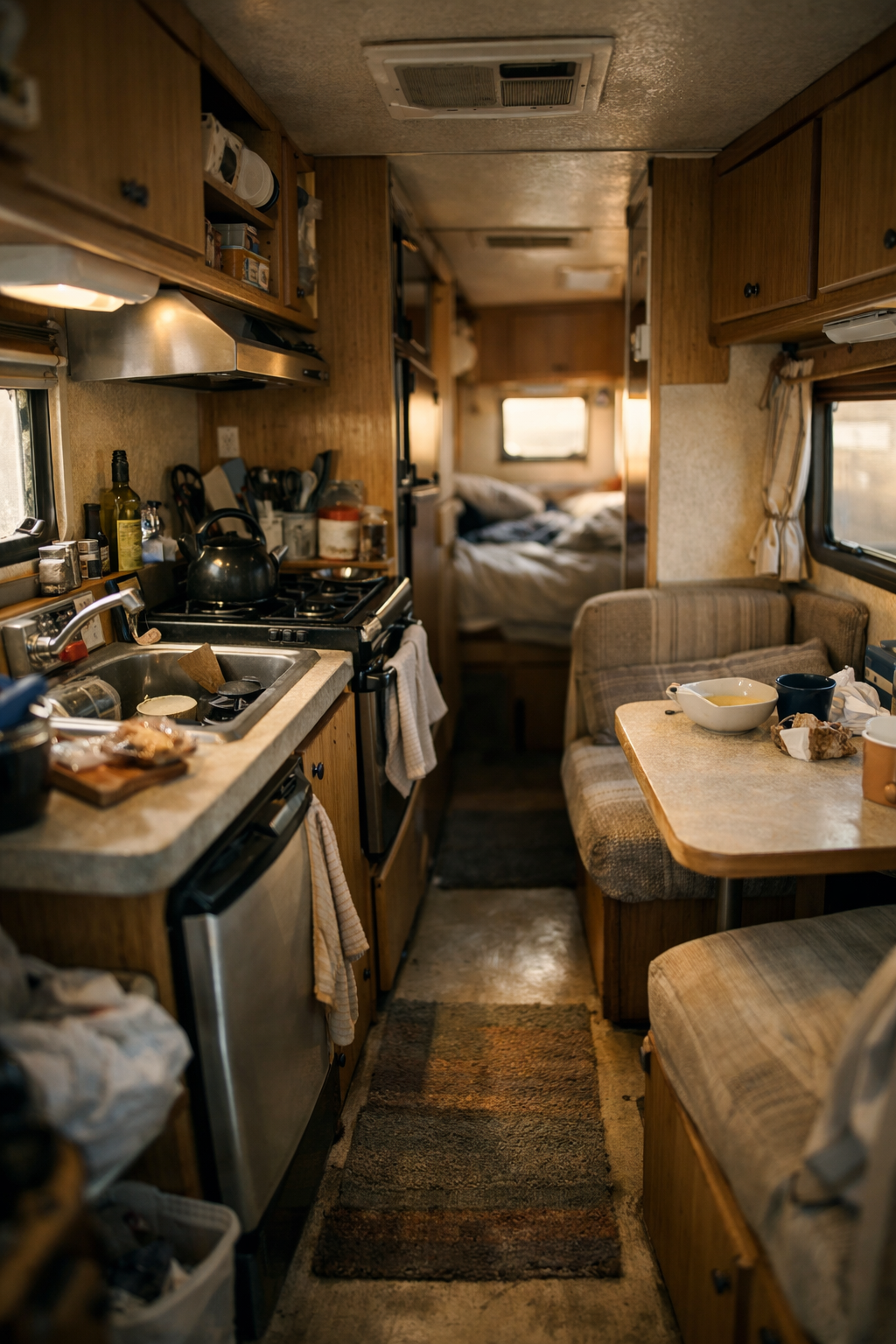
Before diving into techniques, it helps to understand why small camper storage feels challenging in the first place.
Unlike a traditional home, a camper must balance weight distribution, mobility, and functionality. Every cabinet, drawer, and hidden compartment is designed with efficiency in mind. That means space exists—you just have to learn how to unlock it.
Most storage problems in a small camper are not about square footage. They stem from three common issues: unused vertical space, poorly defined storage zones, and keeping more than you truly need.
Once you approach your camper with these factors in mind, storage becomes less about squeezing items in and more about designing systems that work.
Rethinking Vertical Space for Smarter Small Camper Storage
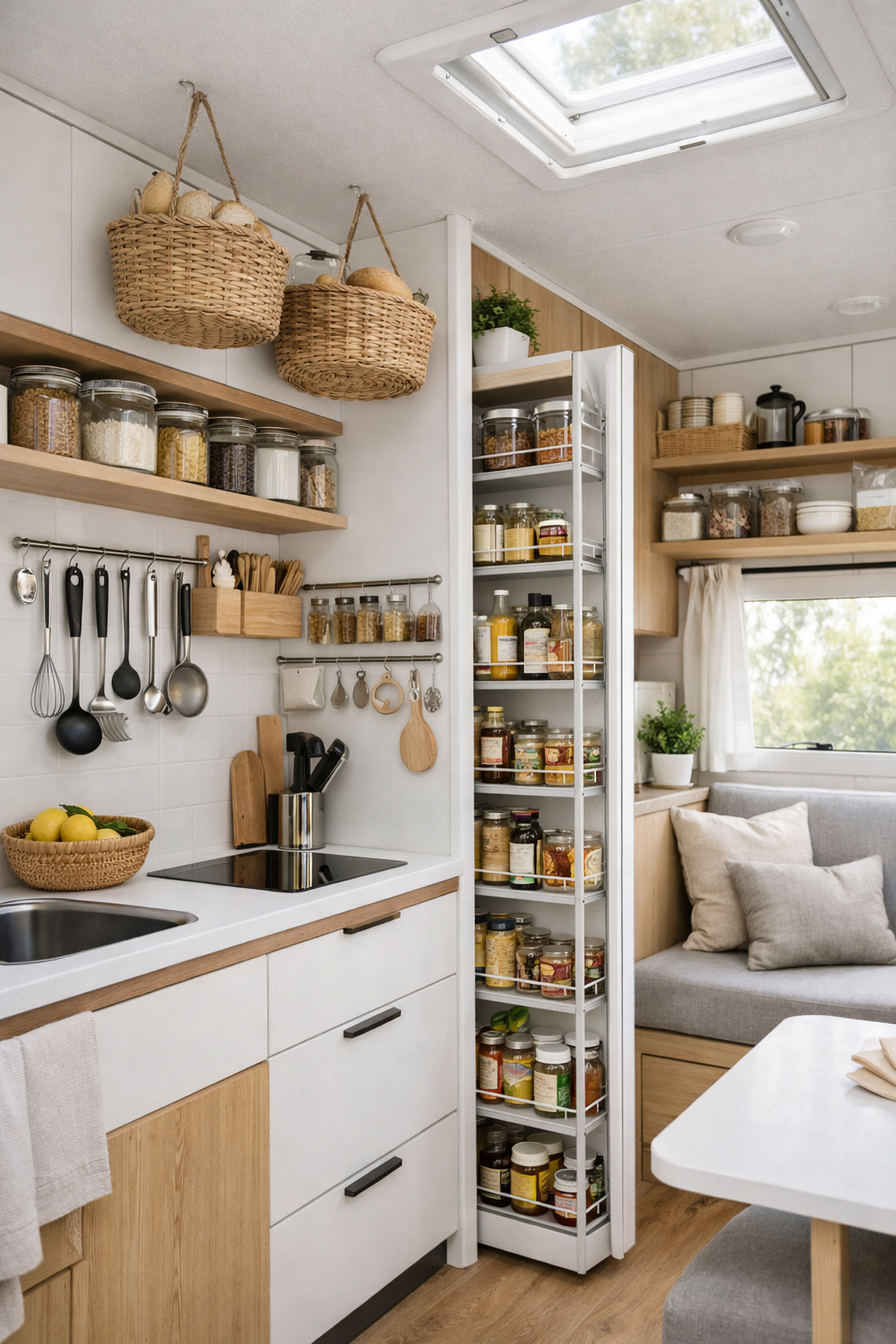
One of the most overlooked strategies in small camper storage is vertical optimization. When floor and counter space are limited, the walls become valuable real estate.
Wall-mounted organizers, slim shelving, and hanging racks can transform blank surfaces into functional storage. In kitchens, magnetic strips can hold knives and utensils securely. In bathrooms, narrow wall baskets can keep toiletries contained without crowding the sink. Even the back of cabinet doors can hold lightweight organizers for spices, cleaning supplies, or small tools.
Ceiling space is another underused area. Lightweight hanging nets or soft fabric hammocks can store items like jackets, blankets, or even children’s toys. When installed thoughtfully, these additions keep essentials accessible without making the camper feel cluttered.
By moving items upward rather than outward, you preserve walking space and create a more open visual flow.
Hidden Compartments That Transform Small Camper Storage
Many campers already include hidden compartments, but owners often forget to use them fully. Benches, dinette seating, and beds frequently conceal generous storage areas underneath.
Under-bed storage can hold seasonal clothing, extra bedding, or less frequently used gear. Vacuum-sealed bags are especially helpful here because they reduce bulk while protecting fabrics from moisture. If your camper bed doesn’t lift easily, installing gas struts can make access smoother and more practical.
Dinette benches can serve as organized storage zones for kitchen overflow, board games, or emergency supplies. Adding labeled bins inside prevents items from shifting during travel.
Even stair steps in some camper models contain storage drawers. If yours doesn’t, consider retrofitting shallow pull-out compartments where structurally safe.
The key is to treat every built-in structure as potential storage rather than just furniture.
Creating Functional Zones in a Small Camper
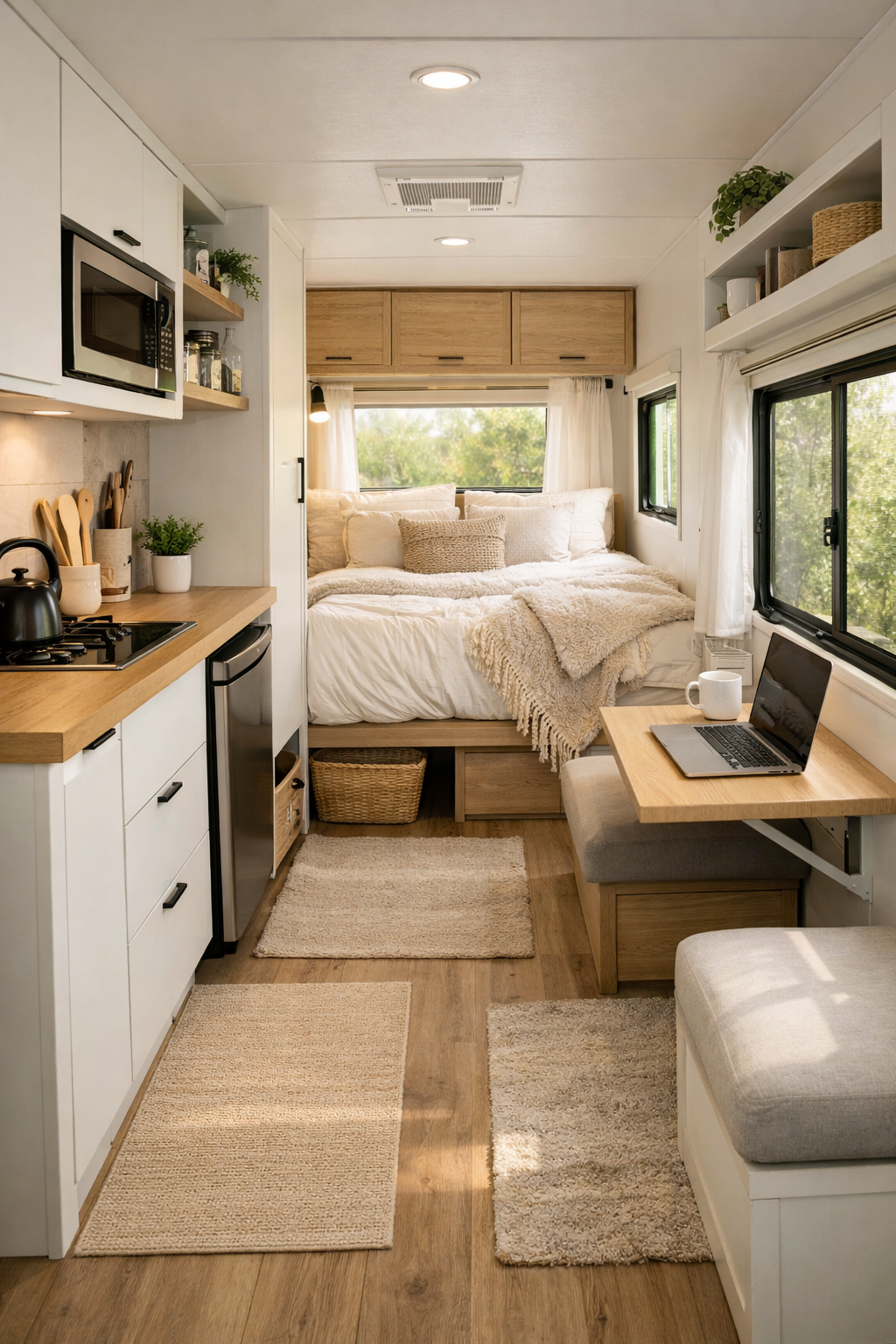
One powerful small camper storage trick is zoning. In small spaces, multi-use areas can quickly become chaotic if items overlap without structure.
Define clear zones for sleeping, cooking, working, and relaxing. Even if your camper is a single open area, assigning mental boundaries helps you store items logically.
For example, kitchen tools should live only in the cooking zone. Work materials should remain in a designated drawer or portable bin. Clothing should have a defined closet or storage bin, even if it’s compact.
When every item has a home, clutter decreases naturally. You no longer waste time searching for misplaced belongings, and the camper feels more spacious simply because it is organized.
Zoning also helps with downsizing. If your clothing zone overflows, it signals that you may be carrying more than necessary.
Multi-Functional Furniture That Expands Small Camper Storage
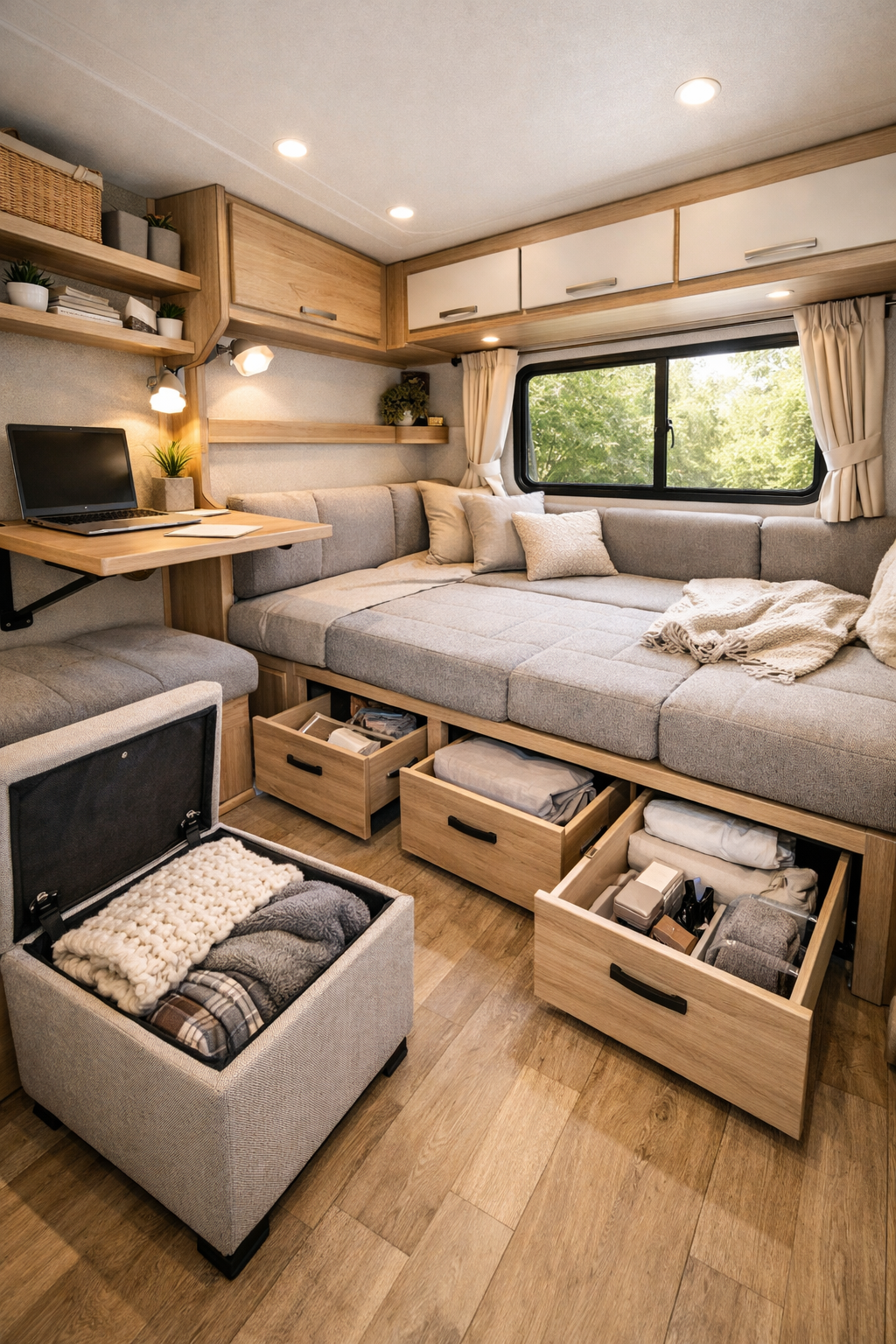
In a small camper, furniture must work harder. Pieces that serve dual purposes are essential for maintaining both comfort and order.
Ottomans with internal storage provide seating while hiding blankets or shoes. Fold-down desks can transform a dining area into a workspace without adding permanent bulk. Beds that convert into sofas create daytime openness while still offering hidden compartments underneath.
When selecting upgrades or modifications, prioritize furniture that adds concealed storage. Even something as simple as a slim shoe rack that fits under a couch can dramatically reduce visible clutter.
This approach keeps surfaces clear, which is critical for making a small camper feel airy rather than cramped.
Kitchen Organization That Maximizes Small Camper Storage
The camper kitchen is often the tightest and most challenging space to manage. Pots, pans, dry goods, and utensils compete for limited cabinets.
Stackable cookware designed for RV use can free up significant cabinet space. Collapsible bowls and silicone measuring cups also reduce bulk. Inside cabinets, shelf risers double vertical capacity, while tension rods can prevent items from sliding during travel.
Pantry organization is equally important. Clear containers make it easier to see what you have and avoid overbuying groceries. This is especially valuable in small camper storage systems where excess food quickly becomes clutter.
A small lazy Susan in corner cabinets can make hard-to-reach spaces functional rather than wasted.
When every inch of the kitchen is intentional, cooking becomes less stressful and the entire camper feels more manageable.
Closet and Clothing Solutions for Small Camper Living
Clothing is often the biggest challenge in small camper storage. Traditional wardrobes simply don’t exist in compact RV models.
The solution lies in strategic minimalism. A capsule wardrobe with versatile, layer-friendly pieces dramatically reduces storage needs. Rolling clothes instead of folding them can increase drawer capacity and improve visibility.
Hanging organizers that attach to a short closet rod can create additional shelves vertically. Under-bed bins are ideal for off-season items, especially when compressed.
Hooks placed near the entrance are practical for jackets and bags, keeping them off the floor while maintaining accessibility.
When clothing storage is streamlined, daily routines become easier and the camper feels less crowded.
Bathroom Storage Without the Bulk
Camper bathrooms are notoriously compact, yet they must store toiletries, towels, and cleaning supplies.
Slim vertical shelves can fit beside sinks or toilets. Adhesive hooks are useful for towels and robes without requiring permanent drilling. Over-the-door organizers can hold hair tools or grooming essentials discreetly.
Choosing smaller, travel-sized containers for daily-use products prevents overloading cabinets. In small camper storage systems, reducing item size often makes a significant difference.
Keeping bathroom counters clear enhances the sense of space in one of the tightest areas of the camper.
Managing Outdoor Gear and Entryway Clutter
Outdoor gear can quickly overwhelm a small camper interior if not managed thoughtfully.
Designating a specific storage bin for shoes near the entrance prevents dirt from spreading. Foldable outdoor chairs should have a consistent storage location, ideally in an exterior compartment.
If your camper includes pass-through storage underneath, use it strategically for bulkier equipment like hoses, leveling blocks, and tools. Keeping these items outside the main living area preserves valuable interior space.
An organized exterior storage plan directly supports interior spaciousness.
The Psychological Side of Small Camper Storage
Storage isn’t only physical; it’s psychological. Clutter creates visual noise, which makes small spaces feel even smaller.
Adopting a mindset of intentional ownership is essential. Before adding any new item to your camper, ask whether it serves a clear purpose. Regularly reassess belongings, especially during longer trips.
A well-managed small camper storage system reduces stress, improves daily flow, and enhances the overall travel experience. When your environment feels calm, the space naturally feels larger.
Frequently Asked Questions About Small Camper Storage
How can I make my small camper feel bigger?
Focus on reducing visible clutter and maximizing vertical storage. Keeping countertops clear, using light colors, and organizing items into hidden compartments can dramatically improve the sense of space.
What is the best way to store clothes in a small camper?
Use a capsule wardrobe approach, roll clothing to save space, and store off-season items in vacuum-sealed bags under the bed. Hanging vertical organizers can also increase closet capacity.
How do I prevent items from shifting while driving?
Use bins, drawer dividers, and tension rods inside cabinets. Non-slip shelf liners also help keep items stable during travel.
Is it worth installing custom storage solutions?
In many cases, yes. Simple upgrades such as shelf risers, pull-out drawers, or lift-assisted bed storage can significantly improve functionality without major renovation.
How often should I declutter a small camper?
Regularly reviewing belongings every few weeks during active travel helps maintain an efficient small camper storage system. The smaller the space, the more important routine decluttering becomes.
Conclusion: Small Camper Storage That Truly Transforms Your Space
Small camper storage is not about squeezing more into less. It is about designing systems that support your lifestyle while keeping your environment calm and functional. By maximizing vertical areas, utilizing hidden compartments, embracing multi-functional furniture, and maintaining clear zones, even the most compact camper can feel open and inviting.
The real transformation happens when organization becomes intentional. Each item earns its place. Each storage area serves a defined purpose. As clutter decreases, comfort increases.
With thoughtful planning and consistent habits, your small camper storage strategy can turn limited square footage into a surprisingly spacious, stress-free home on wheels.