Last Updated on February 12, 2026 by John Tim
When you’re living or traveling in a camper, every square inch matters. The table is often the heart of the interior. It becomes your dining space, workspace, prep counter, coffee bar, and sometimes even part of your sleeping platform. Choosing the right camper table ideas can completely change how functional and comfortable your setup feels.
If you’ve ever struggled with a bulky dinette, a wobbly surface, or a table that blocks your walkway, you already understand why smart design matters. This guide walks you through practical, space-saving camper table ideas that balance durability, flexibility, and aesthetics. Whether you’re converting a van, upgrading an RV, or refining a small travel trailer, you’ll find thoughtful solutions that work in real-world conditions.
Why the Right Camper Table Matters More Than You Think
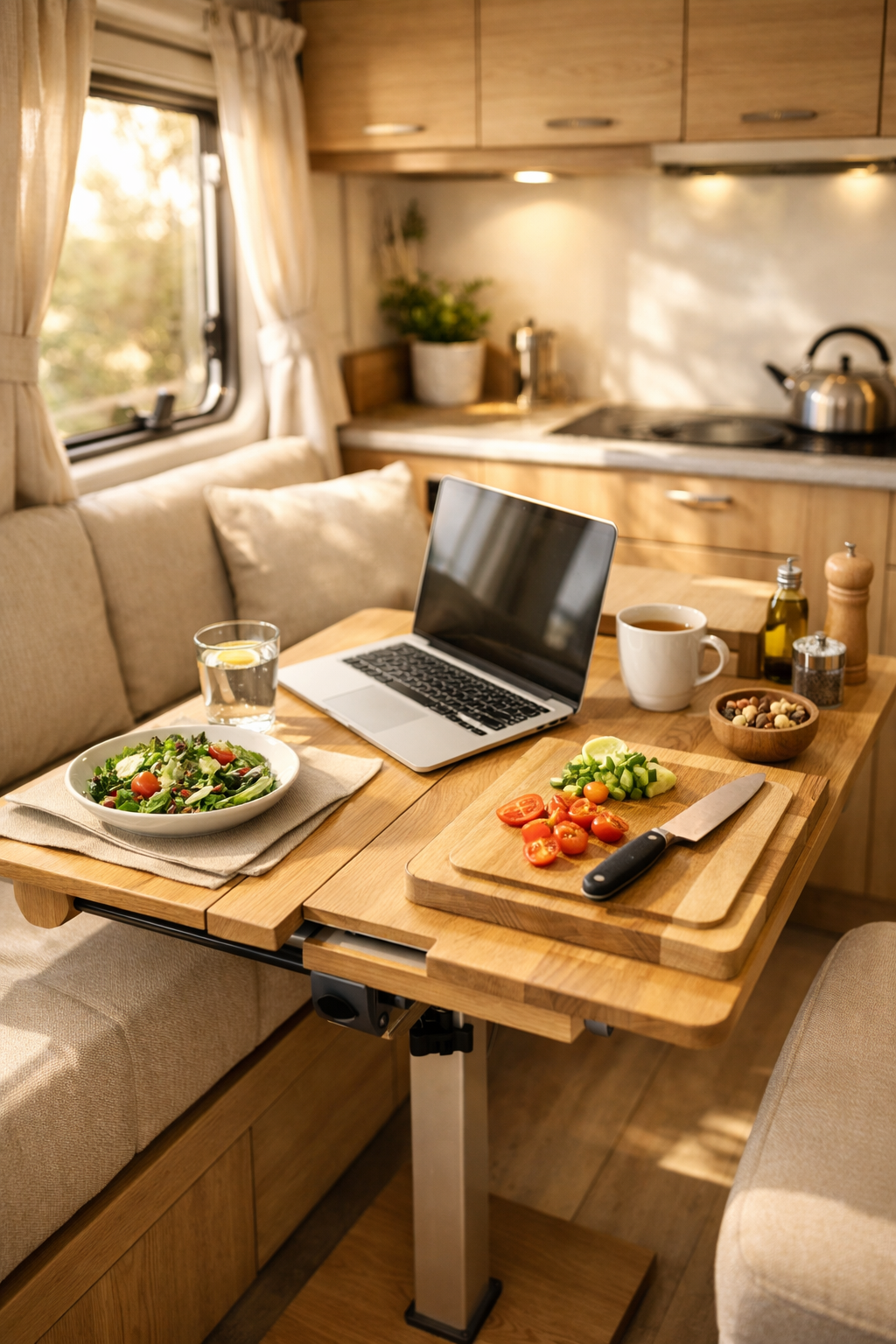
In compact living, furniture cannot be single-purpose. A well-designed table should support multiple activities without dominating the space. In many campers, the traditional fixed dinette consumes valuable floor area and limits layout flexibility. Modern camper table ideas focus on adaptability, weight reduction, and seamless storage.
A good table also contributes to structural efficiency. Heavy materials or poorly mounted systems can add unnecessary weight or stress to walls. On the other hand, lightweight yet sturdy builds improve fuel efficiency and long-term durability. The goal is to create a surface that feels stable when in use and invisible when it’s not.
Understanding Your Space Before Choosing a Table Design
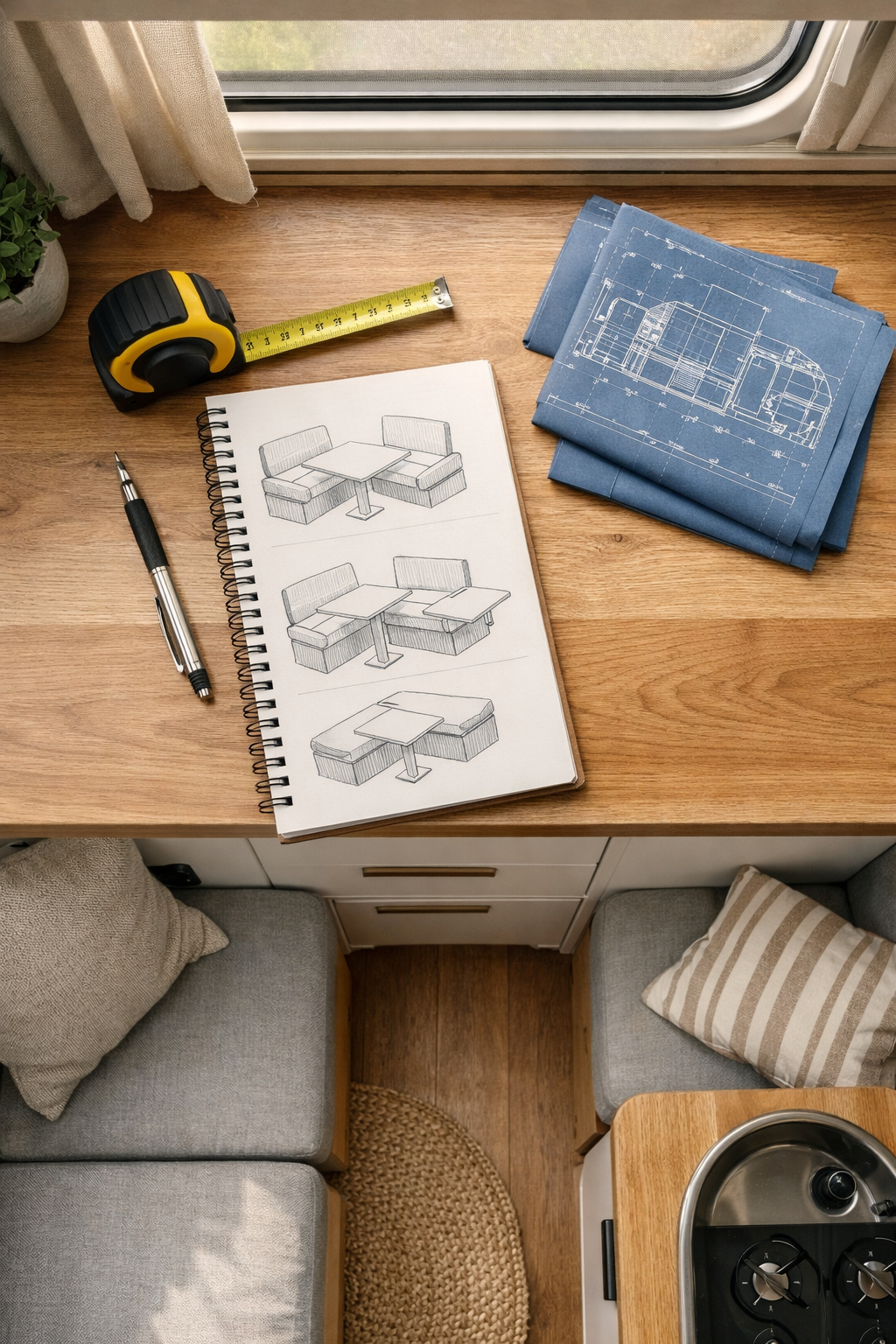
Before selecting from various camper table ideas, it’s essential to evaluate how you actually use your camper. Full-time van dwellers often need a reliable workspace. Weekend travelers may prioritize a dining surface that converts into a bed. Families require flexibility and quick transitions between activities.
Consider your floor plan, seating arrangement, and storage access. A table that blocks drawers or fridge access can quickly become frustrating. Also assess wall strength if you plan to mount a fold-down system. Lightweight plywood or composite panels work well in most builds, but reinforcement may be necessary for heavier hardwood surfaces.
Understanding these details prevents expensive redesigns later and ensures the table supports your daily routine.
Wall-Mounted Fold-Down Tables for Maximum Flexibility
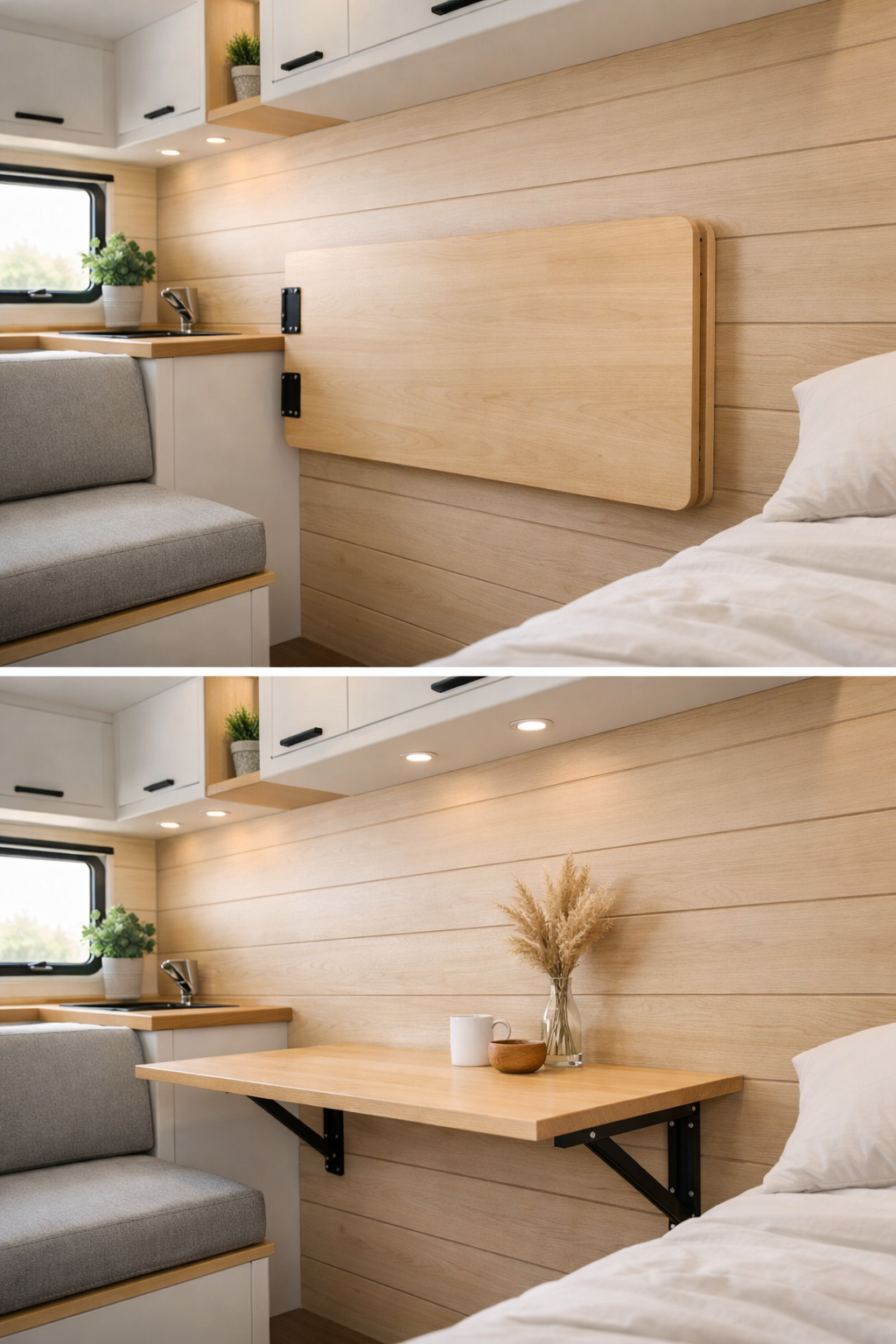
One of the most practical camper table ideas is the wall-mounted fold-down design. This option attaches directly to the wall with heavy-duty hinges and folds flat when not in use. It works especially well in vans and small trailers where floor space is limited.
When deployed, the surface can function as a dining table or desk. When folded up, it restores full walkway access. Many builders incorporate collapsible legs or cable supports for stability. The key advantage here is simplicity. The mechanism is straightforward, easy to maintain, and lightweight.
For improved aesthetics, consider matching the table surface with cabinetry. Using consistent wood tones or laminate finishes creates a cohesive look without overwhelming the small interior.
Removable Pedestal Tables for Versatile Layouts
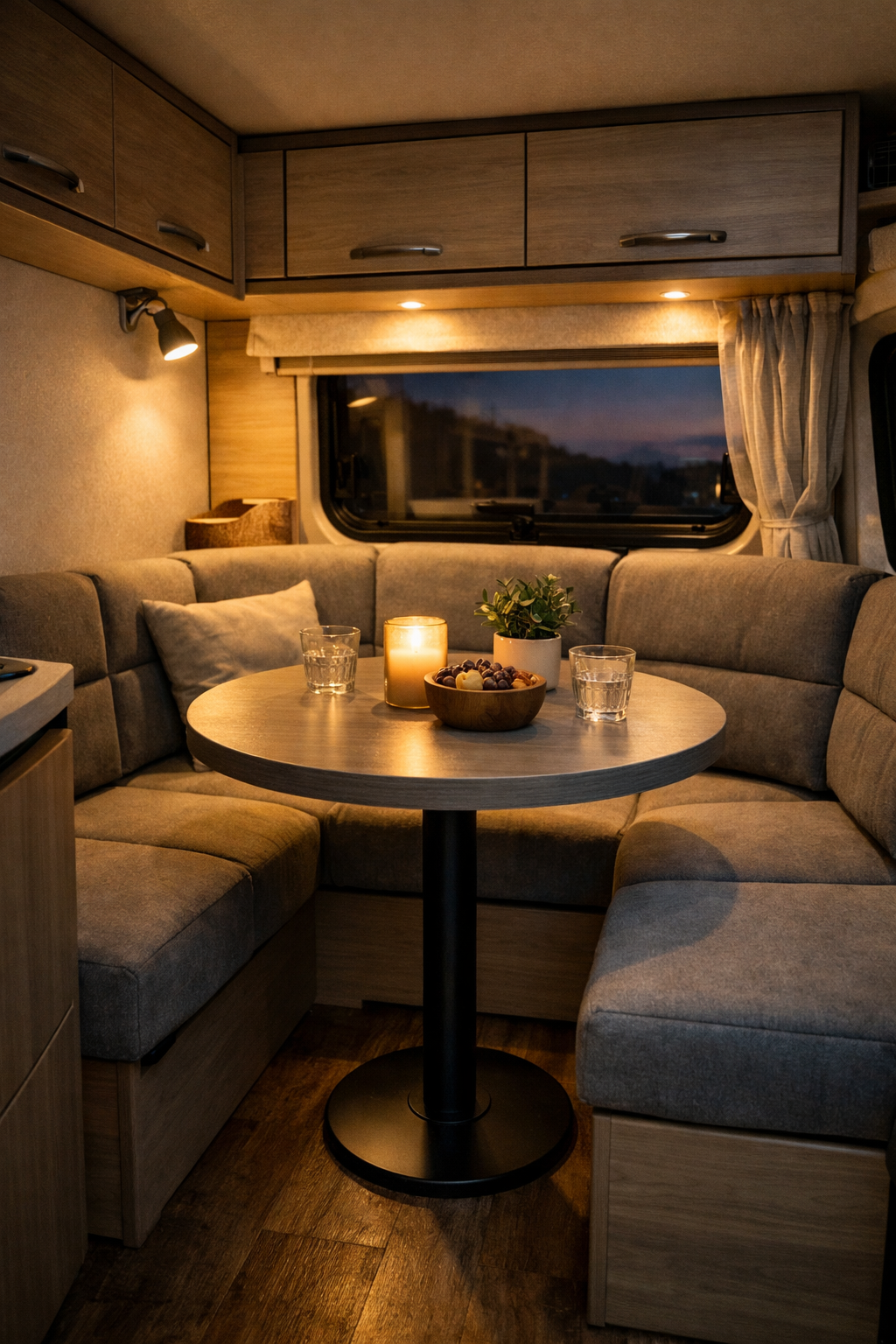
Another popular choice among camper table ideas is the removable pedestal system. This design uses a central post anchored to the floor, allowing the tabletop to detach when not needed. Some pedestal tables can lower to convert into a sleeping platform, making them ideal for dinette-style layouts.
The biggest benefit of this system is stability. A well-installed pedestal provides solid support without requiring wall reinforcement. However, floor anchoring must be secure to avoid movement during travel.
Removable pedestals also allow you to reposition seating arrangements. You can create a social layout for meals and then clear the space entirely for gear loading or lounging. This flexibility makes it a strong choice for multi-use campers.
Slide-Out and Pull-Out Table Solutions
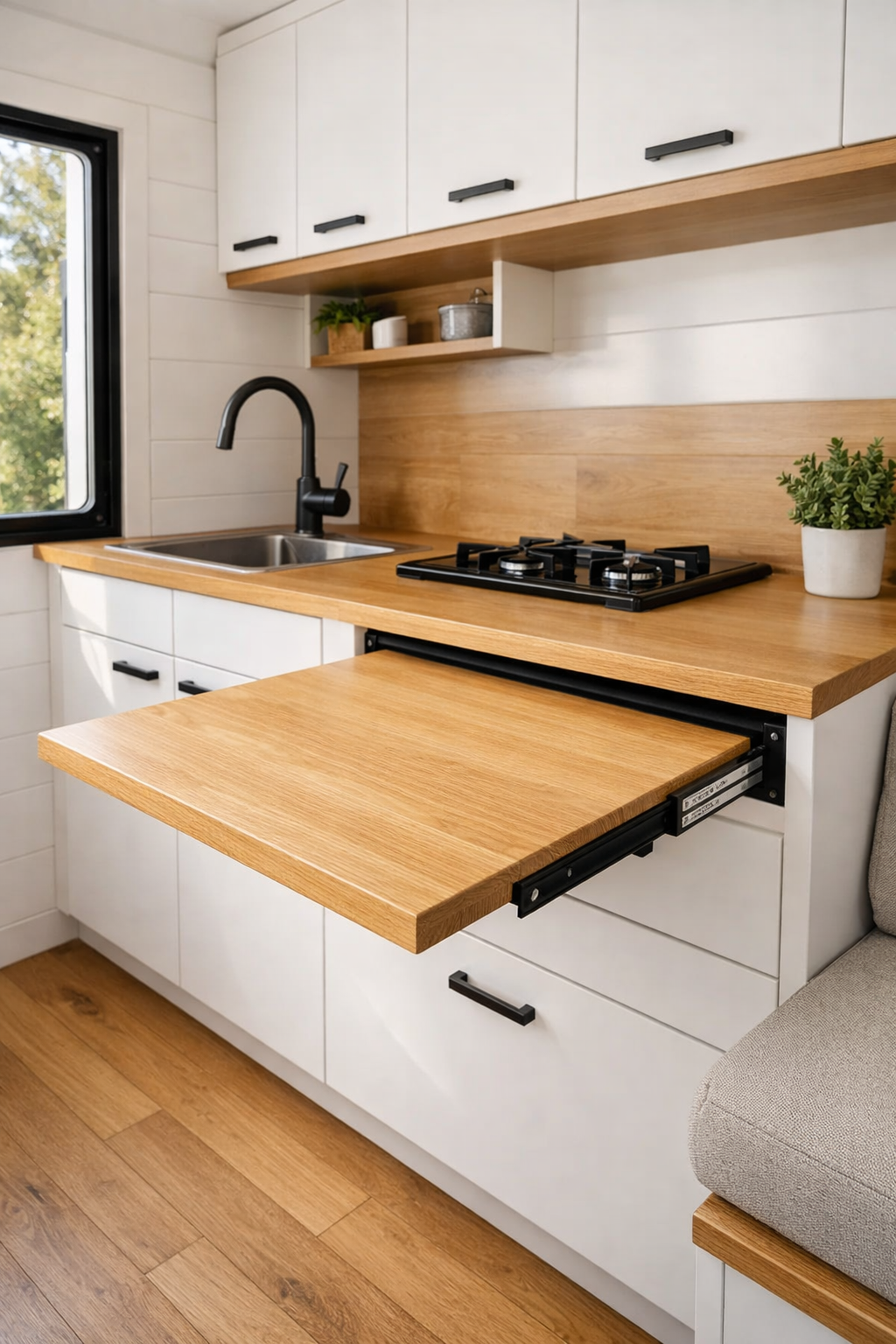
If your cabinetry includes deep drawers or bench seating, integrating a slide-out table is an efficient solution. These camper table ideas rely on heavy-duty drawer slides mounted beneath a hidden surface. When extended, the table glides smoothly into position. When retracted, it disappears inside the cabinetry.
This approach keeps the main living area uncluttered while maintaining functionality. Slide-out systems work especially well in galley kitchens where counter space is limited. They can serve as extra prep areas or compact dining surfaces.
The design must account for weight distribution. High-quality slides rated for sufficient load capacity are essential. Inferior hardware can lead to sagging or mechanical failure over time.
Swivel Tables for Compact Workspaces
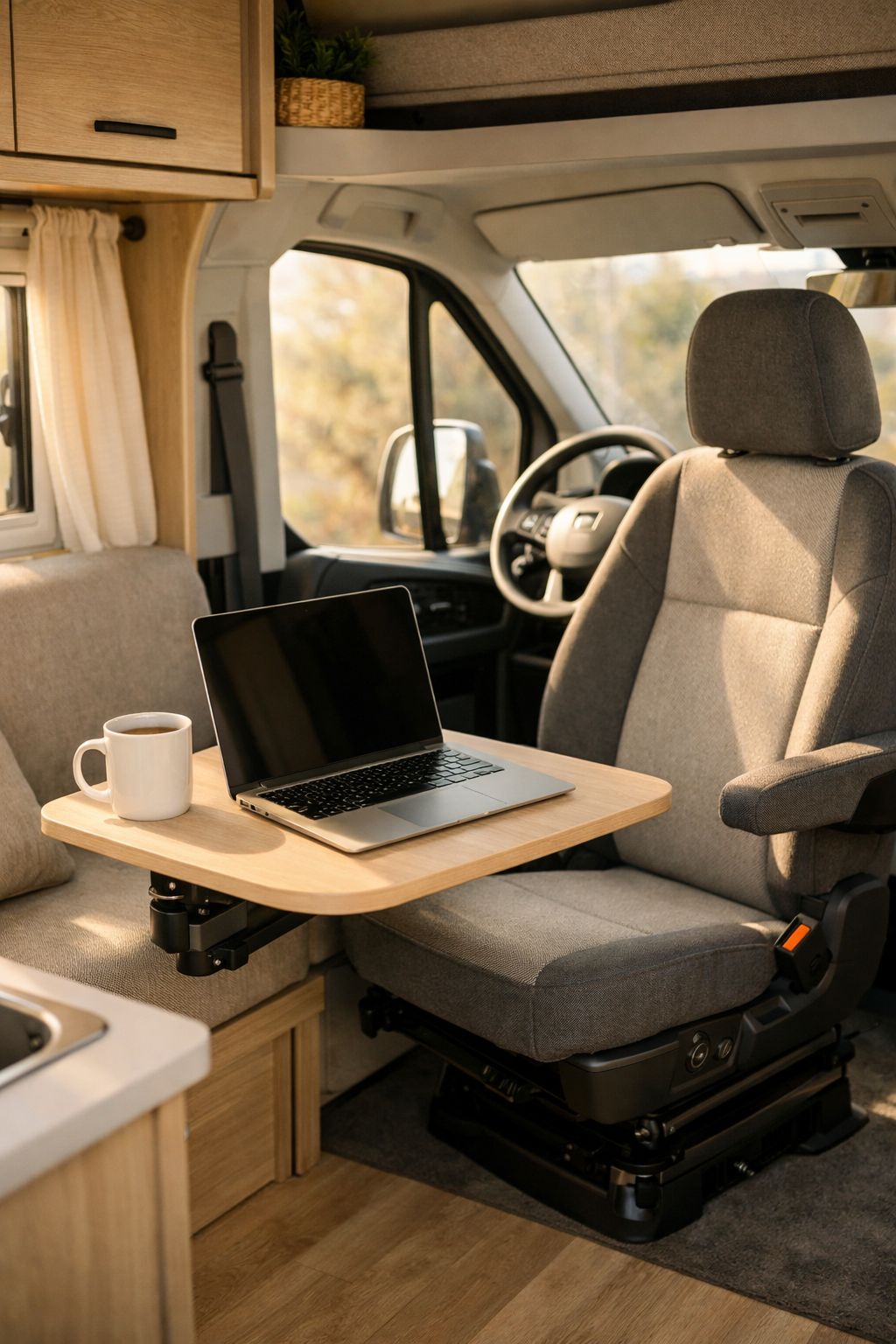
Swivel-mounted tables are common in professional camper conversions because they offer rotational flexibility. Attached to a single support arm, the table can pivot toward different seating areas. This design eliminates the need for multiple surfaces.
Among modern camper table ideas, swivel tables are excellent for remote workers. You can rotate the surface toward the driver seat, passenger seat, or rear bench depending on your needs. When not in use, it can swing flush against a wall or cabinet.
Installation requires precision to avoid wobble. Reinforcing the mounting area ensures long-term durability. When done correctly, this setup feels surprisingly sturdy and adaptable.
Convertible Dinette Tables That Transform Into Beds
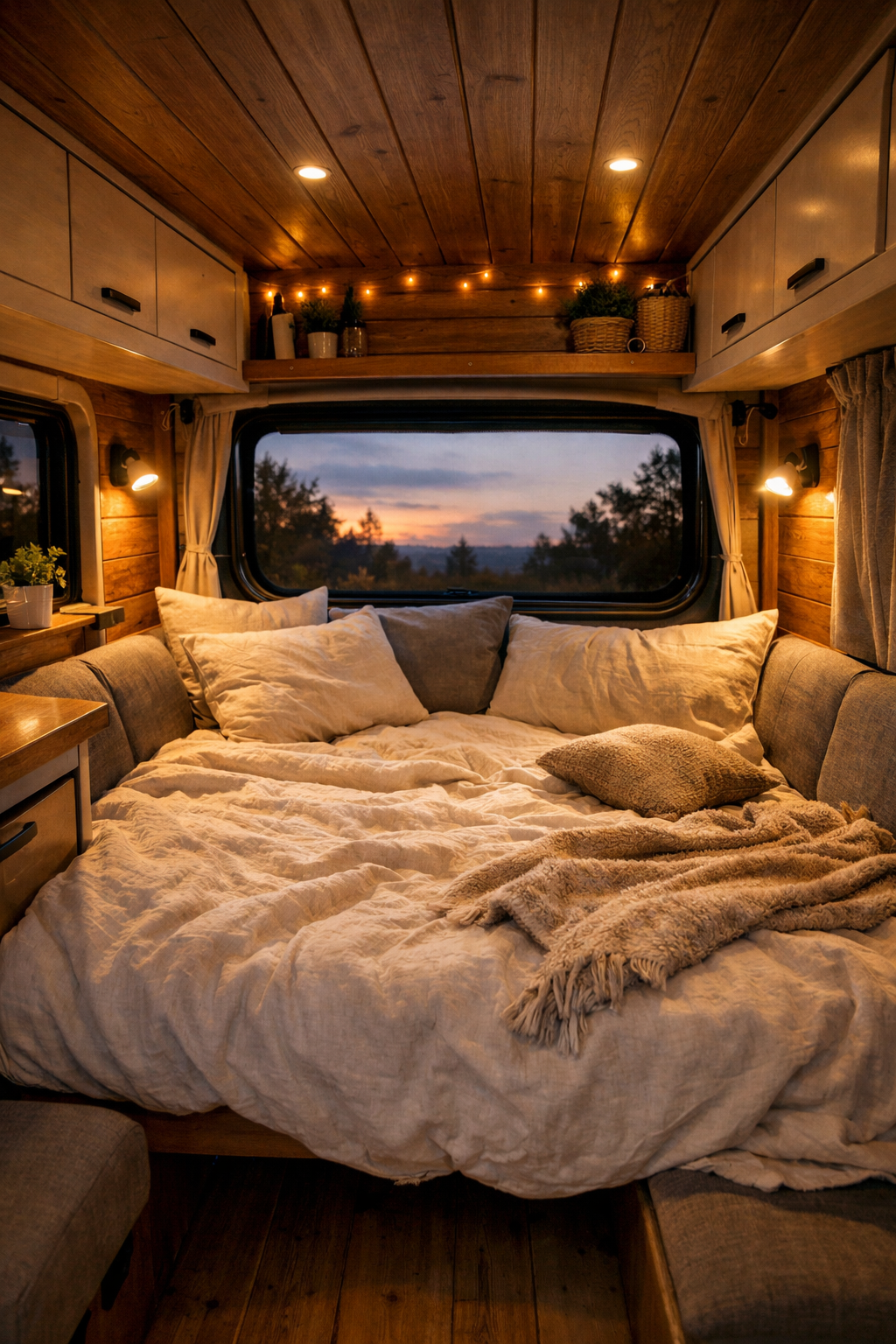
For campers where sleeping capacity is a priority, convertible tables offer dual functionality. In these camper table ideas, the tabletop lowers between two benches to create a sleeping base. Cushions are rearranged to form a mattress.
While this concept is traditional, modern builds have improved on it with lighter materials and smoother mechanisms. Adjustable rails or lift systems make transitions easier than older models.
The key to comfort lies in alignment. The lowered surface must sit perfectly level with bench frames. Even minor height differences can create discomfort during sleep. Proper measurements and testing are crucial before final installation.
Folding Side Tables and Compact Add-Ons
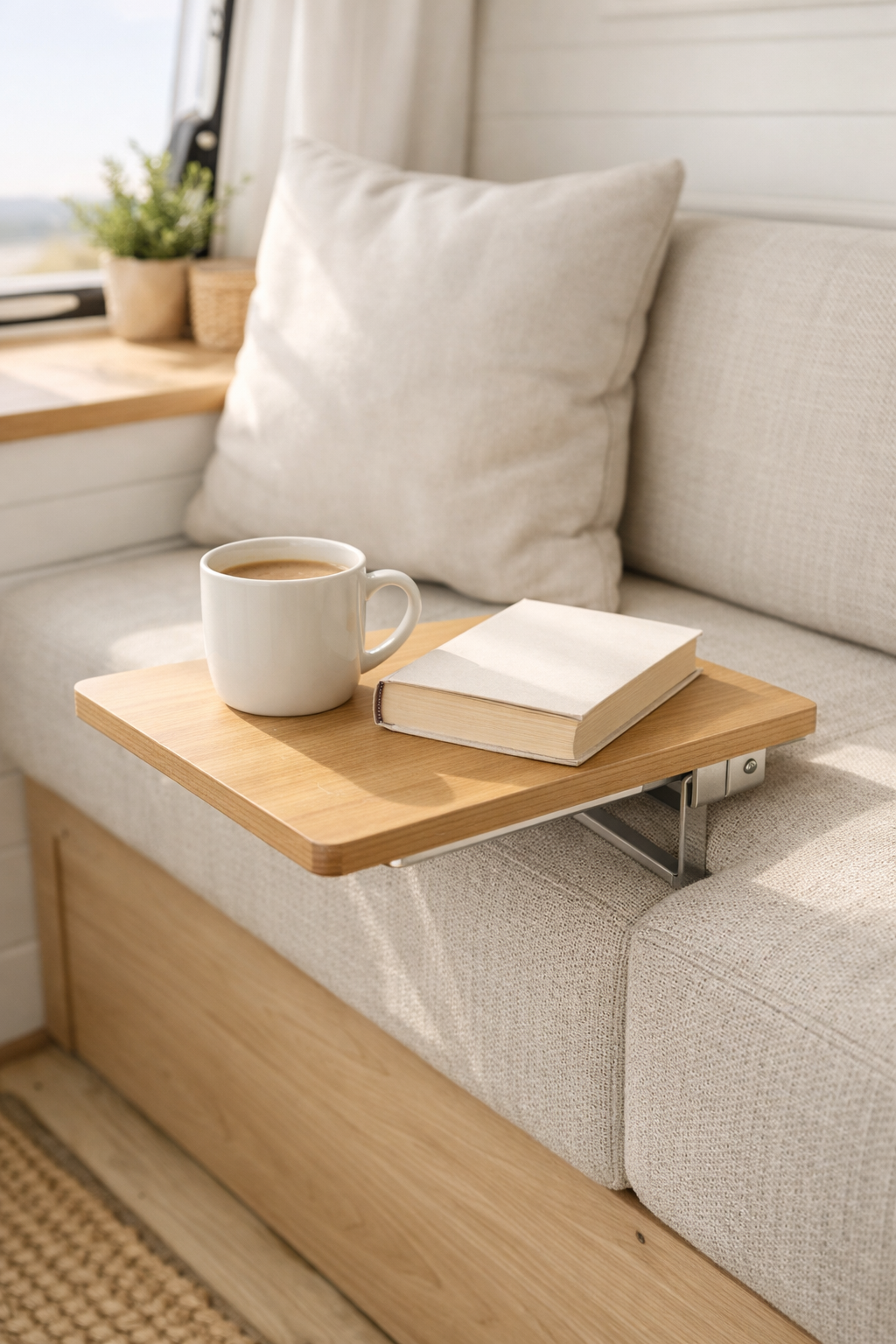
Not every camper needs a large central table. Sometimes, small side tables provide enough surface area without crowding the interior. These camper table ideas include slim folding extensions mounted near benches or beds.
They are perfect for holding coffee cups, laptops, or books. Because they are smaller and lighter, installation is easier and structural requirements are minimal.
Compact add-on tables can also be installed near entry doors, providing a quick drop zone for keys or groceries. This improves daily convenience without requiring major layout changes.
Materials That Balance Weight and Strength
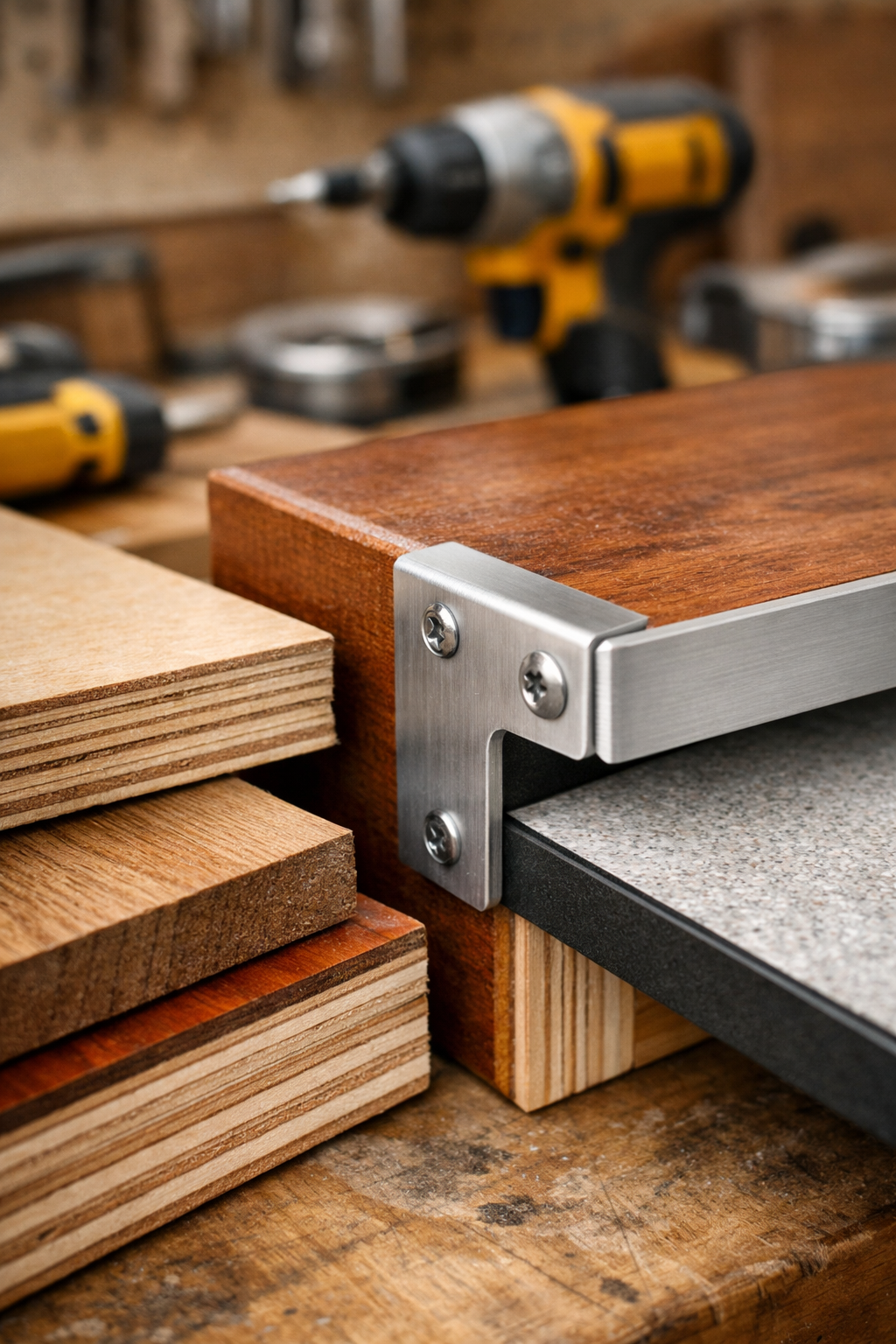
Choosing the right material is just as important as selecting the design. In most camper table ideas, lightweight plywood is the preferred option because it offers strength without excessive weight. Marine-grade plywood adds moisture resistance, which is beneficial in humid climates.
Hardwood surfaces provide a premium look but add weight. If you prefer solid wood aesthetics, consider a thin hardwood veneer over a lightweight core. Laminate surfaces are another practical option because they resist scratches and are easy to clean.
The finish should withstand temperature changes and movement. Flexible sealants or protective coatings reduce cracking and wear over time.
Space-Saving Design Tips for Small Campers
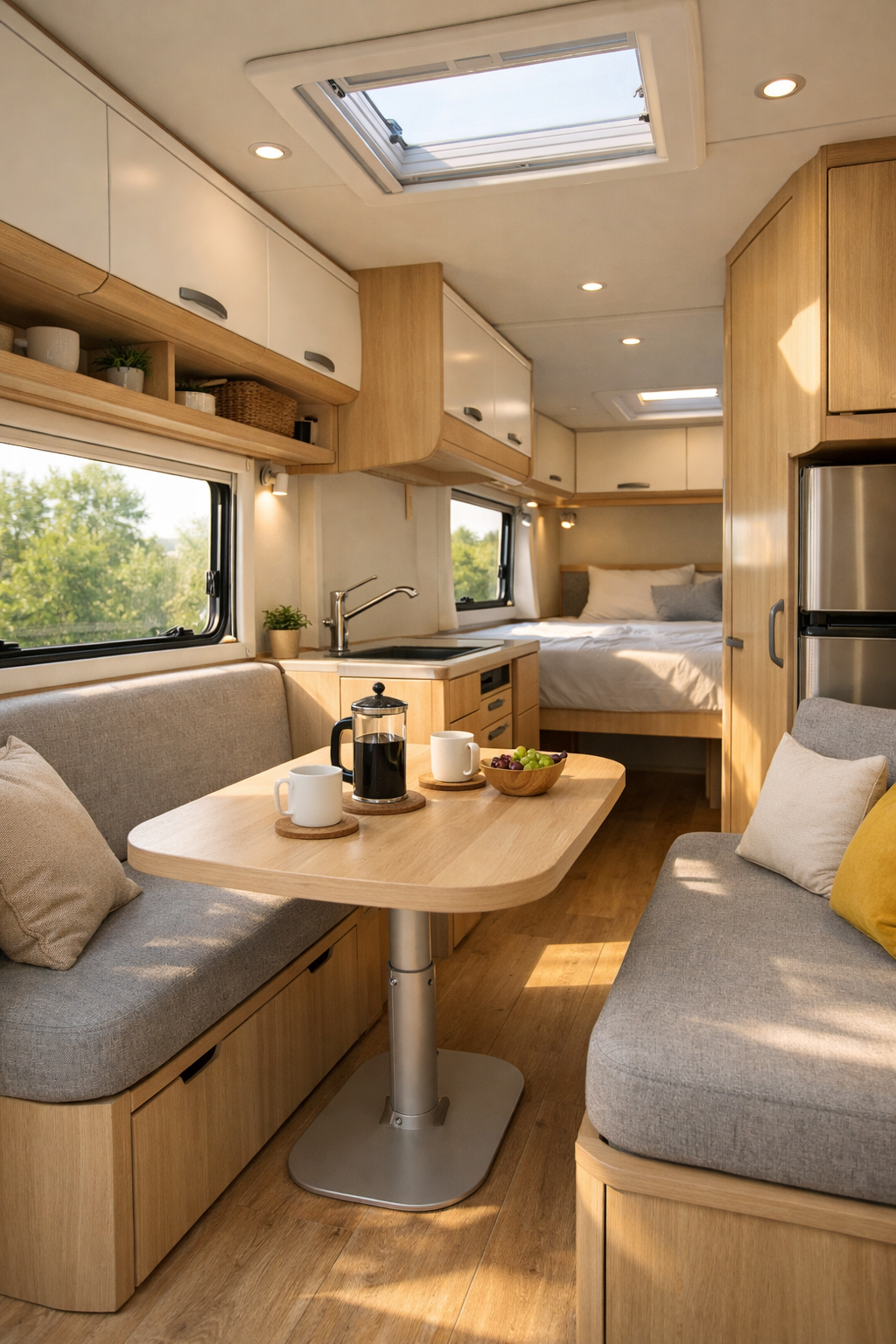
Even the smartest camper table ideas can fail if scale is ignored. Proportions matter. A surface that feels spacious at home may feel overwhelming in a van. Measuring your walkway clearance and seating dimensions prevents overcrowding.
Rounded corners improve safety and movement flow. Sharp edges in tight quarters increase the risk of bumps and bruises. Adjustable heights can also enhance versatility, allowing the table to function as both dining and work space.
Finally, consider how the table integrates visually. Light colors make small spaces feel larger, while darker tones create a cozy atmosphere. The right balance depends on your overall design theme.
Durability and Stability Considerations
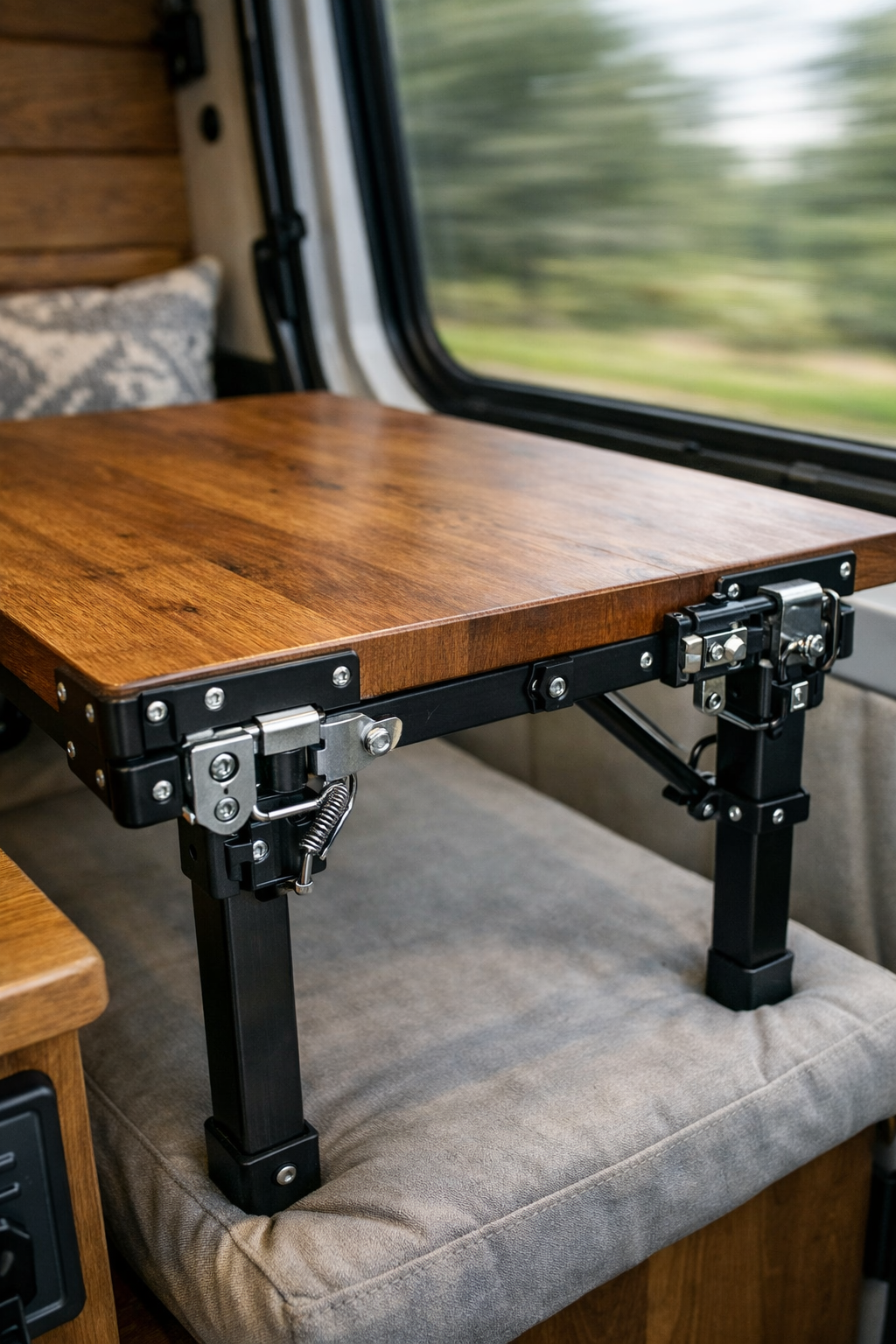
Travel introduces vibration and shifting forces that traditional home furniture never experiences. Camper table ideas must account for these dynamic conditions. Secure locking mechanisms prevent movement while driving. Reinforced brackets and metal supports improve long-term reliability.
Testing your installation before long trips is wise. Sit at the table, apply pressure, and simulate daily use. Any wobble or instability should be corrected immediately. A stable table enhances both safety and comfort.
Frequently Asked Questions About Camper Table Ideas
What is the most space-saving camper table design?
Wall-mounted fold-down tables are generally the most space-efficient. They disappear completely when not in use and require minimal floor space, making them ideal for vans and compact trailers.
Can a camper table be lightweight but still strong?
Yes. High-quality plywood with proper reinforcement provides excellent strength-to-weight balance. Using aluminum brackets or reinforced hinges further improves durability without adding significant weight.
How do I prevent a camper table from wobbling?
Wobble usually comes from weak mounting points or insufficient support. Reinforce walls or floors where brackets attach, use heavy-duty hardware, and ensure all measurements are precise before installation.
Are convertible dinette tables comfortable for sleeping?
They can be, provided the lowered surface aligns perfectly with bench frames. Cushion thickness and proper leveling are critical for comfort.
What size should a camper table be?
The ideal size depends on your layout. Measure seating width and ensure at least comfortable clearance around the walkway. Compact designs often work better than oversized surfaces in small interiors.
Conclusion: Smart Design Makes All the Difference
Functional camper table ideas are not just about adding a surface to your RV or van. They are about maximizing flexibility, improving daily comfort, and using space intelligently. From wall-mounted fold-down systems to swivel mounts and convertible dinettes, each solution serves a specific purpose depending on your travel style and layout.
The best table is one that supports your routine without dominating your living area. It should feel stable during meals, reliable for work, and effortless to store when not needed. By choosing lightweight materials, secure mounting systems, and well-proportioned designs, you can transform even the smallest camper into a highly functional space.
Ultimately, thoughtful planning leads to better experiences on the road. When your table works seamlessly with your lifestyle, your camper becomes more than just a vehicle. It becomes a comfortable, efficient home wherever your journey takes you.