
Last Updated on February 9, 2026 by John Tim
Designing a boho camper interior is about far more than following a trend. It is about creating a space that feels relaxed, personal, and deeply connected to the joy of travel. For many people, a camper represents freedom and escape, and the boho style naturally complements that spirit. It blends comfort, creativity, and individuality into a warm environment that feels lived-in rather than staged.
Readers searching for boho camper interior inspiration usually want two things. First, they want ideas that look beautiful and authentic, not overly polished or impractical. Second, they want decor tips that actually work in a small, mobile space. This guide addresses both needs by combining design experience with realistic, road-tested insights. Whether you are converting a camper for long-term travel or refreshing an existing setup, the goal is to help you create a boho camper interior that feels like home wherever you park.
What Defines a True Boho Camper Interior
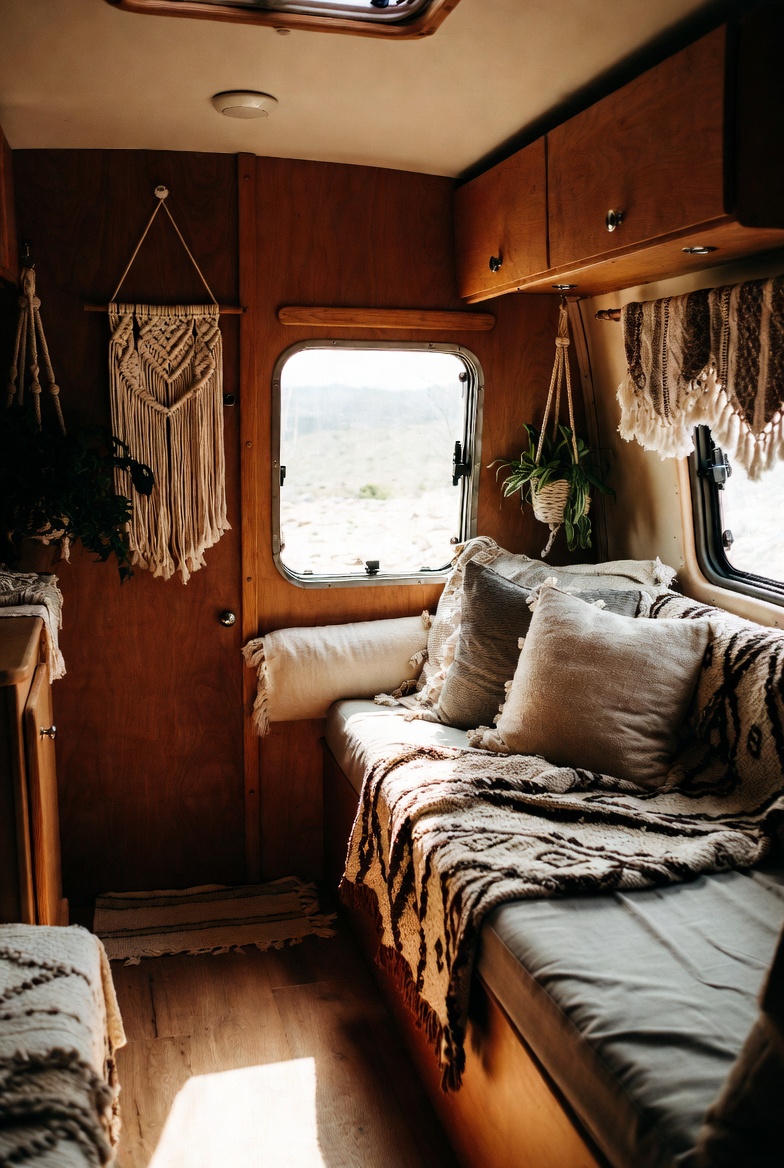
A boho camper interior is rooted in comfort, texture, and self-expression. Unlike minimalist or ultra-modern styles, boho design embraces warmth and character. It often mixes old and new elements, handcrafted pieces, and natural materials in a way that feels effortless rather than curated.
In a camper, boho style is especially effective because it softens hard surfaces and adds emotional warmth. Wood finishes, woven fabrics, and organic shapes balance the compact structure of the space. The interior feels inviting instead of confined, which is essential when living or spending long hours inside a camper.
What truly defines the boho look is authenticity. A boho camper interior does not aim for perfection. It evolves over time, shaped by travel experiences, personal taste, and practical needs. This organic approach is what makes the style feel timeless rather than trendy.
Building the Foundation With Color and Mood
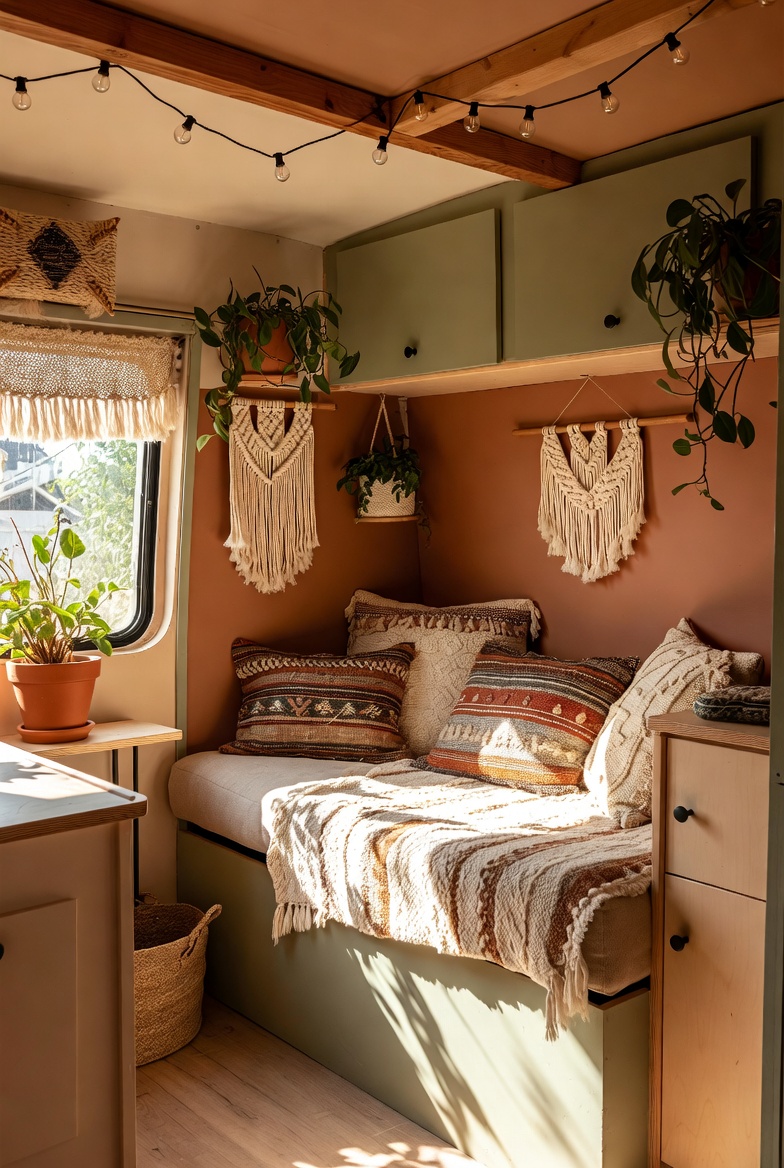
Color sets the emotional tone of a boho camper interior. Soft, earthy hues are commonly used because they create calm and warmth without overwhelming a small space. Shades like warm white, beige, sand, and soft clay provide a gentle base that reflects light and makes the interior feel open.
These neutral foundations allow for layered accents. Muted greens, terracotta tones, dusty blues, and warm browns add depth and interest while maintaining harmony. In a camper, restraint is important. Instead of bold contrasts, the boho aesthetic relies on gradual transitions between colors.
Mood matters just as much as palette. A successful boho camper interior feels relaxed and welcoming. Natural light plays a major role in achieving this atmosphere. When color choices work with light rather than against it, the space feels balanced and soothing throughout the day.
Textures and Materials That Bring Boho Style to Life
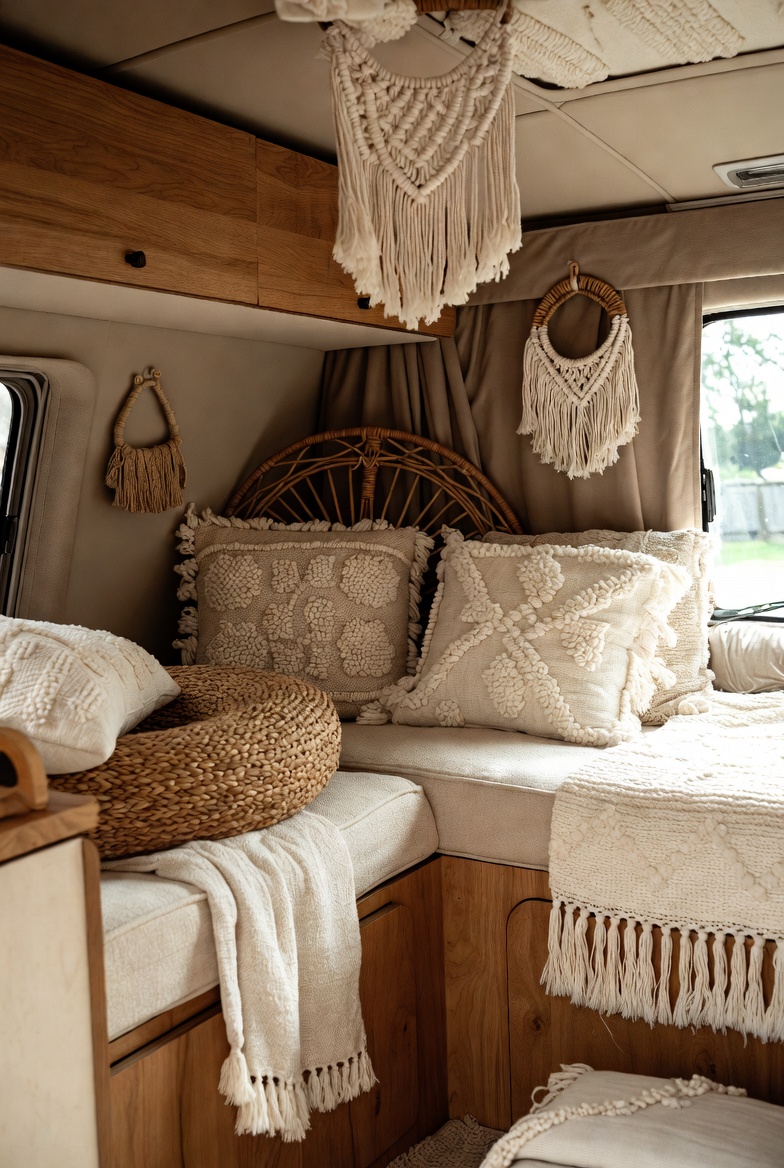
Texture is one of the most important elements in boho design, especially in a camper interior. Since space is limited, visual interest often comes from materials rather than furniture volume. Woven, layered, and tactile surfaces make the interior feel rich without feeling crowded.
Natural materials are central to the boho look. Wood, cotton, linen, jute, and rattan are commonly used because they age well and feel grounded. In a camper, these materials also offer durability and comfort when chosen carefully.
Layering textures adds depth and softness. Smooth wood surfaces paired with woven fabrics and subtle patterns create contrast without chaos. The key is balance. Too many textures can overwhelm a small interior, while too few can make it feel flat. A thoughtful mix keeps the boho camper interior visually engaging and comfortable.
Furniture Choices That Support Comfort and Flow
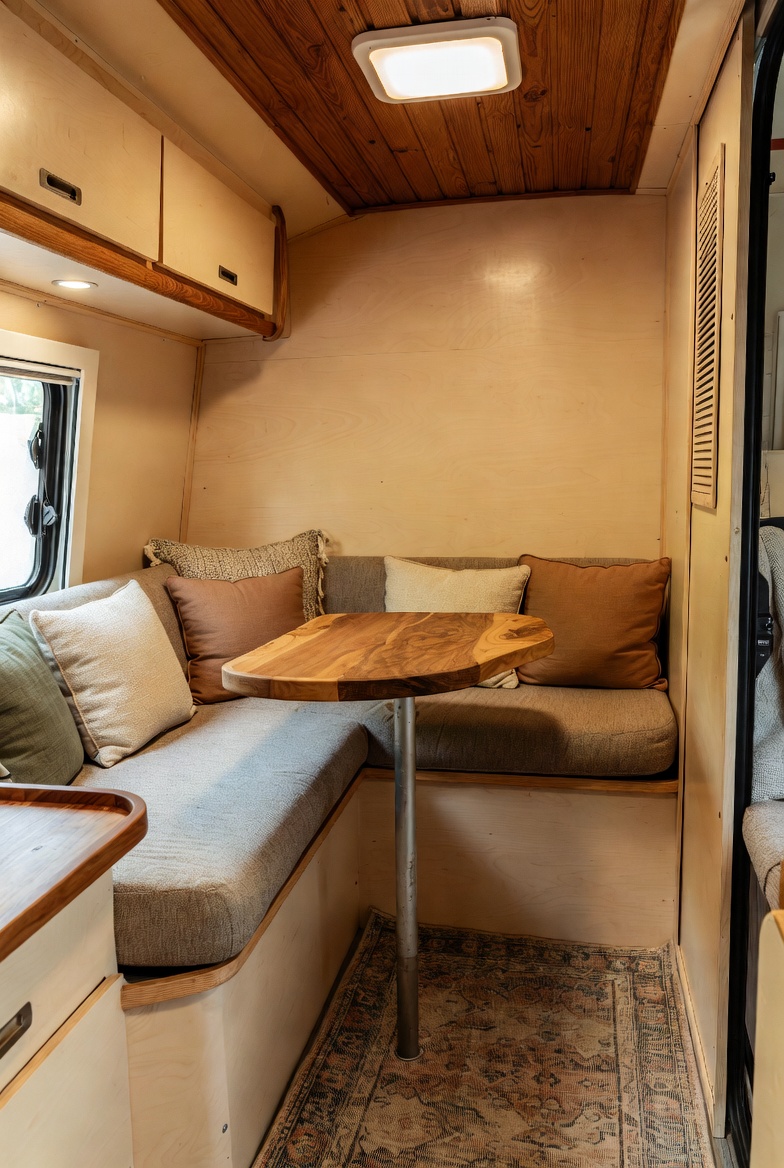
Furniture in a boho camper interior should feel relaxed and functional at the same time. The boho style favors pieces that invite lounging and slow living, but a camper demands flexibility and efficiency.
Built-in seating often works best, especially when paired with soft cushions and textured upholstery. This approach maximizes space while maintaining comfort. Furniture should feel lightweight visually, even if it is structurally solid. Rounded edges and natural finishes help achieve this effect.
Convertible elements are particularly valuable in a camper. Tables that fold away or seating that transforms into sleeping areas allow the interior to adapt throughout the day. When these functional features are styled with boho textures and colors, practicality blends seamlessly with aesthetic appeal.
Making a Small Camper Feel Open and Relaxed
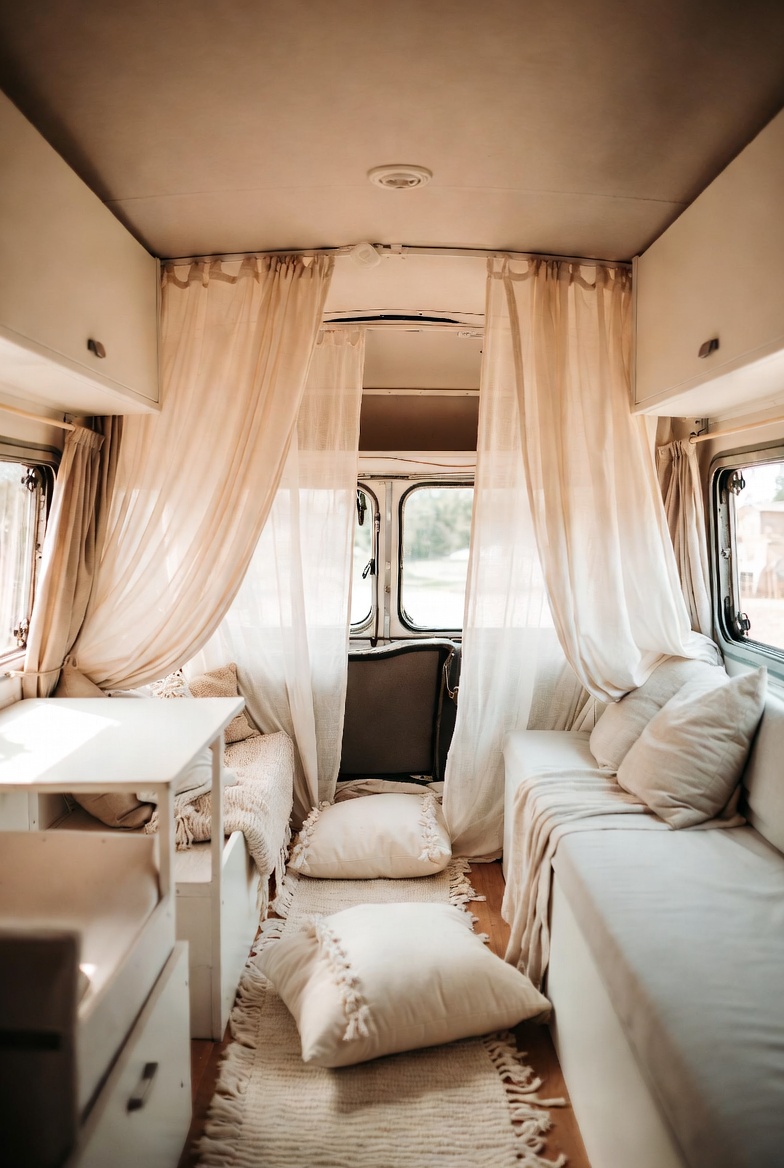
One of the biggest challenges in creating a boho camper interior is avoiding a cramped feeling. Boho design thrives on layers, but too many elements can make a small space feel heavy if not handled carefully.
Visual openness starts with layout. Clear pathways and unobstructed sightlines help the interior breathe. When furniture placement feels intuitive, movement within the camper becomes effortless.
Light also plays a crucial role. Allowing natural light to flow freely enhances both the boho aesthetic and the sense of space. Light-colored surfaces, reflective accents, and soft window treatments help distribute light evenly. When the interior feels bright and airy, the layered boho details feel intentional rather than cluttered.
Storage That Preserves the Boho Aesthetic
Storage is essential in any camper, but it must be integrated thoughtfully in a boho camper interior. Visible clutter quickly disrupts the relaxed atmosphere that boho design aims to create.
Hidden storage solutions are particularly effective. Under-seat compartments, integrated cabinets, and concealed drawers keep necessities out of sight while maintaining accessibility. This approach allows the interior to remain visually calm.
Open storage can still be part of a boho camper interior when used selectively. Open shelves displaying a few meaningful items can add personality and warmth. The key is curation. Each visible item should serve a purpose or contribute to the overall story of the space.
Lighting That Enhances Boho Warmth
Lighting can dramatically influence how a boho camper interior feels, especially during evenings and early mornings. Harsh or overly bright lighting undermines the cozy, relaxed vibe that defines boho style.
Warm lighting tones are ideal. Soft, diffused light creates a welcoming atmosphere and highlights textures and materials. Layered lighting allows different moods throughout the day, supporting both functionality and comfort.
Placement matters as much as tone. Lighting that feels intentional enhances the design rather than distracting from it. When light sources complement the layout and materials, the interior feels cohesive and thoughtfully designed.
Personal Expression and Storytelling in Boho Design
At its core, a boho camper interior is personal. It reflects the journey, experiences, and tastes of the people who live in it. This personal layer is what transforms a decorated camper into a true home on wheels.
Meaningful objects, such as handmade items or travel souvenirs, add emotional depth. These elements should be introduced gradually and thoughtfully to avoid overcrowding the space.
The beauty of boho design lies in its flexibility. There are no strict rules, only guiding principles. When the interior tells a story that feels genuine, it naturally feels comfortable and inspiring.
Adapting the Boho Camper Interior Over Time
A boho camper interior is rarely finished in one step. It evolves as needs change and new experiences shape the space. This adaptability is one of the style’s greatest strengths.
Seasonal adjustments help maintain comfort. Lighter textiles and breathable fabrics support warmer months, while thicker layers add warmth during cooler periods. Because boho design embraces layering, these changes feel natural rather than disruptive.
Maintenance is also part of long-term success. Choosing materials that are easy to clean and age gracefully ensures the interior remains inviting over time. A well-maintained boho camper interior continues to feel welcoming no matter how far the journey goes.
Frequently Asked Questions About Boho Camper Interiors
What makes a boho camper interior different from other camper styles?
A boho camper interior focuses on warmth, texture, and personal expression rather than strict minimalism or modern uniformity. It feels relaxed and lived-in, emphasizing comfort and individuality.
Can a boho camper interior work in very small campers?
Yes, when done thoughtfully. Using light colors, layered textures, and integrated storage helps maintain openness while still achieving the boho look.
How do I avoid clutter in a boho camper interior?
Balance is key. Use hidden storage for daily essentials and limit visible decor to meaningful pieces. Curated simplicity keeps the interior calm and inviting.
Are natural materials practical for camper living?
Many natural materials are practical when chosen wisely. Durable woods, washable fabrics, and well-finished surfaces work well in a mobile environment.
Is boho style expensive to achieve in a camper?
Not necessarily. Boho design often values creativity over cost. Thoughtful color choices, textiles, and personal items can achieve the look without major expense.
Conclusion
A thoughtfully designed boho camper interior is more than a visual style. It is an experience that blends comfort, creativity, and freedom into a space that supports life on the road. By focusing on warm colors, layered textures, functional furniture, and personal expression, you can create a camper interior that feels relaxed and deeply inviting.
The strength of boho design lies in its adaptability and authenticity. It allows your camper to evolve alongside your journey, reflecting who you are and how you live. When done with intention and care, a boho camper interior becomes a true home on wheels, offering comfort and inspiration wherever the road takes you.


